Regular Episode
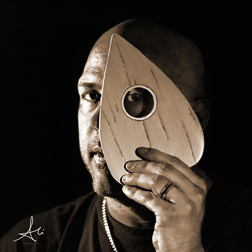
#199 – We Never Play Ouija Bored
This is episode 199, recorded shortly after Blake attended DragonCon, where a panel discussion about folk horror prompted him to reflect on what he sees as a creeping new Satanic panic — one in which books, games, and art are once again cast as weapons of spiritual warfare. Few objects better illustrate that tension than the Ouija board: continuously sold in toy stores since 1890, yet freighted with demonic associations largely traceable to a single 1973 film.
🗂️ What Is a Talking Board?
Murch draws a careful distinction: “Ouija” is a trademark (currently owned by Hasbro), while “talking board” is the broader category. Talking boards are, by his working definition, flat objects bearing letters, numbers, and words, where a touched indicator moves to point out those letters — and they are, as far as historians can tell, an American invention.
The lineage runs from the Modern Spiritualist movement, which exploded in 1848 in Hydesville, New York with the Fox Sisters, through the French-imported planchette (circa 1853), to the first identifiable talking boards appearing in American popular coverage around 1886. The planchette in its original form was a heart-shaped rolling device with a hole for a pencil — essentially an automatic-writing tool. As literacy in ghost-written script proved frustrating, devices that pointed to pre-printed letters became more practical.
🏭 The Birth of Ouija as a Product
In 1890, Charles Kennard of Chestertown, Maryland partnered with Baltimore lawyer Elijah Bond to commercialize what would become the Ouija board, manufacturing through the Kennard Novelty Company. Bond’s contribution included the now-iconic arc layout of the alphabet. Crucially, the founders never claimed to know how or why the board worked — their marketing simply promised it would “exceed your greatest expectations.”
This was, Murch argues, one of the most effective pieces of paranormal-adjacent marketing in American history: they took something people were already making at home, packaged it attractively, and sold it to everyone — not just spiritualists. Early box art showed entire families, including small children clutching teddy bears, gathered around the board. The demonic associations came much later.
👩 Helen Peters: The Mother of Ouija
One of the Talking Board Historical Society’s most significant historical recoveries is the story of Helen Peters Nosworthy, Elijah Bond’s sister-in-law, whom Bond considered a medium. On April 25, 1890, at a session with Kennard and Bond, Peters asked the board what it wanted to be called. It spelled out O-U-I-J-A. When asked what that meant, it answered: “good luck.” The Kennard Novelty Company subsequently marketed it as “the Egyptian luck board.”
Securing the patent required a demonstration at the U.S. Patent Office in Washington. According to letters later sent to the editor of the Baltimore Sun and corroborated by National Archives research, the chief patent examiner challenged Peters to spell out his name — which she did, letter by letter. He reportedly left the room visibly shaken, but the patent was granted.
Peters’ contribution had been largely erased from the historical record. The Talking Board Historical Society located her grave in Denver’s Fairmount Cemetery, where she had been buried in an unmarked plot. The Society raised funds to install a memorial headstone featuring Ouija board imagery and quotes from the original historical sources — giving her, in Murch’s words, the recognition of being the board’s mother as well as its fathers.
🔬 The Ideomotor Effect and Skeptical Framings
Murch is candid about the scientific explanation for talking-board phenomena. Michael Faraday, observing the spiritualist craze that had crossed the Atlantic by the early 1850s, designed careful experiments around table-turning and demonstrated that no external forces were responsible — the movement originated with the participants. His colleague William Benjamin Carpenter coined the term ideomotor effect to describe the mechanism: small, unconscious muscular movements, married to the subconscious mind, produce fluid motion in the planchette. The user is, in effect, answering their own questions without consciously knowing it.
Murch notes three competing frameworks people bring to the board: the scientific/ideomotor explanation; the psychic-telepathy hypothesis (the board opens a channel between participants’ minds); and the spiritualist belief that it parts the veil between the living and the dead. He is direct that no evidence supports the latter two, while being equally clear that the experiences people report are subjectively real to them — and that the belief itself is the engine driving those experiences.
🎬 Hollywood, “Ouija-stitions,” and The Exorcist
The rules everyone “knows” about Ouija — never play alone, never play in a graveyard, always say goodbye — have almost no pre-1973 history. They are, Murch argues, largely artifacts of The Exorcist, in which a girl plays alone and is subsequently possessed. That brief scene, in a film marketed as based on a true story, calcified a set of folk superstitions Murch calls “Ouija-stitions.”
He traces the board’s cinematic arc from its earliest appearances in silent films — where it was comedic, a date-night novelty — through a gradual darkening in the 1960s, to the post-Exorcist era of demonic associations. Murch himself served as a consultant on the 2014 Ouija film and its sequel Ouija: Origin of Evil, and credits that film with accidentally inventing a new “authentic” practice: nobody held the planchette up and looked through its eye-hole until the movie showed it — but within days of release, paranormal investigators at conferences were doing exactly that.
🌏 Global Variations and Cultural Attitudes
Talking boards are not universal. Murch discusses analogues including Kokkuri-san in Japan (participants rest fingers on a coin surrounded by characters) and Cầu Cơ (Kakao) in Vietnam (a stick pointer over ground-laid symbols). The key cultural difference, he emphasizes, is that in most non-Western traditions, spirit communication with ancestors is treated as solemn and reverential — the frivolous American approach of asking whether a crush likes you would be considered deeply disrespectful.
When Parker Brothers acquired the Ouija trademark from the William Fuld Company in 1966 and gained global distribution, the board largely failed in Australia — not due to religious opposition but to a broader cultural resistance to treating spirit communication as a game. Karen, speaking from her own Australian upbringing, recalls making homemade boards with friends during school recesses and getting into serious trouble when discovered, even in an otherwise secular household. To this day the official Ouija brand is difficult to find in mainstream Australian toy retailers.
📚 Further Reading
– 🎬 Ouija: Origin of Evil 💵 (the film whose commercial opens the episode)
– 🎬 Ouija 💵 (2014; Murch served as historical consultant)
– 🎬 The Exorcist 💵 (1973; the film most responsible for modern Ouija superstitions)
– 📚 The Frighteners 💵 by Peter Laws (Blake’s Audible pick for the month; a look at why horror culture can be therapeutic)
🔗 Related Links
– Talking Board Historical Society (tbhs.org) — nonprofit dedicated to researching and preserving talking board history
– Ouija — Wikipedia
– Ideomotor Effect — Wikipedia
– Fox Sisters — Wikipedia
– Planchette — Wikipedia
– Elijah Bond — Wikipedia
– William Fuld — Wikipedia
– Kokkuri-san — Wikipedia
– Michael Faraday — Wikipedia
– William Benjamin Carpenter — Wikipedia
– Find a Grave — Helen Peters Nosworthy and Charles Kennard listings added by the Talking Board Historical Society
Note: ads inserted into the distributed audio alter the timestamps in unpredictable ways, so timing references in these notes are approximate.
Is the Ouija Board a tool for talking to the dead? Or is it just a game from Hasbro? We dig into the history of Talking Boards with Robert Murch!
LINKS:
The Talking Board Historical Society (Est. 2013)
Michael Faraday & Spiritualism
Blake Smith
0
Tags :