Regular Episode
#148 – MAGIC: SPIRITUALISM AND THEOSOPHY, PART I
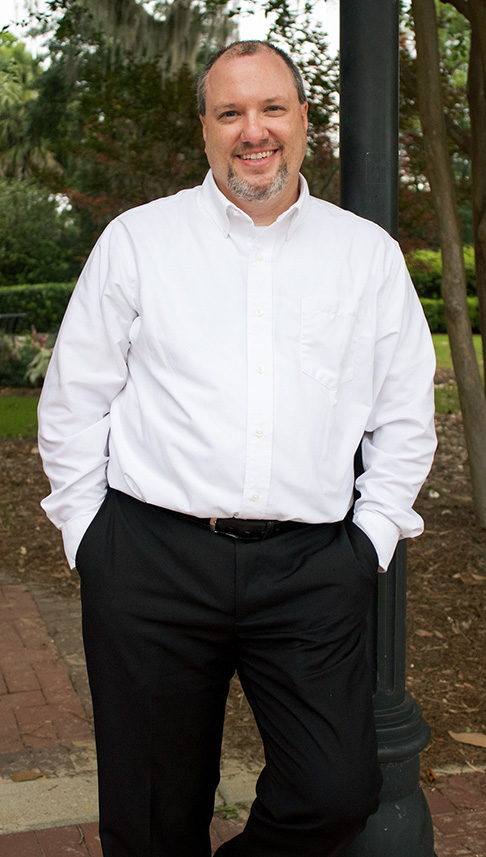
John holds a master’s degree in Western esotericism from the University of Amsterdam — where he wrote on the relationship between theosophy, occultism, and Alan Bennett (Crowley’s teacher in the Golden Dawn, who later became a Buddhist monk) — and a PhD from Florida State University focusing on how Eastern religious traditions entered the United States through the lens of theosophy.
🔨 From Operative to Speculative: The Masonic Foundation
John traces the arc of Freemasonry from its probable origins as a trade certification system — passwords and handshakes as proof of craft knowledge, a kind of pre-modern credentialing — to the rise of speculative masonry in early-18th-century England. The first three degrees of Blue Lodge Masonry spread to the American colonies, while on the continent a proliferating ecosystem of higher and fringe rites — Scottish Rite, the Ancient and Primitive Rites of Memphis and Misraim, and others — circulated largely independently of each other due to the era’s slow communication.
Masonry was never purely mystical in purpose. It served as a mutual-aid society at a time when there was no social safety net: dues paid for a member’s burial and supported his widow and children. By the 19th century, however, the Morgan Affair — in which a New York man named William Morgan threatened to publish Masonic secrets, then disappeared and was presumed murdered — sparked a massive public backlash. The resulting Anti-Masonic Party, the first significant third party in American politics, pioneered the format of the modern political convention: platform, speeches, delegates — all still in use today.
📜 The Illuminati Panic and the Robinson Book
The enduring American fear of a hidden Illuminati conspiracy traces back to a specific miscommunication. Minister Jedidiah Morse (father of telegraph inventor Samuel Morse) encountered a book by John Robison titled Proofs of a Conspiracy Against All Religions and Governments of Europe, Carried on in the Secret Meetings of Free Masons, Illuminati, and Reading Societies. Morse took the book’s warnings seriously and began preaching a conspiracy against American republicanism from his pulpit — but crucially, the “secret degrees” he was pointing to were Scottish Rite rituals that had developed in France and were not yet known to English or American Blue Lodge Masons. When he confronted local Masons about them, they genuinely had no idea what he was talking about, which only deepened his suspicions. That chain of miscommunication and distrust, John argues, laid the ideological foundation for every Illuminati conspiracy theory that followed.
Morse’s 1799 sermon is available in public-domain archives: A Sermon, Exhibiting the Present Dangers, and Consequent Duties of the Citizens of the United States of America.
👻 Spiritualism: The Democratic Supernatural
The conversation then turns to the surge of Spiritualism that erupted in 1848 with the Fox Sisters in upstate New York. John situates the movement within several converging currents: the influence of mesmerism (which flowed from Franz Mesmer through mental healing and eventually into Christian Science and New Thought); liberal Protestantism and Quaker openness to spiritual experience; and above all, the worldview of Emanuel Swedenborg.
Swedenborg’s accounts of traveling to other worlds — describing angels’ clothing, planets, and conversations with the same matter-of-fact prose as a Victorian travel narrative — gave liberal Protestants a conceptual framework in which the spirit world was a recognizable place you could simply visit. Once the afterlife looked like a stroll in the park, communicating with its residents seemed entirely plausible.
Critically, Spiritualism was radically democratizing: anyone could be a medium. No seminary, no training, no institutional gatekeepers. Women in particular took on medium roles, partly because prevailing 19th-century gender constructions cast them as naturally more open to spiritual influence. By the time Spiritualism crossed the Atlantic to France, Allan Kardec absorbed it into a more systematized Spiritism, blending in Freemasonic elements. Blake notes the movement’s living legacy: Dan Aykroyd‘s family was deeply involved in Spiritualism, a direct line from the Fox Sisters to 🎬 Ghostbusters 💵. Active Spiritualist communities still exist today at sites like Lily Dale, New York and Cassadaga, Florida.
🔬 Science-y but Not Science: Ghost Hunting and the SPR
A lively digression touches on the gap between the serious inquiry of the Society for Psychical Research and the reality-television ghost-hunting genre. Blake invokes skeptic Sharon Hill‘s phrase “sounding science-y” — deploying the rhetoric and equipment of science without its epistemology: no null hypothesis, no replication, no publication, no peer review. The apparatus gets anomalies on tape; then the show moves on. John points out the irony that the one ghost-hunting show with nominal academic ties (Paranormal State, associated with a Penn State student club) folded, while the self-styled plumber-investigators of Ghost Hunters spawned multiple spinoffs — a dynamic John reads as reflecting society’s broader discomfort with institutions lending credibility to fringe inquiry.
The discussion of Daryl Bem‘s 2011 precognition paper in the Journal of Personality and Social Psychology — which passed peer review before generating fierce controversy about whether ESP research should be published at all — illustrates the inverse problem: when gatekeepers refuse to engage with heterodox claims on methodological grounds, that too is a failure of the scientific process.
🔮 Occultism as Spiritual Materialism
The episode’s conceptual payoff: John explains why occultism is best understood not as primitive superstition but as a self-consciously modern project. The word “occult” simply means hidden, and when occultism coalesced in the 1870s it explicitly borrowed the language and appearance of science — charts, tables, diagrams, the rhetoric of experiment and proof. Theosophists Charles Leadbeater and Annie Besant claimed to inspect atomic structure clairvoyantly, producing what they called occult chemistry — complete with color diagrams of astral-plane molecular configurations.
What occultism kept from science was the costume; what it discarded was the epistemology. Knowledge was not open and reproducible — it was accessible only to the clairvoyant, the trained initiate, or one authorized by a higher master. In Theosophy, that founding authority came from the Himalayan Masters — advanced beings living in Tibet whose wisdom underwrote Blavatsky’s entire edifice. In the Golden Dawn, it was an Egyptian magical lineage and a set of founding cipher manuscripts. Every group, John notes, has this same structure: a logical superstructure built on an unprovable axiom taken on faith. That architecture — and the specifically Masonic framework of degrees, oaths, and initiatory secrecy that underlies Theosophy, the Golden Dawn, and the OTO alike — is where Part II will pick up, as the conversation moves toward Crowley himself.
📚 Further Reading
– 📚 Proofs of a Conspiracy Against All Religions and Governments of Europe 💵 by John Robison (1797)
– 📚 The Royal Masonic Cyclopaedia 💵 by Kenneth R. H. Mackenzie (1877)
– 📚 An Encyclopedia of Freemasonry 💵 by Albert C. Mackey
– 🎬 Ghostbusters 💵 (1984)
🔗 Related Links
– Freemasonry (Wikipedia)
– Illuminati (Wikipedia)
– Adam Weishaupt and the Order of the Illuminati (Wikipedia)
– Fox Sisters (Wikipedia)
– Emanuel Swedenborg (Wikipedia)
– Spiritism / Allan Kardec (Wikipedia)
– Society for Psychical Research (Wikipedia)
– Swedenborgian Church (New Church) (Wikipedia)
– Theosophical Society (Wikipedia)
– Daryl Bem’s precognition research (Wikipedia)
Note: ads inserted into the distributed audio alter the timestamps in unpredictable ways, so timing references in these notes are approximate.
The 19th century saw the rise of a variety of secret and secretive movements. Freemasons, Spiritualists, Theosophy and Esoteric Orders give rise to a variety of mystic-themed groups whose influence lurks under the mainstream themes of the 19th century. In this episode of MonsterTalk, we talk with religious studies scholar John L. Crow about the birth of these movements and how they influenced 19th (and 20th) century thought.
Mentioned in this episode
- Proofs of a conspiracy against all the religions and governments of Europe: carried on in the secret meetings of Freemasons, Illuminati, and reading societies
- Swedenborgian Church
- The Royal Masonic Cyclopaedia (1877), by Kenneth R. H. Mackenzie
- An Encyclopedia of Freemasonry, by Albert C. Mackey M.D.
- The Spiritualist Movement
- Spiritism
- Daryl Bem’s precognition tests
- The first mention of the Illuminati in America was in 1799 in a sermon which was reprinted as A sermon, exhibiting the present dangers, and consequent duties of the citizens of the United States of America : Delivered at Charlestown, April 25, 1799. The day of the national fast, by Jedidiah Morse, D.D.
Music
- Monstertalk Theme: Monster by Peach Stealing Monkeys
MTArchivist
0