Regular Episode
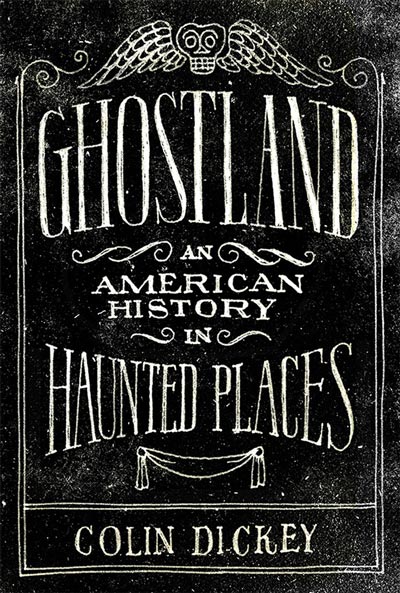
#149 – WINCHESTER’S CATHEDRAL
The timing of the episode is not accidental: the Winchester film had just hit theaters, and Dickey had reviewed it for The New Republic. It currently holds a roughly 10% rating on Rotten Tomatoes — which, Dickey charitably notes, makes it sound worse than it actually is.
🏚️ The Winchester Mystery House: Myth vs. Reality
The standard tour narrative goes like this: gun heiress Sarah Winchester lost her husband and infant daughter, fell into pathological grief, consulted a medium named Adam Coons, and was told she must build — ceaselessly — to appease the spirits of everyone killed by the Winchester rifle. Hence: stairs to nowhere, doors opening onto walls, and an obsessive use of the number 13.
Dickey spent years trying to verify this story and found very little that holds up. We have almost no first-hand documents from Sarah Winchester — a striking absence for someone of her wealth. A handful of letters survive at the Connecticut Historical Society, and they paint a picture entirely inconsistent with the tour’s portrait of a woman in supernatural crisis. Crucially, historian Mary Jo Ignoffo (author of 📚 Captive of the Labyrinth 💵) points out that spiritualism in the 1880s was an inherently communal activity — séances were not solo affairs — and Sarah Winchester’s name appears nowhere in the well-documented San Jose spiritualist community of the era.
As for the architectural oddities: the famous 13th candle on the ballroom chandelier appears to have been clumsily tacked on after the fact. A woman wealthy enough to commission custom Tiffany glass windows with 13 gemstones embedded in them would not, Ignoffo argues, be resorting to DIY candelabra modification. Dickey also notes that if you go looking for groups of 13 things in any large Victorian house, you will find them — because you are looking for them.
The house itself, Dickey insists, is genuinely remarkable as architecture. The mythology, however, appears to be largely a 20th-century commercial invention layered onto a landmark that sits adjacent to some of the most valuable real estate in Silicon Valley.
🏙️ Dark Tourism and the Haunted City Business
One of Ghostland‘s animating questions is: why do certain places become haunted while others don’t? Dickey tracked this phenomenon across multiple American cities, finding that “most haunted city” is essentially a municipal marketing claim — New Orleans, Salem, Richmond, and Savannah all claim the title simultaneously.
The Merchant’s House Museum in Manhattan is a case study: a legitimate historical site that only recently began leaning into ghost tourism as a revenue strategy, partly because Manhattan real estate pressures demand creative ways to keep a landmark open. Dickey is sympathetic — the economics are real — but notes that the result is often a distortion of the past rather than an engagement with it.
⚜️ New Orleans: The LaLaurie Mansion and Charcoals Burgers
Dickey pairs two very different New Orleans haunted sites as a study in contrasts. The LaLaurie Mansion — associated with Delphine LaLaurie, accused of torturing enslaved people in the 1830s, later briefly owned by Nicolas Cage before he lost it in foreclosure — is now privately held by an absentee owner from Texas. Ghost hunters covet it; nobody can get inside. The haunting mythology dates partly to children who, during the tenement years, would charge neighbors a nickel to hear a friend drag chains around the attic.
On the other end of the spectrum: Charcoals Burgers, a craft-beer-and-bison-burger joint in the Magazine District, reportedly haunted by a woman killed by a drunk driver during Hurricane Katrina — her body left in the street for days while emergency services were overwhelmed. For Dickey, this pairing illustrates how New Orleans continuously folds new trauma into its existing haunted mythology, making the city’s ghost stories a living, updating record of collective grief.
🔦 Salem: Awareness Without Understanding
Salem presents what Dickey calls “awareness of history with very little engagement with what that history actually means.” The city has leaned so hard into its witch-trial identity that the police cars feature a witch on a broomstick, the town logo is a witch on a broomstick, and crystal shops and tarot readers line the streets. Meanwhile, one block over, the weight of the actual executions — of real, innocent people — bears down with considerable moral gravity.
The cognitive dissonance is acute: Americans invoke “witch hunt” as a political metaphor almost daily, while simultaneously half-celebrating the Salem accused as though they might have been genuinely supernatural. A statue of Samantha from Bewitched sits within easy walking distance of the memorial to the executed. Dickey found this mixture of tackiness and genuine tragedy to be Salem’s most defining, if uncomfortable, characteristic.
💻 Digital Hauntings and the Algorithms That Can’t Understand Death
In the book’s final movement, Dickey turns to what he considers the emerging frontier of haunting: the digital. Blake reflects on the experience of social media platforms prompting him to wish happy birthday to friends who have died — an intersection of grief and algorithmic indifference that lands differently than any Victorian séance.
Dickey frames this through Ray Bradbury’s story “There Will Come Soft Rains” — the automated house that keeps serving breakfast after everyone is gone. Facebook, he suggests, is that house. It cannot distinguish between a user who has left the platform and a user who has left the world, and it will keep sending birthday reminders and memory notifications indefinitely. Dickey predicts that as our social lives migrate increasingly into digital commons, ghosts will follow us there — and the question of how platforms handle the dead will become one of the defining social questions of the next generation.
🃏 Ghost Hunters, the Order of the Good Death, and Why We Fear Dying
Dickey encountered a wide range of paranormal investigators on his travels — from self-described hard scientists attempting to prove the existence of wormholes to pairs of middle-aged men who treated ghost hunting as a weekend escape before heading to a strip club. He briefly fell under suspicion of being a mole within the Los Angeles ghost hunting community, which required some diplomatic recalibration.
Underlying all of it, Dickey explains, is his own lifelong terror of death — and the discovery that the best way to manage that fear is to write about it constantly. He is a member of the Order of the Good Death, founded by mortician and author Caitlin Doughty, whose mission is to reclaim the rituals of dying and mourning from the funeral industry and return them to individuals and families. Blake notes that MonsterTalk previously spoke with Paul Koudounaris, another Order member, in an episode about demon-possessed cats — which apparently involved a significant number of cat puns.
Dickey also mentions Death Salon, the Order’s annual event, as something worth seeking out. Whether you believe in ghosts or not, he argues, they are fundamentally a technology of grief — a way communities process the dead — and understanding them requires understanding how we mourn.
📚 Further Reading
– 📚 Ghostland: An American History in Haunted Places 💵 by Colin Dickey
– 📚 Captive of the Labyrinth: Sarah L. Winchester, Heiress to the Rifle Fortune 💵 by Mary Jo Ignoffo
– 📚 Smoke Gets in Your Eyes 💵 by Caitlin Doughty
– 📚 Cranioklepty: Grave Robbing and the Search for Genius 💵 by Colin Dickey
– 📚 Haunting America 💵 by Karen Stollznow
🔗 Related Links
– Winchester Mystery House (Wikipedia)
– Sarah Winchester (Wikipedia)
– LaLaurie Mansion (Wikipedia)
– Salem Witch Trials (Wikipedia)
– Spiritualism (Wikipedia)
– The Order of the Good Death
– Colin Dickey’s review of Winchester (2018) for The New Republic — linked in the existing show notes
Note: ads inserted into the distributed audio alter the timestamps in unpredictable ways, so timing references in these notes are approximate.
The Winchester Mystery House is a sprawling Victorian mansion in San Jose, California. It is a famous piece of American architectural history, yet nearly every story commonly told about its mysterious history is likely untrue. In this episode of MonsterTalk, we are joined by Colin Dickey, author of the fantastic book Ghostland to discuss the case of the Winchester house and some of the other fascinating places he covers in his fascinating work.
Of Interest
Music
- Monstertalk Theme: Monster by Peach Stealing Monkeys
MTArchivist
0