S05E21 – Dragons & Trolls of the Marsh
We are delighted to talk with Dr. Christopher Beatty about his research into Dragonflies. From ancient times these insects have been the subject of wonder, fear and misinformation. Let’s keep the wonder but get rid of some of the other stuff as we dive in on a creature whose lifecycle, morphology, and effectiveness as a hunter elevate its place in the lore of humanity.
Why this title for the episode? Tune in and find out.
Petroglyphs of Dragonflies 1000y/o (Atlas Obscura)
Dragonflies in Japan – Akitsu Shima
Those are from a class of helmets called Kiwari Kabuto – amazing variety
Some cool electronica I used to listen to back in “the day” from an album named after dragonflies: Odonata by Amethystium
Good lord – has it been 25 years?? Tempus fugit.
Additional note from Dr. Beatty:
“I’m the past-president of the Dragonfly Society of the Americas, a group that promotes public awareness, as well as research and conservation of dragonflies. We are open to anyone with interest in odonates, and membership is quite inexpensive ($15/year).
We have an annual meeting, which for 2026 will be taking place in Hot Springs, North Carolina, in the last week of June. Info on the meeting can be found here:https://www.dragonflysocietyamericas.org/hotsprings2026.”
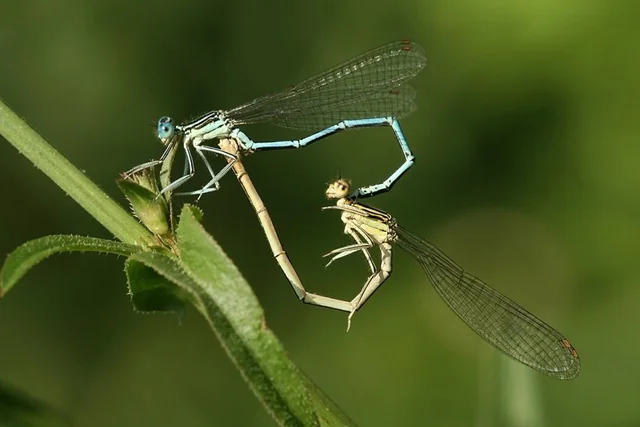
As mentioned in the interview, mating damsel flies form heart-shaped bindings.
Dragonfly Nymph Hunting
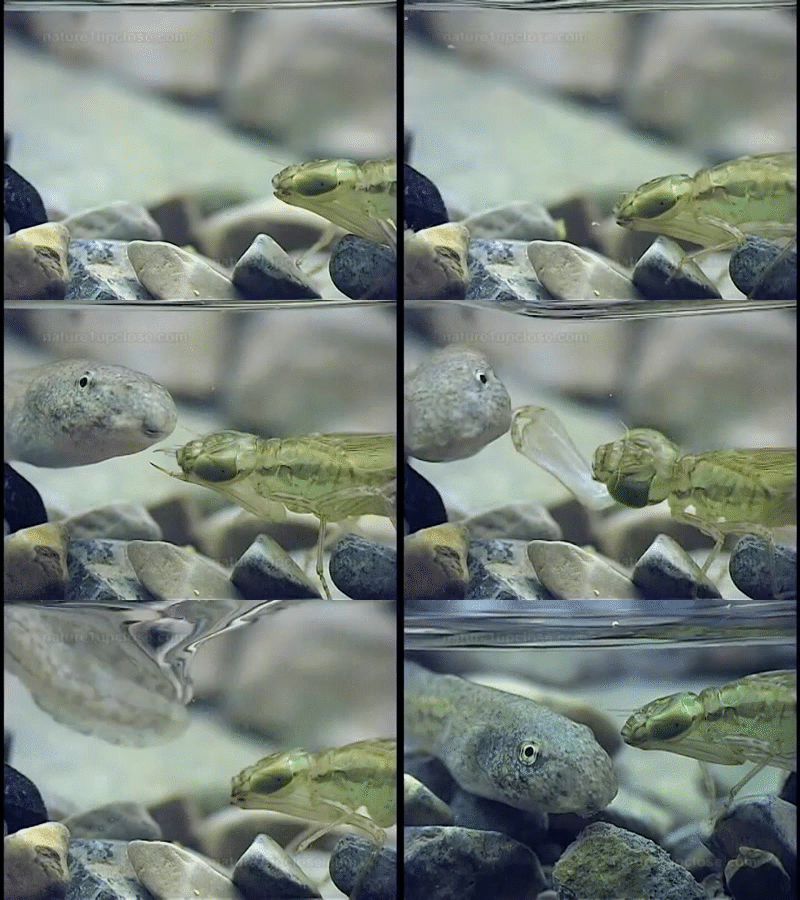
They’re really something to watch… in slow motion, of course.
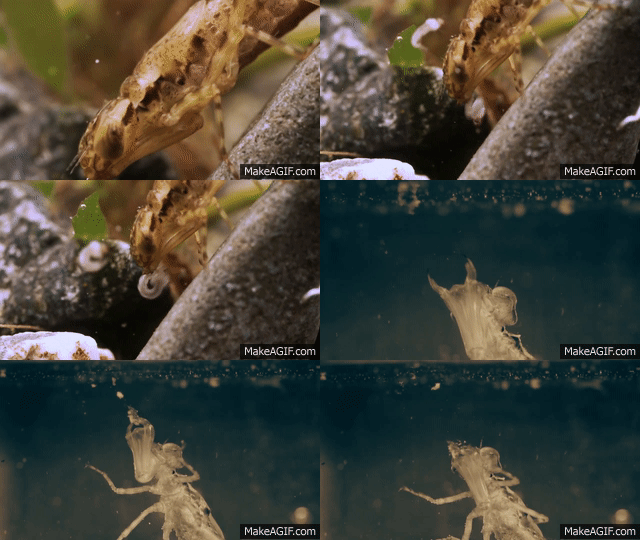
And spoilers… as regards “Favorite Monsters,” but if you haven’t seen it ya gotta SEE it:
SEO Transcript
This is not a fully accurate transcript, and was machine generated. It’s here for helping search engines find the episode but not intended to be a faithful transcript of the episode. (But it’s not AWFUL.) Some of the material in this transcript only exists in the Patreon/Premium edition of the show and was excised for the commercial version.
———————
Monster House presents…
This is the ad-supported version of Monster Talk.
We’re dependent upon the revenue from these ads and from the support of our patrons at patreon.com forward slash monster talk to continue making this show.
As a disclaimer, your hosts are unable to control what ads you will hear, and while we have done what we can to avoid ads that are divisive, the system that injects them sometimes ignores our preferences and always seems to ignore our efforts to not interrupt the conversational flow.
While we understand this can be disruptive, we’re trying our best.
Patreon remains the best way to enjoy commercial-free listening to our content.
Plus, you generally get extended coverage of the subject.
We’re working on other ways to consume our content as well, so please stay tuned.
A giant hairy creature, part ape, part man.
In Loch Ness, a 24-mile-long bottomless lake in the highlands of Scotland, it’s a creature known as the Loch Ness Monster.
Monster Talk.
Welcome to Monster Talk, the science show about monsters.
I’m Blake Smith.
And I’m Karen Stollznow.
This week I’m excited to do one of my favorite kinds of Monster Talk episodes, the kind where we look at real creatures that have become enshrined in myth and legend, only to discover that the reality of their capabilities may be even more wondrous than our collected imaginations even hinted at.
Dragonflies are known by many names around the world and are seen as monsters in some cultures and noble spirits in others.
In English, we’ve been calling them dragonflies for a few hundred years, combining the fantastical dragon with the common fly.
In Sweden, they’re known as Trollslanda, combining that fairytale monster, the troll, with slanda, a word which comes from a term for a spindle such as you’d wind thread around.
Which is interesting because Dragonfly lore also frequently brings in sewing metaphors for other reasons.
Perhaps because of their needle-shaped body, or perhaps because some of their actual biological processes look suspiciously like the motions of pushing thread through cloth.
These creatures are beautiful and deadly.
And I think they’re fascinating.
And in this episode, we’re talking with Dr. Christopher Beatty.
And I think it’s safe to say that Karen and I both learned a lot.
And we’re delighted to share this conversation with you.
Monster Talk.
Well, thank you for joining us.
So can you tell the listeners who you are?
Sure.
My name is Chris Beatty.
I’m an evolutionary ecologist.
I’m currently a visiting scholar at Stanford University, and I also am a research associate at the American Museum of Natural History in New York.
I work on aquatic insects and most specifically on dragonflies and damselflies.
I’ve done some work on their behavior, looking at things like evolution of territoriality and color evolution and signaling.
More recent years, I’ve been working on their…
of biogeography, sort of how the species got to where they are.
And a lot of that has moved into doing more genetics and genomics.
So I do spend a lot of time working with DNA and genomes these days.
That’s so cool.
I’m so interested in so many things about these creatures.
I’m assuming the listeners know what a dragonfly is, but we should probably talk about that.
And you said dragonflies and damselflies.
And I only know damselflies as something that fly fishermen use to
fish, and I don’t really know anything else about them.
Are they closely related?
Is there a difference?
What is that?
They are.
So they’re part, and that’s probably me just being a completist saying it that way.
They’re all part of the insect order Odonata.
And so dragonflies, it’s a little confusing because the common name for the order is dragonflies.
But then there are three sub-orders within that order.
There’s the dragonflies, Anasozagoptera.
And then there’s the damselflies, Zygoptera.
And then there’s another very small group with only about three species in it called Anisozygoptera because they kind of share traits of the two.
The differences, they do look a lot alike.
The differences you would see looking at them, dragonflies, when they land, their wings are out like an airplane wing.
So they land with the wings lateral.
Damselflies land with the wings folded over their bodies.
Oh, I’m looking at them now.
That’s okay.
I’ve seen these and didn’t even know there was…
But as soon as you say that, I see the difference.
Yeah, yeah.
Right.
They have a lot of similarities.
I say they’re part of the same order.
It’s two groups that separated, oh, I want to say 180, 190 million years ago, maybe a little further back, basing on estimates.
Yeah, yeah.
So they have similar ecologies.
Their dragonflies are predators both in their juvenile stage in the water as a nymph and they’re predators as adults.
But yeah, that would be the difference.
There’s about 6,400 species.
species of Odonates currently described.
And that’s roughly divided.
There’s about a little over 3000 dragonflies and a little over 3000 damselflies.
And yeah, there are some other, uh, a lot of dragonflies, the eyes, uh,
The eyes, the compound eyes, take up the whole head.
So it’s just sort of two eyes that meet right in the middle.
Damselflies tend to have the eyes more out, sort of separated kind of on a wide head, almost like a hammerhead shark, kind of on a wide, on stalks, would be another way that you’d tell them apart.
I tend to think about, in mammals, widespread eyes being something that prey would have to be more alert.
Oh, yeah.
But in insects, not so much.
These things, apparently, if my reading is correct, have 360 degrees field of vision.
That’s a lot of vision.
And they’re brutal hunters, which I know we will talk about.
Right.
So is that trait…
That associating predatory with, you know, I guess it’s stereo vision, but eyes evolved separately.
I’m answering my own question here.
Eyes evolved separately in insects.
So is there any relationship between predator and prey and eye configuration in insects?
I would certainly say four.
I’ll just call them dragonflies if that’s okay.
And we’ll know I’m referring to the whole order.
But vision is super important in them finding their prey, in finding mates, in navigation.
We have examples of…
several dragonfly species that are migratory.
And so obviously their visual system is very different from ours, but with the compound eyes, they do have a huge number of facets that wrap around.
There are those that literally have facets basically facing backwards so they can look all around them.
They can see above quite well and below.
A lot of people I work with have occasion to need to catch dragonflies, which can be a trick.
one strategy that people will use is if you can kind of get underneath them if you have one that’s maybe flying back and forth along a stream and you want to catch it you maybe can see a little bit less well directly below and then you sort of swing up but that’s that’s one technique but yeah the um vision is certainly very uh very important to them
I just love dragonflies.
I love their colours.
I’ve always been fascinated with them, but I haven’t really known too much about them.
So we’re really excited to do this show with you.
And you’ve touched upon biology already, but I’m wondering if you could address some more questions about where we might find them and things like how long do they live, what do they eat, and what causes their beautiful colours?
Something many people may not be aware of is that the dragonfly spends a majority of its life underwater.
It’s an aquatic nymph in freshwater habitats.
You can find them in a variety, be it ponds or sometimes larger lakes, streams and rivers.
Oftentimes, that habitat is fairly species-specific.
There are those that are adapted to live in fast-moving current and those that much prefer kind of a quiet pond.
They, on average, if I can generalize across the whole order…
It’s probably safe to say that most species, individuals take about a year to go through their life cycle.
That can be different in high elevation places where it takes a little longer, for example, or higher latitude.
It might be a little shorter than that in places like the tropics where you might get multiple generations over a long, warm, wet period.
But they lay their eggs in water.
A lot of species, the egg hatches fairly soon after it’s laid.
And they’ll spend time as a nymph, usually eight to 10 months.
And then they emerge.
Dragonflies are different.
They’re what we call hemimetabolous insects.
So incomplete metamorphosis.
There are the…
The mayflies and the grasshoppers are a couple of other examples of insect groups that do this.
So they don’t have a pupa stage.
They don’t, you know, like butterflies and beetles.
They don’t have this resting stage where they go from being sort of a grub-like larvae to this very different adult.
The dragonfly nymph has…
You know, it doesn’t look like an adult, but it has some of the traits.
It already has large eyes.
And if you’re watching one develop, you can actually see that it has wing pads on its back.
The wings are inside the pads.
It’s a little like an undeployed parachute.
And they’re slowly growing in there.
And so it will feed and get larger.
and it will molt the old exoskeleton and grow a new one.
And when it’s ready, it’ll crawl up on some sort of a stick or a stone, some sort of material sticking out of the water, and then it will emerge.
The exoskeleton splits right at the thorax.
Maybe I should…
Quickly point out, you have three body parts in all insects.
You’ve got the head, the thorax, where the wings and the legs are attached, and then the abdomen.
That’s all I remember from biology.
That’s all I remember.
Hey, that’s great.
No, that’s, you know, a fundamental thing about, you know, the vast majority of life on the planet.
That’s good.
So it splits along the top of the thorax.
And so they sort of pull their thorax and head out first.
And that allows that exoskeleton to harden a little.
And then they’ll use the legs.
When the legs are strong enough, they’ll grab onto the structure that they’ve climbed out onto and then pull out the abdomen.
And then that’s when they pump lymph into the wings and the abdomen to expand.
So that’s when those wings expand out to their full size.
And then once they harden, they can fly.
And adults…
On average, probably that part of the lifespan is six to ten weeks, depending on how lucky they are or, you know, if they get hit by a truck or…
But that, yeah, probably ten weeks.
I’ve seen individuals at places I’ve worked where, especially the males, as you get towards the end of the summer and the flying season, if you catch one, the back edge of the wings are pretty shredded and battered.
They’ve…
been out and about and busy.
So yeah, that’s the average lifespan.
I work on a particular group that’s kind of a violation of that rule.
And they spend actually multiple years as a nymph.
But that’s their life cycle.
One of the interesting things about their mating, of course…
Once they come out, it’s go time.
Flying, they feed as adults.
They’ll eat on average.
This usually gets people to like dragonflies even more if they don’t already.
They’re voracious eaters of other insects, especially mosquitoes.
They’ll eat about 30 to 100 mosquitoes a day on average from what we know.
And so life once you’re an adult is all about flying around and finding mates.
It’s eating and mating.
It’s just like you’re 20.
I often tell people, you know, for dragonflies, they’ve been around 325 million years.
They eat whatever the heck they want and they have sex in midair.
So, you know, it’s pretty good life.
Life peaked early for Earth.
You mentioned their abdomens, and I can’t help but notice that their abdomens are very long and slender compared to a lot of insects.
Obviously, there’s others, but is there a relationship?
This is a weird, specific question, but is there like a common average ratio to the head and the thorax compared to the abdomen across species, or does that vary wildly?
But is that mathematically significant?
It is, and I have colleagues who are engineers who spend a lot of time looking at this.
This is not my field, but it does, some of it has to do with the dynamics of flight.
You have sort of long distance flyers versus short maneuverability, and the length of the abdomen can influence that.
There are also some constraints.
For example, there are some damselflies in South America that lay their eggs in tree stumps.
So you get these epiphytes and tree stumps that are full of water and they put their eggs in there.
And quite often, they have very long abdomens.
And very likely, the constraint of that is just to be able to maneuver themselves in to get the eggs down into the water.
The length of the abdomen can also be important when they mate.
If you’ve ever seen a pair of dragonflies flying together…
You’ll either see them sort of head to tail.
The male is always in front and has claspers at the end of his abdomen to attach to the female.
That’s another dragonfly and damselfly difference.
For dragonflies, there’s a structure on the top of the female’s head to attach to.
For the damselflies, there’s a structure on the thorax.
And so when they first sort of work out that they’re interested in mating, they’ll attach like that.
That’s referred to as tandem.
And the sperm production structures, the organs for that in the male, are in the very end of the abdomen, just like the ovaries and then the oviduct are in the end of the female’s abdomen.
But if the male is attached to the female…
with that part of his body, then it sort of makes it a problem.
Like, well, how do you deal with the sperm and get it where it needs to go?
And it turns out dragonfly males have a second set of naughty bits.
They’ve got what are called accessory genitalia.
It’s a structure on the second and third section of the abdomen, kind of up close to the thorax on the bottom.
And if you watch, sometimes you’ll see males flying around and you’ll actually see them curling their abdomen and that’s them transferring sperm in there.
And so the female, if she’s receptive, will then roll her abdomen around and they’ll make what’s called the mating wheel or the copulation wheel.
For damselflies particularly, it’s been suggested if you see them, actually it makes kind of a heart shape.
Aww.
So, yeah, so that’s sort of the damselfly.
I have colleagues that will send out, you know, holiday cards or certainly Valentine’s Day cards and put a damselfly mating pair there.
Hey, happy Valentine’s Day.
Here’s some insect porn.
That’s right, exactly.
I wouldn’t suggest the dragonflies are particularly, you know, gentle or romantic, but, you know, it gets the job done.
right did you want to go back to that yeah okay i’m just thinking about all the vivid beautiful blues and greens and and why they’re all different and uh yeah i’m just wondering what you can tell us about that yeah and are they actually different colors or is it one of those things like birds where it’s like the
No, scales.
It’s like the scales reflect certain colors.
Yeah.
Right.
So there are actually a couple of different mechanisms, and it depends a little on what color you’re seeing.
There are pigments that, especially if you see things like some of the blues that you might see, like spots of blue or bands of blue on the, well, really on any part of the body, but on the…
thorax and the abdomen.
Those often are caused by structures that have pigments inside them, and those are under the exoskeleton.
In some cases, that area of the exoskeleton is thinner and a little more clear, so that color can come through.
There are some interesting patterns that we’ll see.
Some of those pigments end up being temperature dependent.
And so if the individual cools off, those colors appear to go away.
And if they’re still alive, if they warm up, they’ll come back again.
But there’s some blues and yellows that work that way.
And then for the dragonflies that you see that have like a metallic coloration, that is a structure that’s on the surface of the exoskeleton.
And that’s actually a scattering.
There’s Tyndall scattering and Raleigh scattering are sort of two of the mechanisms that I know of.
But that’s a little bit more…
similar to how the scales on a butterfly will they also there’s a lot of superstructure involved there and so it differentially reflects different wavelengths back and so you get that as a color and then the sort of the third major way that you’ll see colors are on a structure
that’s again on top of the exoskeleton, but it’s called prunosity.
And it’s a waxy structure that is basically sort of exuded onto the body.
And those often are like a bright blue or a white.
There are some dragonflies you’ll see that have a really white abdomen or white patterns on the wing.
And that’s more of that waxy structure.
It looks very white to us.
In many cases, it also has an ultraviolet reflectivity as well, which we don’t see, but which dragonflies and other things do.
Wow, amazing.
The function, it can function in mating.
The best understood ways that it functions in mating are usually in damselflies with color on the wings.
And that, especially if it’s a very dark sort of color,
That’s often driven by melanin that has been sequestered into the wing, that’s been put into the wing.
And melanin is part of the… Well, it’s true for…
many insects, but it’s part of the dragonfly immune system.
If they have different things that might be like infections, parasites that can get in, the melanin will sort of glob around it and sort of protect the insect from them.
And the idea is that if you’re a really robust male…
that you can put a lot of melanin into this flashy wing and sort of signal, well, I’ve got melanin to spare.
Look at me, I’m just pouring penicillin in my coffee and throwing it over my shoulders.
Exactly.
So, you know, it’s excessive consumption.
Yeah, yeah.
That’s funny.
A very complex answer.
That’s really interesting.
Well, it strikes me as being particularly interesting because in many species, coloration is related to, if not sexual selection, to how you present to predators.
And these creatures have been around for so long that their predators have evolved.
Like some of them didn’t even exist before.
So what do we know about these ancient dragonflies compared to now?
I’m always fascinated by what can be directly inferred from, you know, the fossil record, amber, wherever.
But I’m really curious about, you know, what do we know about what eats them back then?
What eats them now?
Right.
Well, I think color, it does sort of beg the question, how can they get away being so brightly colored when obviously there are things that are going to want to eat them?
To their benefit, it’s probably the case that they’re pretty fast and can get away, though they still get eaten.
But we have some records, there are
fossil examples, wings tend to fossilize pretty well.
And so that’s oftentimes when we get representation of extinct species or other lines of dragonflies that aren’t around today, that aren’t part of the dragonfly or damselfly group.
We do tend to get wings and we do have examples going quite a ways back showing…
wing coloration, where you can see some banding and color in the wings.
Coloration, one other thing I should mention, thermoregulation can be really important too.
It’s thought that the colors, the different colors may reflect or absorb thermal temperature or thermal radiation and help them to adjust their temperatures.
So that’s beyond sort of mate recognition.
That’s another potentially really important one.
But yeah, I’m happy to talk about the fossil dragonflies.
On my wall in the living room, I have a life-size drawing of Meganeuropsis permiana, which is the largest known wingspan.
I’m just confirming here, wingspan was up to about 75 centimeters or 28 to 30 inches.
We have those from the Carboniferous era.
So the idea, there’s some debate about it, but the idea was that we saw potentially larger amounts of…
oxygen in the atmosphere back then.
We had larger trees, larger plant structures growing.
They were dying and falling, but the fungus and other things that break down cellulose hadn’t really evolved to catch up yet.
So we had periods potentially with oxygen levels, I think up to about 30, maybe slightly higher than 30%.
We’re at about 21% these days.
And the idea basically being that, you know, if you have a higher concentration of oxygen outside, potentially it can work in its…
dragonflies, like other insects, have trachea that open onto structures called spiracles that are basically just openings on the side of the body.
And so the air basically just works its way in.
It’s not carried by blood the way ours is.
And it has to eventually get into very small capillaries that can get all the way down and into the tissues and cells.
So if you have higher pressure oxygen, potentially it can get in deeper.
And so those organisms can grow to be larger.
And so that’s how we ended up with that group.
That particular group is called griffin flies.
So they’re not the ancestors of our modern dragonflies.
They’re, you know, another extinct lineage.
There are a number of other lines.
The gigantopithecus of dragonflies, right?
Yeah, yeah, right.
Well, Chris, a little while ago, I thought I heard you mention engineers studying dragonflies.
And I wonder if you can talk a bit more about that.
I was wondering if there are any applications for areas of engineering or other areas of science regarding the way that dragonflies move and fly.
Is there?
Is that a thing?
It is, yeah.
There are a few different groups that I know of, a couple here in the US and some in Great Britain that come to mind.
And we are very interested.
Dragonflies have a lot of flight ability that we still cannot replicate.
They can hover really well.
They can fly backwards.
Not many insects can do that.
The ability to develop drones, other aircraft that could use those same approaches to flight, potentially there are a lot of ways we could use that.
And one of the challenges is there’s sort of mimicking how the muscles move in moving the wings.
But if you’ve looked at a dragonfly wing, you can probably see it has a pretty standard shape.
The front wing, well, actually that’s another difference between dragonflies and damselflies that I forgot to mention.
And that’s actually the origin of the suborder names.
If you look at a dragonfly, the front wings and hind wings have different shape.
In the dragonfly, the hind wings are wider, close up to the body.
In damselflies, they tend to have narrow stalks.
So the fore and hind wings are kind of similar in shape.
The dragonfly wing is a kind of a complex structure.
The patterning and density of the wing veins can cause some parts of the wing to be a little more stiff and other parts to be a little more flexible.
Most dragonflies also have a structure.
If you look at them, there’s a little rectangle or a little dot on the leading edge of the wing towards the outside, right before the wing curves back.
That’s called a terastigma, and that is basically just a thicker layer of the exoskeleton.
that’s there, and that brings some rigidity to the end of that wing.
And so sort of the size and shape of that is an important component of, along with the size and shape of the wing that allows flight.
But as they’re flying, it might be better to think of them as swimming, as doing like a butterfly stroke in the air, because as they move those wings…
different parts of them will sort of bend and flex.
And that’s a big component of how they are able to do all the things in flight that they do.
And the material design of mimicking that is a real challenge.
And so that’s part of the sort of the challenge in figuring out how to get flight like a dragonfly can fly.
All right.
Very cool.
We know they will eventually succeed, though, because I’ve seen Dune, and that’s set in the future.
Oh, yeah.
The ornithopters.
Right.
I don’t know why they call it an ornithopter.
You know, it’s got too many wings.
It does.
It looks just like a dragonfly to me, you know.
Or maybe it’s a damselfly.
I didn’t look to see how they put their wings away when they’re not flying.
It could be pointed out, not necessarily in the dragonfly line, but there are, you know, foremost insects, it’s come down to two pairs of wings.
Things like the flies, the hind end has adapted into these structures for sort of orientation.
So they’re not…
which is why the order is called Diptera, two wings.
So there’s only two functioning wings.
And then for the beetles, the four wings have become the sort of hardened elytra that cover them up.
So they fly more with the back wings.
But there are some examples from the fossil record of some insects that appear to have wings on that, appear to have six wings, appear to have something of a pair of wings on the front wing.
thoracic segment on that first segment.
The modern dragonfly, modern insects, have the wings on the second and third of the thoracic segment.
I’m always interested in what got thrown away by evolution.
You see some weird, yeah, the fossil record’s great.
You come up with, yeah, just about anything has been tried in the past.
If you look back long enough, we sort of circled around the aquatic form of them.
But can we talk a little bit more about that?
Because when I told my kids we were doing this, one of them got very excited and began just spouting off things that they knew about baby dragonflies and talking about how they’re similar to xenomorphs.
And that’s the example I use.
Yeah.
Jet propulsion.
And I don’t want to spoil it.
No, no, absolutely.
No, the dragonfly nymph is a pretty wild and crazy organism.
So your comparison to the xenomorph is an interesting one.
They have this prehensile mouth part.
It’s only in the nymphs.
The adults don’t have it.
Adults have pretty standard sort of chewing jaws.
And although the nymphs have chewing jaws too, but it’s covered up by this thing.
I like to suggest, imagine if you had a third arm and the shoulder was attached to your chin.
Because the structure folds, it has sort of a two-part structure that can fold up under the body, much like your two sections of your arm.
And then it has a mask which has prehensile hooks and spines and all sorts of things associated with it, depending on the species.
And that folds up and covers the face, covers the mouth parts.
During COVID, a good friend of mine made up masks that looked like a spiked-tailed nymph mouth part.
It was great.
Just this gnarly-looking thing.
It actually looked a little bit like the mouth parts on the Predator, if we can bring Predator into the conversation, as well as the Xenomorph.
But you probably do remember that the xenomorph has those sort of internal jaws that jump out.
And the mechanism, you have to look at it on slow motion photography to see it.
But this arm can just basically reach out super fast and use those hooks to grab prey.
And that’s how they capture their prey.
And then they bring it in and sort of manipulate it with that and then chew it up and eat it with the mouth parts.
It’s a wild mechanism.
And in fact, that’s why the order is called Odonata.
Most all of the other insect orders have terra, P-T-E-R-A, in their name.
Hemiptera, coleoptera, diptera.
And that’s because they were described and sort of separated out from one another through their wing structure.
That was the system Linnaeus used.
Fabricius, another early person who worked on taxonomy, when he broke up the insects, broke them up by mouthparts.
And, you know, basically that was the one name that was left over because that mouth part is just so weird.
It’s like, well, we have to still name the order after that.
It’s crazy.
So the O-D-O-N, the Don in that, or Odon, I think it’s Odois is the…
is the, is it a Greek, I think a Greek root.
And that basically like an orthodonture.
Yeah.
It’s tooth.
Right.
And so Odonata is the toothed ones.
And yeah, so that mouth part is wild and the jet propulsion too.
So the only dragonflies can do this.
When you look at dragonfly nymphs.
The damselfly nymphs have what look like three tails.
There’s three structures at the end of the abdomen.
And they do actually use them for kind of long and slender, and they can use them for swimming.
But predominantly, they’re gills.
And the technical term is caudal lamellae.
And it’s just sort of a large surface area that they can use to exchange gases.
And then that’s connected to the trachea.
But the dragonfly nymphs breathe through their butt.
They have an internal gill in a rectal chamber, and they will sort of expand and contract their abdomen a little like a bellows and draw the water in and out.
And not all of the dragonflies are some of the primitive…
species that are primitive groups that can’t do it you say primitive but they’re really old already so you mean that they have you know they’ve maintained their old phenotype from long ago is that what you mean right boy that’s a you’re you’re calling me out a little because primitive is a dangerous word to use yeah yeah just well i live in the deep south and man anything i could do to help remind people that evolution is real i like to i like to do that so so yeah so the um so
The major families, a lot of the major families of the dragonflies, some of them go back.
There’s this group I work on that’s about 160 million years old.
That’s when it appears to have separated from the other main families in the dragonflies.
But there are a lot of them that they’ve diversified in the last 25 to 30 million years.
And the old, the petal tails, the group I work on is one that their gill structure and abdomen structure, they really can’t do that jet propulsion thing.
Where they live, it wouldn’t work very well anyway.
They live in sort of bog habitats and there isn’t a whole lot of water to move around in.
But the…
But yeah, some of them will fill up with water and then just blast it out and go shooting away.
And it’s definitely something they’ll use as predator avoidance if they can.
Butt jets.
Yeah.
That’s where it’s at, man.
It looks like fun.
While we’re still talking about biology, I wanted to quickly, I read, and that doesn’t make it true, that adult dragonflies have a success rate when they hunt higher than 90%.
Is that true?
There are a couple, actually a recent paper from a group out of UC Davis or some recent work on that.
And there’s a paper from 2013 that I was just looking back to remind myself where they did high-speed video photography.
When you look at how dragonflies hunt…
There’s sort of two groups.
There’s what we call perchers and flyers.
The flyers are more active.
They’re like, well, we call it hawking because it’s more like a hawk.
They spend time on the wing flying around looking for things to eat.
But the perchers, which tend to be some of the more mid-sized dragonflies, they will find sort of a vantage point and they will sit there and they will watch for things to fly by and then go after them.
And what they were able to figure out was basically that the dragonflies can do trigonometry.
They’re like, if you’re a submarine trying to sink a destroyer, you don’t aim for where the boat is.
You try to figure out where it’s going and its speed, and you try to send the torpedo to where it’s going to be.
And that’s generally what they do.
They take off and fly, and they can sort of match speed.
But yeah, they are…
The species that were studied showed like 95…
if you look at the percentage of times that they went after a prey and succeeded in capturing it, yeah, it was like 95 to 97% of the time.
We think about lethality in animals, like, you know, a pack of lions is probably running in the thirties, right?
Yeah.
I think it’s 25.
I actually looked this up.
It’s 20, 25%.
And I think great white sharks are 50, 50.
There you go.
Obviously, insects don’t have a lot of cognitive power to imagine how much peril they’re in.
But if a dragonfly gets after you, you’re probably dead already.
You just don’t know it yet.
We should be much as I would love to live in a world where we had…
giant dragonflies, life would be a lot more of a challenge for us, potentially.
I don’t know if they would see us as prey, but if they did, it would make the morning commute a tough thing.
I saw a documentary, it’s called Heavy Metal, and you get to ride them.
It’s really cool.
Oh, yes, yeah.
Well, Chris, we’ve looked at a lot of the amazing science behind these creatures, and I wonder if we can shift gears a bit and just take a different angle.
When I think about dragonflies, I think about how popular they are in literature and art, jewellery, things like Art Deco.
I have a couple of lamps that are ripoffs of the Tiffany-style lamps that have dragonflies.
Do I?
So, I’m wondering, this is probably not your purview, but are there any myths or legends that you could think about regarding dragonflies and why are they so popular in art and literature?
Actually, there are a lot of examples and I am not a specialist on this, but I am very interested in it from, you know, being sort of the…
being someone who works with these things.
And it depends on the part of the world, but there are a lot of examples.
You say they appear in art, you know, the Tiffany lamps, you’ll see them in sort of, you know, Art Deco and sort of Beaux Arts design.
But there’s another, I’ve actually gotten to visit the site about 10 years ago.
Yeah, I think it’s a Mogollon culture, and that’s southwestern U.S. and into Mexico.
There’s a place in the Gila National Forest that I’ve visited that’s, I think it’s just called the Dragonfly Trail, but it’s artwork that’s about, it’s petroglyphs.
They’re, I believe, right about 1,000 years old, and it’s representation of dragonflies.
And in that particular area, you can find the…
the dragonfly petroglyphs quite regularly uh and so yeah another another example where they’ve been represented the culture probably that has to my knowledge that has um embraced
dragonflies the most would be in Japan.
In fact, Akitsushima is a name which basically means the island of dragonflies.
And that’s sort of the Japan sort of appearing in mythic stories.
And there we see the dragonfly tends to be something that represents
uh sort of good luck and good fortune they’re seen as as a very fortuitous thing and they’re also seen as a very sort of brave and bold organism there’s some great examples of um samurai battle helmets that i’ve seen if you get a chance you should look them up there’s one i think the minneapolis institute of art has one and um and the met in new york they’re 16th or 17th century but there’s these helmets
And the dragonfly, because it sort of boldly launches forward and goes after its prey, it’s seen as sort of this sigil of a bold soldier.
And so they have these helmets that are really quite wild in the way that they’ve built sort of…
dragonfly iconography on top of them, which is really cool.
I saw it described as because they don’t have to turn around to flee.
They can back up.
So they always face their enemy.
It’s very brave.
Kawari Kabuto is, I believe, the Japanese name for the particular style of helmet.
But just about anywhere you go, you will find there are
it’s interesting because in sort of Northern European stories, you will get dragonflies being potentially a little more malevolent or a little more of a trickster.
The snake doctor, is that a familiar term to you, Blake?
Like earlier today, I was reading about that.
Yeah.
I didn’t know if they called them that in Georgia.
That’s in, I grew up in Southern Illinois and that was a name that I did hear.
Some people call it, uh, Appalachians and the Appalachians.
Yeah.
So I’m in the South end of the Appalachians and there’s a lot of snake folklore, um, about things, uh, joint snakes.
This reminded me of the joint snake, the idea, because the idea behind the joint snake is it’s a snake that can break apart and then go back together.
Um, I,
I think the most uh you humoristic version would be that that’s probably a glass lizard that people saw right you know which really does break apart but does not go back together but the idea that dragonflies would be sewing them back to together again as like helping them like it was that is the idea yeah that that they’re they’re there to stitch them or if they get injured to heal them and you you will find
Europe and in several places in Africa and around, you’ll find the sort of association with dragonflies and snakes.
That’s possibly because in some of these areas, you tend to find them in the same place.
Especially if you’re in a more arid region, you probably will find them more along rivers or in places that are a little more wet.
But even the origin…
If we go back to the name, Dragonfly is not a super old name.
I think it goes, I think the first time it’s seen in print is in like the 16th century.
Oh, wow.
That’s really new.
But it refers to sort of the, it goes back to the older concept of, you know, dragon as giant serpent.
Yeah.
And so it’s, yeah, they’re sort of seen as, you know, if you look at them, they’ll sort of long abdomen and, you know, they can be, they can sort of flex as they fly.
And so that’s kind of what you go back to.
And there’s also some of the earlier names.
that you find for them.
Adderbolt.
Really?
Yeah.
So an early…
So actually some of the names… Like a flying snake?
Like an adder?
Yeah.
So Bolt may have a…
You know, I think of bolts as associated with like, you know, arrows and, or, you know.
Yeah, crossbows.
Crossbows, things like that.
That’s the sound they make, by the way.
A lot of people don’t know that.
It’s strange because it’s also the sound that phasers make.
Yeah, yeah, pew, pew.
It’s wild.
That’s where the terms like a whinge and whine come from.
as well, from Scottish.
You say whinge, we say whinge.
Oh, sure.
Yeah, the sound of an arrow going past, zooming past.
Oh, right.
I saw multiple folklores involving dragonflies sewing things.
Why?
I don’t know.
Does it look like a needle?
I don’t know.
Well, that actually, so some of the older names, we’ve already talked about Snake Doctor.
Adderbolt was an older one.
Horse Stinger or Horse Killer.
They don’t sting.
That’s one thing I want to make very clear is dragons, sometimes people are afraid of them because that long abdomen looks like they might injure you.
They don’t have a stinger.
But Devil’s Darning Needle is another common name.
And, you know, like a darning needle like you’d use to darn a sock.
Yeah.
In some places, Cabellitos del Diablo, the Little Horses of the Devil in Spain and in some places in South America.
But the, yeah, the…
I’m not, well, it’s interesting.
I’m not quite sure.
I mean, it does look a little like the darning needle, but this is kind of my guess.
But if you watch a lot of dragonfly species, when they go to lay eggs, sometimes the male will stay with the female and mate guard.
But in many species, once they’ve made it, the male will leave and the female will go and oviposit eggs.
And many of them will just sort of fly kind of straight up and down and dip their abdomen in the water.
I have seen that at the swamp.
Okay, yeah.
And it’s almost, if you watch them, it almost looks like a mechanical sort of as they go up and down.
And in fact, there’s, well, there’s a few names, but the one I can think of right away in Brazil, one of the common names is Lava Bunda.
And I believe the interpretation is basically a butt washer.
So it looks like it’s washing its backside.
That’s great.
Fascinating.
Yeah.
And I love those sorts of names because it’s an observation about what they’re doing.
It’s like a behavior, life history sort of inference.
But I have wondered if that almost doesn’t look like sewing.
in that when you watch a female putting eggs in the water, that up and down over and over again, you know, it greatly predates things like a sewing machine, which, you know, I can think of, you know, watching my mom running the sewing machine and, you know, the needle going up and down.
But yeah, so I think that’s the, the darning needle is, it’s a name I’ve heard in several places.
But yeah, they’re, so in some places they’re seen as, and you may have heard some of the stories too, that if you go to sleep by the creek, they’ll sew your mouth shut or sew your eyes shut.
Yes.
Super creepy.
Yeah.
um but uh but in a lot of places they’re seen as sort of a good especially coming out of water because you know rainy seasons are often the sign of a new growing season and dragonflies often sort of presage you’ll you know you’ll see as it gets rainy and the water comes out there you know they’ll sort of show up and uh so that’s a lot of you know in um
places in South America, certainly a number of places in Africa where they’re seen as this sort of harbinger of good things, of good fortune and bounty.
Well, speaking of darning, I have to say, darn it, we’re running out of time.
Oh, sure.
So I have to wind up here, and I believe we could easily talk for another hour or two about these things.
Yeah, we’ll have to have a sequel, I think.
Anytime we get to talk about it, I know some people wonder, why do we do episodes about pure biology?
It’s like so many monsters and folklore originate with the natural world.
And we can both dispel common myths and also just…
be reminded about…
There’s remarkable facts and figures.
Exactly.
Evolution is astonishing.
Anyway, I’ll never get tired of it.
And I really appreciate the work you’re doing in this field and taking the time to talk to us as well.
Well, thanks.
It’s been a blast.
As I say, I’ve been a fan of the show for a long time, so I’m excited to get to come on and share.
I will point out that if you’re a mosquito, if you want to talk about the most monstrous thing in the world, it’s definitely a dragonfly.
You turned him, you turned him pure hero because I don’t, we’ve done, we’ve done an episode about mosquitoes, but it is the most lethal to humans.
Right.
Yeah.
They are used actually in places.
There’s a variety of different, uh, approaches, uh,
But there’s been work taking, like say going into a community in an area that has malaria.
And in a lot of cases, people are collecting water for use.
They’ll have rain barrels.
And of course, those can get filled with mosquitoes, but they will go in and put dragonfly nymphs in those containers.
And they’ve been able to show in some cases that it doesn’t…
you know, get rid of mosquitoes across the area, but it can bring the numbers of them down around the communities where people live.
And so it can actually be a way to sort of help combat the malarial mosquitoes is just have the dragonfly nymphs just eat them up.
It’s certainly the prettiest.
Well, you know what’s coming next, given that we’re out of time.
I do.
You’re all prepared.
Christopher Beatty, what is your favorite monster?
It would be really tempting to talk about Meganaropsis permiana, but I got to go with the home team.
I am from Alton, Illinois, and I’m not the first person to bring this monster up.
Joe Laycock, I believe, he said something about having family in the area.
But back in Alton, we have an animal, a cryptid, called the Piusaw bird.
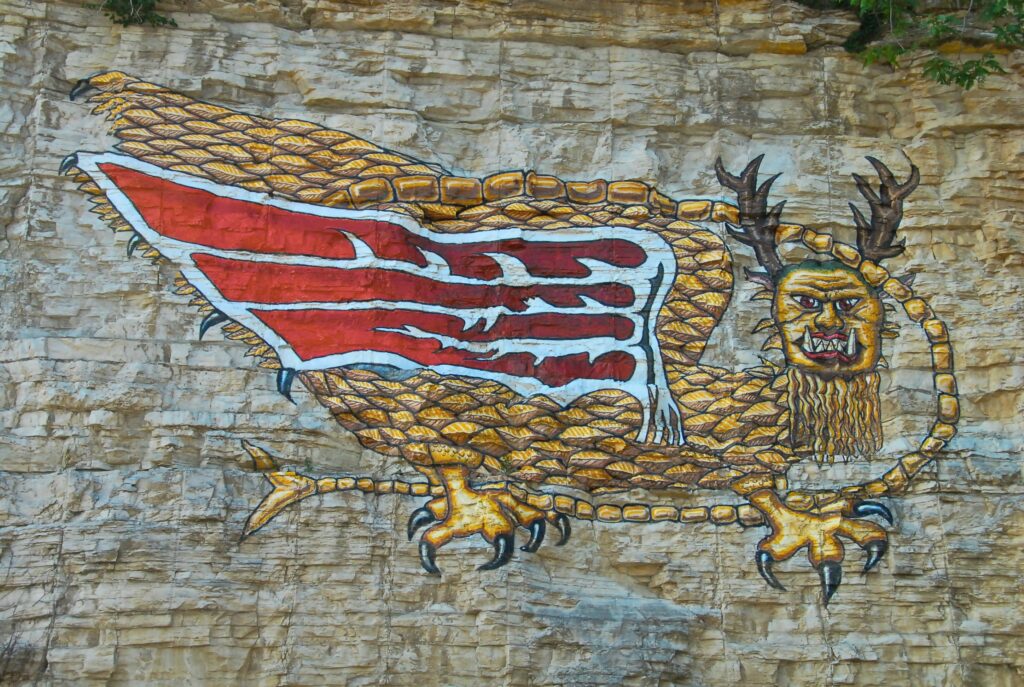
which has kind of a long history in its folklore.
There was artwork that was painted on the bluffs along the Mississippi above Alton that was first recorded by Père Marquette when he was exploring the region in the 1670s.
And the modern story, which is…
probably more of a 19th century artifact than any story that came from the actual native people of the region.
But it’s this great chimeric monster.
It has antlers and a face like a man with a beard, but it’s got a giant body covered in scales with wings and this long tail that can wrap around its body with a fish tail at the end.
And it’s got four legs.
So it has kind of a dragon-ish kind of look to it.
Yeah.
And the story was that after, I think, a battle in the area, it started feeding on the corpses left in the battle and got a taste for human flesh.
And so it was attacking local villages.
And there was a village leader, Chief Otoga, as the story goes.
He, in a dream, got the inspiration to take a number of…
men of his community and go and hide out near the Pius Hubbard’s cave.
And he sort of offered himself up his bait and they shot it with poisoned arrows, I believe is how the story goes.
And it expired.
But of course, every so often, somebody out fishing on the Mississippi.
Late at night, thinks they, you know, hear the whoosh of the wings of the Piusaw bird flying over them.
So, yeah, that’s the cryptid I grew up with.
That’s our hometown monster.
So, yeah, I wanted to call out the Piusaw bird.
Yeah, fantastic.
Thanks so much for talking with us today.
We’re going to put a lot of, I’m going to put a bunch of pictures in the show notes because we talked about a lot of cool stuff and some of it.
You did a great job of moving your hands around, but the listeners can’t see that.
I’m sorry, I realized I was gesticulating as I was describing.
I know, I know.
I was like, I want to say, for the listeners, he’s moving his hands towards his head.
But no, this is great.
This is great.
Thank you, Chris.
Thank you so much.
You’ve been listening to Monster Talk, the science show about monsters.
I’m Blake Smith.
And I’m Karen Stollznow.
You just heard a conversation with Dr. Christopher Beatty going deep into the fascinating world of dragonflies.
Check out the show notes for links and pictures of these amazing and beautiful creatures.
I’m tempted to call them flying death machines, but as Dr. Beatty says, they’re also flying love machines.
So go have a look and check out some links for further reading.
Monster Talk’s theme music is by Pete Stealing Monkeys.
And once again, the real monsters turned out to be the fiends we met along the way.
This has been a Monster House presentation
Here is your sacrifice.
Full attack.
Now, give me your power.
Throw her in.