Regular Episode

#096 – FEAR ITSELF
The conversation is a rare MonsterTalk deep-dive into pure science — no hoaxes, no cryptids (well, barely) — and it holds up as one of the show’s most substantive interviews.
🧠 What Fear Actually Is
Dr. Ressler opens by acknowledging a bit of circularity in the definition — fear is what we experience when we’re afraid — before offering the working neuroscience version: fear is the complex of physiological and behavioral responses (elevated heart rate, increased breathing, sweating, muscle tension, hyperarousal) that prepares an organism for fight or flight. The response is conserved across vertebrates, from fish to humans, though whether invertebrates experience anything analogous to subjective fear remains an open question.
The anticipatory component is key. Dr. Ressler traces the scientific study of fear conditioning back to Ivan Pavlov, whose lesser-known work — beyond the salivating dogs — involved pairing neutral cues with aversive stimuli to produce conditioned fear responses. That same mechanism is why horror-film scores work: the music becomes the cue that predicts something terrible is about to happen on screen.
⚡ Fear vs. Anxiety: Two Circuits
Dr. Ressler draws a neurologically grounded distinction between fear and anxiety. Fear is cue-specific and temporally immediate — thing A predicts bad outcome B, and you’re afraid of that pairing. Anxiety is more diffuse: a non-specific dread of something harder to name or schedule.
These map onto different (though related) brain structures. The amygdala — long recognized as the brain’s fear hub — handles specific, cue-triggered responses. A neighboring region called the BNST (bed nucleus of the stria terminalis), part of what researchers call the extended amygdala, seems to underwrite the more chronic, non-specific anxiety state. Both structures share hardwired projections to brainstem circuits that produce the physiological fear signature. Work by researchers Mike Davis and Dave Walker has been central in distinguishing these two systems.
🔬 From Mouse Amygdala to Human PTSD
The Ressler Lab approaches fear from both ends: bottom-up (cell culture, mouse models) and top-down (human neuroimaging and physiology). On the human side, the lab studies civilians living in high-violence urban environments and veterans, both populations with elevated rates of PTSD. Using fMRI and measures of galvanic skin response, the lab looks at how people with fear disorders overgeneralize fear cues and struggle to inhibit learned fear responses.
Genetics play a meaningful role: Dr. Ressler estimates that roughly 30–40% of the variance in risk for fear disorders is heritable. Crucially, it’s not that some people “have the fear gene” — everyone has the same genes — but subtle variations in gene expression can tilt the balance of neural activation. From an evolutionary standpoint, this makes sense: hypervigilance that looks pathological in a peaceful suburb was probably a survival asset in environments where predation and violence were routine.
💊 Treating Fear: Extinction, Exposure, and the Limits of Talk
On the medication side, the picture is modest: SSRIs (Prozac, Zoloft, and related drugs) are the only FDA-approved pharmacological treatments for PTSD, and their effectiveness for specific phobias is limited. Most people with specific phobias simply avoid their triggers — until avoidance becomes its own impairment.
Psychotherapy, however, is a genuine success story. Exposure-based therapy — methodically reintroducing patients to feared stimuli in a safe context, from spider across the room to spider in hand — exploits a brain mechanism Pavlov also described: fear extinction. Extinction isn’t erasure; the original fear memory persists. What exposure therapy builds is a new, competing memory: in this context, this thing is safe. That distinction matters, and it’s why simply telling someone their fear is irrational rarely helps. Declarative, language-based memory (the kind amenable to argument) runs in parallel with deeper emotional and sensorimotor memory systems — the same reason you can’t explain how to ride a bike; you have to teach your muscles. Virtual-reality environments are extending exposure therapy into settings — battlefield trauma, fear of flying — where in-person exposure is impractical.
Blake draws an explicit parallel to skeptical outreach: if fear memories can’t be overwritten by argument alone, perhaps beliefs more broadly require the same accretive replacement process rather than simple refutation. Dr. Ressler finds the analogy plausible and mentions the emerging science of memory reconsolidation — a window during which consolidated memories may briefly become labile again — as a potential (if rare) exception.
🐍 Prepared Pathways and Universal Fears
Blake asks about fears that appear consistent across cultures — snakes, heights, blood, dogs — versus fears that almost never develop around genuinely more dangerous modern hazards like guns and cars. Dr. Ressler describes the concept of prepared learning: the brain may be wired to route certain visual inputs (a long, sinuous shape) toward the amygdala more readily than others, without requiring an individual to inherit a specific “snake fear.” Evolutionary history with ancestral predators is the proposed explanation.
The blood-phobia case is particularly elegant: rather than producing fight-or-flight, blood phobia triggers a vasovagal response — a drop in blood pressure and potential fainting. The counterintuitive evolutionary logic: if you’re bleeding and have no medical care, lowering your blood pressure may help a clot form before you exsanguinate.
🎢 Why Fear Can Be Fun
The conversation turns to the paradox of recreational fear — haunted houses, roller coasters, horror films. Dr. Ressler points out that the amygdala is not purely a fear organ; it activates for appetitive stimuli as well, and the neurochemistry of excitement (adrenaline, dopamine) closely overlaps with that of fear. A classic (and decidedly pre-IRB) 1960s experiment is cited: students given amphetamine but primed to expect either euphoria or terror reported dramatically different subjective experiences, demonstrating how cognitive context shapes the emotional interpretation of the same physiological arousal.
For people who enjoy horror, enough of the prefrontal context-setting apparatus apparently signals “this is not a real threat” — allowing the pleasurable edge of amygdala activation without the full alarm response. Blake notes from personal experience that the gap between fictional movie violence and genuinely disturbing real footage is vast, which Dr. Ressler confirms as exactly that contextual modulation at work.
A brief mention of Urbach–Wiethe disease — a rare condition in which the amygdala becomes calcified and non-functional — rounds out the neuroscience. Research by Ralph Adolphs on patients with this condition showed they could describe fear intellectually (learned from social observation) but couldn’t experience or produce it. Counterintuitively, many of these individuals had more difficult lives, suggesting that a functioning fear system — even an anxious one — plays an important protective role in navigating relationships and recognizing unsafe situations.
📚 Further Reading
– 📚 The Emotional Brain: The Mysterious Underpinnings of Emotional Life 💵 by Joseph LeDoux
– 📚 Anxious: Using the Brain to Understand and Treat Fear and Anxiety 💵 by Joseph LeDoux
🔗 Related Links
– Fear Conditioning (Wikipedia)
– Amygdala (Wikipedia)
– Bed Nucleus of the Stria Terminalis / BNST (Wikipedia)
– Exposure Therapy (Wikipedia)
– Memory Reconsolidation (Wikipedia)
– Urbach–Wiethe Disease (Wikipedia)
– Post-Traumatic Stress Disorder (Wikipedia)
– Vasovagal Response (Wikipedia)
– Ressler Lab (resslerlab.com)
Note: ads inserted into the distributed audio alter the timestamps in unpredictable ways, so timing references in these notes are approximate.
IN THIS EPISODE of MonsterTalk, we interview Dr. Kerry Ressler. Dr. Ressler’s lab researches the biological basis of fear, including work to discover the molecular, neural-circuitry and cellular aspects of how fear manifests in the brain. In this interview we discuss the positive nature of fear, the pathology of fear and the evolutionary role of fear.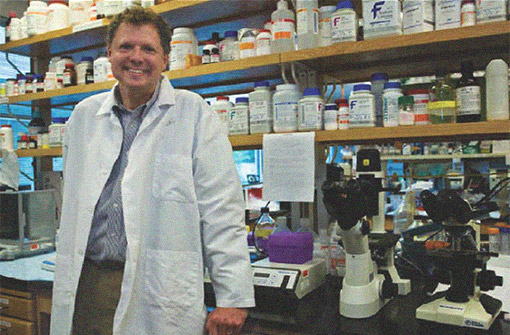
Dr. Kerry Ressler in Ressler Lab
Recommended reading from Dr. Ressler
- The Emotional Brain: The Mysterious Underpinnings of Emotional Life
- Anxious: Using the Brain to Understand and Treat Fear and Anxiety
- Implications of memory modulation for post-traumatic stress and fear disorders
- How the neurocircuitry and genetics of fear inhibition may inform our understanding of PTSD
- “The Role of the Amygdala in Fear and Anxiety”
Music
- Monstertalk Theme: Monster by Peach Stealing Monkeys
MTArchivist
0