Regular Episode
060 – SASQUATCH: KETCHUM IF YOU CAN
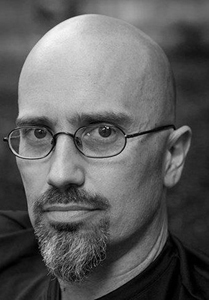
Dr. Disotell is a professor of anthropology at New York University who specializes in molecular primatology and the study of human origins. He has sequenced real alleged-cryptid samples — including a Nepalese “Yeti” skullcap hair that turned out to be a Himalayan goral (mountain goat) — so he knows this territory better than almost anyone. His verdict on Ketchum’s press release is, let’s say, unambiguous.
🔬 Science by Press Release
Dr. Disotell’s first move after seeing the press release was to search PubMed for Ketchum’s publication record. He found none. His concern isn’t personal — it’s methodological: claiming to have sequenced 20 complete mitochondrial genomes and three whole nuclear genomes, without a single peer-reviewed publication to demonstrate the technical competence to do so, is a significant red flag.
He also notes that the press release was issued by what appeared to be a for-profit company associated with Ketchum’s work — introducing a profit motive that science journalism should scrutinize but largely didn’t. As Disotell puts it, the press release was “the least informative press release” he’d ever encountered: no sequencing platform named (Illumina? SOLiD?), no methodology, no raw sequence data — nothing a scientist could evaluate. He compares it, memorably, to Romney’s tax returns.
The panel also addresses the “angel DNA” rumors circulating in Bigfoot forums at the time — the claim, sourced to blogger Robert Lindsay via an unnamed source via Nevada Bigfoot enthusiast Wally Hersom, that Ketchum’s paper referenced DNA “not found in any database.” Blake traces this chain of hearsay and concludes there’s no credible primary source tying the claim to Ketchum directly.
🧬 A Primer on Mitochondrial vs. Nuclear DNA
Before diving into the Ketchum claims specifically, the hosts ask Disotell to walk listeners through the basics of genetic inheritance — because the press release’s argument depends on understanding the difference between mitochondrial DNA (maternally inherited, present in dozens to hundreds of copies per cell) and nuclear DNA (biparentally inherited, 46 chromosomes, the vast bulk of your genome).
The key point: these two genomes can tell completely different ancestry stories, and both are simultaneously true. Your mitochondrial DNA traces only your mother’s mother’s mother’s line; your nuclear DNA is a shuffled mosaic of both parents. This matters enormously for evaluating hybrid-species claims, as the episode makes clear.
🦴 Hominins, Hominids, Pongids — and Hominy
Disotell takes a brief but illuminating detour into taxonomy, prompted by his recent work helping Merriam-Webster update 240 anthropological dictionary entries. The terminology has shifted over the past two decades as genomics clarified our relationships with other apes:
– Hominid now refers broadly to the great apes — humans, chimpanzees, gorillas, and (depending on your theoretical priors) orangutans.
– Hominin (the newer, preferred term) refers specifically to humans and our post-chimp-split relatives: Homo erectus, Australopithecus, Ardipithecus, etc.
– Pongid refers to orangutans and their relatives — including, importantly, the extinct Gigantopithecus.
– Hominy remains a corn product, appropriate for both breakfast and dinner depending on your proximity to a Waffle House.
The Pongid/Gigantopithecus distinction matters: some researchers hypothesize that Bigfoot, if real, could be a surviving Gigantopithecus relative — which would make it a pongid, not a hominin, and would create serious chromosomal incompatibility problems for any proposed hybridization with humans (more on that below).
📅 The 15,000-Year Problem
The single most scientifically damning element of the Ketchum press release, in Disotell’s view, is its claim that the unknown primate component of the proposed Sasquatch hybrid diverged from humans approximately 15,000 years ago. His response is unequivocal: that’s not a different species. That’s us.
Modern Homo sapiens have been anatomically and genetically “us” for at least 200,000 years. A lineage that split from the human line 15,000 years ago falls squarely within the range of modern human genetic variation — it’s roughly when the first humans were crossing the Bering land bridge into the Americas. As Disotell notes, a 15,000-year divergence date doesn’t describe a mysterious ape-man; it describes a Native American population. The database of known human genomes — already over a thousand complete sequences at the time of recording, plus Neanderthal and Denisovan genomes — spans the last 400,000–800,000 years, making it extremely unlikely that a 15,000-year-old divergence would be “unknown.”
The press release is also ambiguous about whether 15,000 years refers to when the unknown primate originated or when the supposed hybridization event occurred — two very different claims that a competent paper would distinguish clearly.
🧪 “Unknown DNA” Is Not a Thing
A recurring trope in cryptozoological DNA claims is that a sample came back “unknown” or “unidentified.” Disotell addresses this directly: there is no such thing as genuinely unknown DNA given modern databases. Every biological sample falls somewhere on the tree of life — archaeal, bacterial, fungal, plant, or animal. If a sequence doesn’t match anything at 100%, that’s called variation, not a new kingdom.
When a lab reports a sample as “unknown,” it almost always means one of three things: no DNA was recovered at all; the sample was too degraded to sequence; or the result was ambiguous and whoever reported it chose an inflammatory gloss over an accurate one. Saying DNA “didn’t match GenBank” and is therefore “unknown” is, in Disotell’s words, obfuscation — or worse.
He also explains how contamination is detectable: if a sample contains DNA from two organisms (say, a goat hair and a human who handled it), modern sequencing will show both signals simultaneously at the same genomic loci, which is distinguishable from a true hybrid. The Ketchum press release gives no indication this standard contamination analysis was performed.
🦷 Denisovans, Neanderthals, and Chromosome Counts
A listener question about chromosome numbers prompts a broader discussion of what the then-recent Denisovan genome discovery — recovered from a single pinky finger and two molar teeth found in a Siberian cave, dating to roughly 40,000 years ago — tells us about hybridization potential.
Disotell admits he once predicted in print that Neanderthals had 48 chromosomes (like chimps, gorillas, and orangutans), which would have made fertile hybridization with humans (46 chromosomes) extremely unlikely — the horse-and-donkey mule problem. The Denisovan genome disproved this: Denisovans had 46 chromosomes, and since Denisovans are more closely related to Neanderthals than to us, Neanderthals almost certainly did too. This means Neanderthal-human hybrids (now confirmed at the 1–4% level in non-African populations) faced no chromosomal barrier.
The implication for Sasquatch: if Bigfoot is a hominin relative (Neanderthal-adjacent), hybridization is at least chromosomally plausible. If Bigfoot is a pongid relative (Gigantopithecus-adjacent, 48 chromosomes), the proposed hybrid scenario in the Ketchum press release becomes dramatically less biologically coherent.
🌐 The Broader DNA Landscape (Sykes and Others)
The episode also briefly notes a contemporaneous and more methodologically credible project: Dr. Bryan Sykes of Oxford University was at the time conducting a broad, open-submission analysis of alleged cryptid hair samples. Disotell mentions he was sending Sykes the raw DNA data from the Nepalese “Yeti” skullcap hair his lab had previously sequenced — which turned out to be a Himalayan goral. (The skullcap in question, familiar to documentary viewers, apparently looks somewhat like a scrotum when held upside down. The hosts move on fairly quickly.)
Disotell’s lab applies the same rigorous methods to cryptid samples as to any other primate work — rolling eyes optional, sequencing mandatory. His standing offer: give him 50–1,000 bases of sequence data showing a closer affinity to orangutans than to humans, from a North American sample, and he’ll become a believer. That data has not arrived.
📚 Further Reading
– 📚 The Sasquatch Genome Project 💵 (Ketchum’s self-published paper, for those who wish to evaluate the claims firsthand)
– 📚 Abominable Science! 💵 by Daniel Loxton and Donald R. Prothero
🔗 Related Links
– Melba Ketchum – Wikipedia
– Denisovans – Wikipedia
– Neanderthal Genome Project – Wikipedia
– Gigantopithecus – Wikipedia
– Mitochondrial DNA – Wikipedia
– Bering Land Bridge – Wikipedia
– GenBank – NCBI
– GenBank – NCBI National Center for Biotechnology Information
Note: ads inserted into the distributed audio alter the timestamps in unpredictable ways, so timing references in these notes are approximate.
In this episode of MonsterTalk, your hosts interview Dr. Todd Disotell on the recent press release regarding Melba Ketchum’s Sasquatch DNA research. Disotell returns for the second time since his visit on the very first episode of MonsterTalk with news about Spike TV’s new Bigfoot show, Bigfoot DNA, science by press-release, and lots of other goodies.
Topics in this episode
- The difference between Homin, Hominid and Homini (and Hominy)
- The perils of dictionary updates
- Science by press release v. peer review
- What can evolution do in 15,000 years?
- A primer on DNA
- Chimps, Neanderthal and how related we are to each other
- How plausible is this press release?
Music
- Monstertalk Theme: Monster by Peach Stealing Monkeys
MTArchivist
0