Regular Episode
035 – THE ZOMBIE AUTOPSIES
The book frames a zombie apocalypse as a quasi-plausible medical scenario — not to argue that the walking dead are real (Schlozman is emphatic on this point, to the point of putting it in capital letters during a CNN Twitter chat), but to use the construct as a “gore-covered canvas” for exploring human physiology, infectious disease, and medical ethics.
🧠 Zombies as a Neuroscience Teaching Tool
Schlozman’s entry point into zombie medicine was a 2009 lecture at the Coolidge Corner Theatre in Boston, part of its Science on Screen program, in which scientists speak before a relevant film. He wrote a fake medical paper about slow, shambling Romero-style zombies, gave a lecture before a screening of 🎬 Night of the Living Dead 💵, and the whole thing went viral. Grand Central Publishing called; a novel followed.
His pedagogical approach starts with observational medicine — just watching the zombies. They shuffle, suggesting problems with balance and dopamine-mediated motor function. They can’t solve simple problems (they can’t open a window), pointing to frontal lobe and higher cortical dysfunction. And they are ravenously, single-mindedly hungry — which points squarely to the ventromedial hypothalamus, the brain region responsible for satiety signaling.
🦠 The Microbiology of the Undead
The fictional pathogen in The Zombie Autopsies is a chimeric bug combining viral and prion components — and the prion science in particular is grounded in real research. Prions (short for “proteinaceous infectious particles”) are misfolded proteins with no nucleic acid: no RNA, no DNA, not technically alive by conventional definitions, yet capable of converting normal proteins in the brain into their misfolded form and causing fatal spongiform encephalopathy.
Schlozman traces prion disease to its first documented human cluster: kuru, identified among the Fore people of Papua New Guinea and linked to mortuary cannibalism — the consumption of the brains of the deceased. The disease causes progressive neurological deterioration including thought disorder, myoclonic movements, and death. He also discusses bovine spongiform encephalopathy (mad cow disease), noting one theory that increasing soil acidity from climate change may have caused environmental prions to fold into more infectious conformations.
A key plot element — aerosolized prion transmission — was pure science fiction when Schlozman wrote the book. Shortly before the interview, however, a study appeared in JAMA and was covered in Popular Science reporting that aerosolized prions produced 100% infection rates in laboratory mice. Life imitating undead art.
He also discusses real-world viral analogs: the Borna virus, which invades the ventromedial hypothalamus in animals and occasionally jumps to humans, producing compulsive hyperphagia — eating and eating without satiety. For a zombie-style pandemic to work, though, he notes that bite-only transmission would never achieve apocalyptic scale; the bug would have to be airborne.
🧫 Real-World Epidemiology and Zombie Triage
Schlozman consulted with infectious disease physicians at his hospital and with mathematician Robert Smith? (yes, the question mark is legally part of his name — added to distinguish himself from every other Robert Smith) at the University of Ottawa, who uses zombie outbreak models as a framework for studying the spread of real diseases like human papillomavirus.
The conversation touches on toxoplasmosis — the parasite that suppresses fear behavior in infected rodents, making them easier prey for cats (the parasite’s definitive host) — as a real-world example of a pathogen manipulating host behavior to aid its own transmission. The evolutionary logic: a bug that changes its host’s behavior to maximize spread will out-compete one that doesn’t. In the novel’s backstory, that logic is weaponized by a group of hedge fund managers who engineered the zombie virus to crash financial markets — and then lost control of it.
⚗️ The Ethics of the Autopsy Table
The book’s title conceit — performing autopsies on zombies — opens a genuine ethical trap door. In the novel, religious leaders convene and formally declare the infected “ecumenically dead,” permitting surgery. But the stage-three infected still know who and what they are. Dissecting them would be, by any meaningful measure, vivisection.
Schlozman draws a direct line between this fictional dilemma and real end-of-life medicine: the Terri Schiavo case was explicitly on his mind. The zombie scenario, he argues, is a displacement that makes it easier to think through genuinely hard questions — when is a person “as good as dead”? Who decides? And what happens to us morally when we dehumanize the afflicted? He notes that historically, classifying enemies as subhuman has been one of the mechanisms that permits atrocity — a theme the novel leaves deliberately unresolved.
🎬 Romero, the Genre, and the Slow vs. Fast Debate
Schlozman has become friends with George Romero, whom he credits with the key creative shift in zombie lore: before 🎬 Night of the Living Dead 💵 (1968), people feared becoming a zombie; Romero introduced the fear of catching the zombie condition. Romero himself reportedly didn’t set out to make a zombie film — he called it Night of the Flesh Eaters, a publicist changed the title, and a magazine reviewer supplied the “zombie” label. He also never profited from the film’s release due to a copyright oversight.
The slow-vs.-fast zombie debate gets its own Oxford-style treatment: Schlozman debated at Spooky Empire convention in Orlando, arguing the affirmative for slow zombies being scarier. His neurological case: slow zombies give you time to think, and sustained anticipatory dread is more psychologically corrosive than immediate flight response. He may have lost the audience vote. He remains unrepentant.
He draws a neurological distinction between Romero-style zombies and the infected in 🎬 28 Days Later 💵 — the latter move fluidly, coordinate, and display pack-hunting behavior, suggesting significantly more intact brain function. He uses both clips when teaching medical students.
📚 Further Reading
– 📚 The Zombie Autopsies 💵 by Steven Schlozman
– 🎬 Night of the Living Dead 💵 (1968), dir. George A. Romero
– 🎬 28 Days Later 💵 (2002), dir. Danny Boyle
– 🎬 Shaun of the Dead 💵 (2004), dir. Edgar Wright
– 🎬 Zombieland 💵 (2009), dir. Ruben Fleischer
🔗 Related Links
– Prions (Wikipedia)
– Kuru disease
– Borna disease virus
– Toxoplasmosis
– Ventromedial hypothalamus
– Ophiocordyceps unilateralis (zombie ant fungus)
– George A. Romero
– Terri Schiavo case
Note: ads inserted into the distributed audio alter the timestamps in unpredictable ways, so timing references in these notes are approximate.
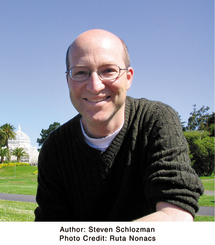
This week on MonsterTalk, we interview Harvard medical doctor Steven Schlozman, author of The Zombie Autopsies and get inside the walking dead to discuss a plausible mechanism for the zombie apocalypse. It took a lot of guts, but in this episode we discuss:
- How did a doctor become
interested in zombies? - What can zombies teach us
about neurology? - Which is scarier:
infection or cannibalism? - Why don’t zombies have sex?
- What’s the best way to slice a brain?
- What do brains taste like?
- Plus much, much more!
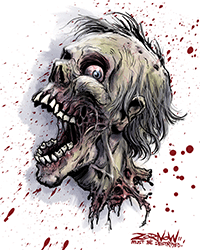
by Jeff Zornow
Suggested Reading
(for younger MonsterTalk fans)
The Zombies Guide to the Human BodyA great book for kids that teaches
anatomy with zombies.https://player.vimeo.com/video/21310345?title=0&byline=0&portrait=0
The Zombie Autopsies with Steven Schlozman, MD from GCP authors on Vimeo.
Music
- Intro: A segment of Figment by Simon Park, from the album: Dawn of the Dead: The Unreleased Incidental Music
- Monstertalk Theme: Monster by Peach Stealing Monkeys
- First Segment Music: Le Fétichisme Dans L’amour by Symbion Project, used with permission.
MTArchivist
0