Regular Episode
030 – UNMASKING THE NINJA
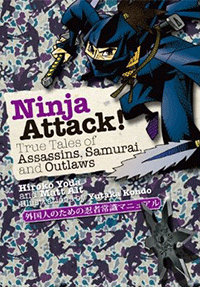
The episode’s main guest is Matt Alt, a Tokyo-based writer, translator, and co-author — along with his wife and writing partner Hiroko Yoda — of 📚 Ninja Attack: True Tales of Assassins, Samurai and Outlaws 💵. Matt and Hiroko run a company specializing in English-language versions of Japanese entertainment (video games, primarily), but their side passion is Japanese cultural history — yokai, and now ninja. Their interest was sparked not by martial arts fandom, but by the yawning gap between pop-culture ninja and the historical record.
⚔️ Who Were the Real Ninja?
Forget the shadowy clans perched on mountain fortresses. Matt explains that the historical ninja were, almost without exception, farmers — commoners from remote alpine communities in the Iga and Kōka regions of central Japan. Their tradecraft emerged from the brutal realities of the Sengoku Jidai (Era of Warring States, roughly 1467–1615): isolated villages that couldn’t rely on central authority to protect them armed themselves, practiced guerrilla tactics in the surrounding mountains, and over generations honed those techniques into what eventually became known as ninjutsu.
Crucially, ninja were not samurai. In a rigidly hierarchical society where only aristocrats were permitted to carry swords, a farmer found with a blade would be killed on the spot. This forced ninja to adapt farming and carpentry tools as covert weapons — and to blend in completely as ordinary working people. Matt’s analogy for their modern equivalent: private military contractors like Blackwater (now Academi) — skilled, for-hire, pragmatic, and decidedly unglamorous.
🕵️ Spies First, Assassins Second
The popular image of ninja as black-clad assassins obscures their primary historical function: intelligence gathering. In an era without telecommunications, knowing the outcome of a distant battle or the troop strength of a rival warlord was enormously valuable — and someone had to go find out, without being noticed. Matt describes ninja as essentially selling information to whichever warlord could pay (often not in gold, but in the promise of non-invasion and political protection).
By the late 1500s, ninja clans had also begun operating as mercenary battlefield units, but Matt stresses that the “hidden assassin” role was far less common than espionage. He cites the real Hattori Hanzō — yes, the inspiration for the Kill Bill character — as an example: the historical Hanzō was a spymaster and political operator who used his Iga and Kōka connections to protect the future Tokugawa Ieyasu after an assassination attempt, earning lasting favor once Tokugawa became Shogun. Ninja from those clans went on to staff the first police force of Edo (modern Tokyo) — and their guardhouse still stands on the imperial grounds.
A wry corollary: the most successful ninja, by definition, left no historical trace. As Matt notes, there’s a saying that if you have a reputation, you’re at best a chūnin — a mid-level practitioner. The ones history knows about are, almost by definition, the ones who got caught or got famous.
🥷 The Black Suit: A Theatrical Invention
So where did the iconic all-black costume come from? Matt points to the ukiyo-e master Hokusai — the artist behind The Great Wave off Kanagawa and a credited pioneer of manga — who in the early 19th century drew a ninja figure dressed in clothing strongly reminiscent of the stagehands in kabuki and nō theater. Those stagehands wore all-black outfits precisely so audiences would visually ignore them onstage — a kind of theatrical invisibility.
Hokusai fused this theatrical convention with the concept of a secret operative, and the image stuck. The historical reality is murkier: true black dyes were largely unavailable in feudal Japan. If ninja wore dark clothing on a nighttime mission, it was almost certainly a deep indigo — which, Matt notes, was also believed at the time to repel venomous animals. And in daylight, a ninja’s best camouflage was simply looking like everyone else.
🔧 Weapons, Tools, and Practical “Magic”
Many of the exotic ninja weapons that fill martial arts catalogues turn out to have mundane origins. The shuriken (throwing star) traces to a nail-pulling tool used by carpenters in the Togakushi region — the central hole is functional, not decorative. Carrying such a tool raised no suspicion. Similarly, the so-called ninja sword differed from a samurai sword precisely because a farmer caught with a proper samurai blade would have been executed.
Supernatural ninja powers get a more skeptical treatment. “Disappearing” was sleight-of-hand: smoke pots (not grenades — ninja explosives weren’t that sophisticated), decoy movements, or simply throwing a garment in a pursuer’s face to break their line of sight. Pepper thrown in an opponent’s eyes isn’t magic; it’s technique. Matt draws a straight line from these methods to the disorientation tactics used by clandestine operatives today. The MythBusters episode testing ninja legends (arrow-catching, water-walking) comes up briefly — Matt’s view is that those abilities were never part of the actual historical toolkit; they’re artifacts of later Japanese pop culture.
On body requirements: historical ninjutsu texts (authenticity disputed) suggest ninja were expected to weigh no more than a 60-kilogram sack of rice, to allow concealment in ceiling rafters and tight spaces. Diet was also regulated — no garlic or strongly aromatic foods, to prevent detection by scent.
👩 Female Ninja and the Walking Maidens
Yes, there were female operatives. The warlord Takeda Shingen maintained a covert intelligence network that included a unit of women — orphaned girls trained from childhood in the ways of the world and deployed as information-gatherers. Matt describes them as the kunoichi equivalent of a government asset (the “Walking Maidens”), operating primarily through proximity and social access — pillow talk, overheard conversations — though some evidence suggests they also carried concealed weapons.
📺 Ninja in Pop Culture
Matt offers his own pop-culture touchstones, distinguishing the historically grounded from the gloriously absurd:
– Kagemusha (1980, dir. Akira Kurosawa) — figures many Western viewers read as farmers are actually ninja gathering battlefield intelligence for their lord.
– Shōgun by James Clavell — includes a noted ninja attack sequence.
– Elektra: Assassin and Ronin by Frank Miller.
– Snake Eyes and Storm Shadow from G.I. Joe.
– Naruto — whose characters, Matt notes, were largely recycled from Edo-period (1800s) ninja story archetypes, creating a direct bridge between 19th-century Japanese pop culture and the 21st century.
The modern ninjutsu tradition is represented primarily by Dr. Masaaki Hatsumi, head of the Togakure School of Ninjutsu — the only lineage still actively taught. Matt is respectful of the tradition but gently skeptical of anyone who approaches it expecting to become an invincible warrior. He also mentions Stephen Hayes as another prominent Western teacher of ninjutsu.
📚 Further Reading
– 📚 Ninja Attack: True Tales of Assassins, Samurai and Outlaws 💵 by Matt Alt and Hiroko Yoda
🔗 Related Links
– Sengoku Jidai (Era of Warring States)
– Ninjutsu
– Hattori Hanzō (historical)
– Katsushika Hokusai
– Shuriken
– Masaaki Hatsumi and the Bujinkan (Togakure School)
– Takeda Shingen
– Kappa (Japanese folklore)
Note: ads inserted into the distributed audio alter the timestamps in unpredictable ways, so timing references in these notes are approximate.
This week the hosts of MonsterTalk take on the mysterious, mystical, legendary menace of the ninja! Should ninjas be considered monsters? They come out at night, have mysterious powers and use fear and lethality to wreak havoc. But to be sure, we Ask a Ninja. Also, we interview Matt Alt, co-author (with Hiroko Yoda) of Ninja Attack: True Tales of Assassins, Samurai and Outlaws.
In this episode
- What are/were ninjas? What was their purpose?
- How did they make the transition to SuperHero?
- How were they different than samurai?
- What did real ninja look like? Where did black-suits come from?
- What were some of the super-secret ninja equipment? (shuriken, etc.)
- What are some of the myths and legends surrounding ninjas, esp. supernatural powers and abilities?
- What did it cost to hire a Ninja?
- What were “ninja spells?”
- Plus much, much more!
(2021 update: Since recording this update the “ninja” behind Ask a Ninja has produced a book in the same comic tone as their persona.)
Music
- Monstertalk Theme: Monster by Peach Stealing Monkeys
MTArchivist
0