Uncategorized
#210 – Going Viral: The Covid19 Monster
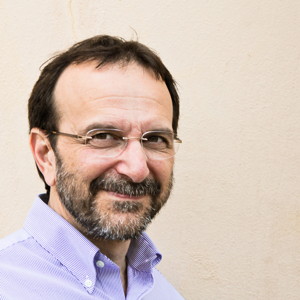
Dr. Racaniello has been podcasting science since 2008 (one year ahead of MonsterTalk), does not monetize his YouTube channel, and would give away his virology textbook if he’d written it alone. He is, in his own words, a teacher first and a researcher second — which makes him an ideal guest for a show that has spent a decade trying to make scary things less scary.
🦠 Viruses 101: What Makes Them Different
Before diving into COVID-19 specifically, Dr. Racaniello lays the groundwork. A virus is, at its most basic, a piece of nucleic acid (DNA or RNA) wrapped in protein and sometimes a membrane. Unlike bacteria, it cannot replicate on its own — it must invade a host cell to make copies of itself. That’s why antibiotics, which target bacterial processes, are useless against viral infections. Bacteria can divide happily in a broth culture; put a virus in the same broth and nothing happens.
Coronaviruses are a family of RNA viruses whose surface proteins, visible under an electron microscope, form a crown-like halo — hence the name (corona is Latin for crown, and no, it has nothing to do with the beer). Before 2003, the known human coronaviruses caused nothing worse than mild colds. Since then, three epidemic strains have emerged: SARS-CoV-1 (2003), MERS-CoV (2012), and now SARS-CoV-2. As a fun fact to deploy at the next party (if parties ever happen again): the estimated number of virus particles on Earth is 1031 — placed end to end, they would stretch 200 light-years into space.
📊 Case Fatality Rates: Why the Numbers Vary
At the time of recording, headline fatality figures ranged from under 1% to over 3%, and the variation was causing significant public confusion. Dr. Racaniello explains that the case fatality ratio (CFR) is not an intrinsic property of the virus — it is a reflection of healthcare capacity. Roughly 83% of infections were mild; of the remaining 17%, only a fraction required hospitalization, and an even smaller fraction required ICU care. When ICU capacity is overwhelmed (as it was in Wuhan and later in Italy and Iran), more patients die. South Korea, which recognized the threat early, built hospital capacity, and rolled out diagnostic tests quickly, maintained a CFR below 1%.
The U.S. response, Dr. Racaniello says bluntly, “has been horrible.” With only around 2,500 confirmed U.S. cases at the time of recording, he estimated the true infection count was between 25,000 and 250,000 — invisible because diagnostic testing had barely started. The country had 95,000 ICU beds; a million cases with even a 1% severe-illness rate would strain that supply severely.
🔬 Origins, Transmission, and Myths
The genetic sequence of SARS-CoV-2 is closely related to a bat coronavirus sampled in 2013, roughly 1,000 miles outside of Wuhan. Like SARS-CoV-1 (which passed from bats through civets and raccoon dogs at live-animal markets), SARS-CoV-2 almost certainly entered humans via an intermediate animal host — pangolins and snakes were early suspects, but neither was confirmed. The lab-escape hypothesis, Dr. Racaniello explains, is inconsistent with the genome sequence: the virus carries evolutionary signatures that no human engineer would know to include. “The best genetic engineer is nature,” he says. “Given enough time, nature can do anything.”
Transmission occurs primarily via respiratory droplets (which, for this virus, fall to the ground within roughly six feet in still air) and via contact with contaminated surfaces. A then-forthcoming paper had tested viral survival on copper, cardboard, stainless steel, and plastic; the bottom line is that the virus persists for hours, not the days being rumored on social media. Regular surface cleaning and frequent handwashing meaningfully reduce risk.
Two circulating myths get direct rebuttals: the claim that there are two strains with different lethalities (there is zero evidence of any difference in pathogenicity between the genomic variants observed in Wuhan and Washington State — the differences reflect normal founder effects in RNA virus evolution) and the claim that reinfection confers no immunity (extrapolating from MERS data, reinfections appear milder, and some reported “reinfections” may simply reflect false-negative PCR tests used to authorize hospital discharge).
💉 Vaccines: Why 18 Months Is Already a Miracle
Blake asks why a vaccine can’t be rushed out in weeks. Dr. Racaniello walks through the full pipeline: preclinical animal studies → Phase I safety trials (20–30 volunteers, ~6 months) → Phase II efficacy trials (vaccinated vs. control group, at least a year) → Phase III large-population trials. For SARS-CoV-2, there was the additional complication that mice are not naturally infectable with the virus, meaning the usual animal-protection data didn’t exist when the NIH pushed an RNA-based candidate into Phase I. He is cautiously skeptical: “No vaccine has ever been developed in less than 18 months. Every time I hear a politician say anything less, I cringe.”
The vaccine hesitancy problem compounds the timeline issue. Half of Americans don’t take the annual flu vaccine — a vaccine for a disease that had already caused 15 million U.S. infections and 8,000 deaths in the current season at the time of recording. Dr. Racaniello predicts that even if a COVID-19 vaccine is developed, uptake will erode once the immediate fear fades. He also notes the structural problem: between SARS-1 and SARS-2, pharmaceutical companies saw no profitable market and invested in neither a broadly protective coronavirus vaccine nor a coronavirus antiviral. The nonprofit CEPI (Coalition for Epidemic Preparedness Innovations) is working to fill that gap by funding the kind of preparedness research that for-profit companies won’t touch.
🏛️ Preparedness, Politics, and Polio
The conversation turns to systemic failures. Dr. Racaniello is unsparing: the U.S. had the knowledge and technology to be ready after SARS-1 in 2003. Instead, the pandemic response infrastructure was allowed to atrophy. He singles out the dismantling of the White House pandemic response team and the cancellation of the PREDICT program (which monitored viruses in wildlife) as specific, avoidable policy failures. Dr. Anthony Fauci gets a shout-out as a longtime Cassandra who has repeatedly warned Congress about underfunding — and been repeatedly ignored.
Dr. Racaniello draws a historical parallel to the arrival of smallpox and measles in the Americas after European contact — a naive population encountering a virus to which it had zero immunity, with catastrophic results. SARS-CoV-2 represents the same dynamic at global scale, albeit with lower lethality.
The episode closes with a brief reflection on polio, which Dr. Racaniello has studied since 1979. He notes that poliovirus was first identified in 1908, and the first effective vaccine didn’t arrive until 1954 — a 46-year gap. School closures triggered by COVID-19 were, at time of recording, the first such widespread closures in the U.S. since polio epidemics in the 1950s. His message: understanding viruses — their biology, their history, their actual risks — is the most reliable antidote to the fear they generate. “I teach virology,” he says, “mainly so students won’t be afraid at the next outbreak.”
📚 Further Reading
– 📚 They Knew Too Much About Flying Saucers 💵 by Gray Barker (Blake’s Audible recommendation this episode — a foundational text of UFO lore and Men in Black mythology)
– 📚 The Frighteners 💵 by Peter Laws (also mentioned as an Audible pick)
🔗 Related Links
– WHO: COVID-19 Information Hub
– CDC: COVID-19 Resources
– CEPI — Coalition for Epidemic Preparedness Innovations
– Microbe.TV — Dr. Racaniello’s podcast network (This Week in Virology, This Week in Microbiology, This Week in Parasitism, This Week in Evolution, This Week in Neuroscience, and Immune)
– Dr. Racaniello’s YouTube channel (virology course lectures, free and unmonetized)
– Virology Blog — Dr. Racaniello’s weekly virus commentary
– SARS-CoV-2 (Wikipedia)
– Polio Vaccine — History and Development
– 1918 Influenza Pandemic
– RNA-based Vaccines
Note: ads inserted into the distributed audio alter the timestamps in unpredictable ways, so timing references in these notes are approximate.
Download MP3 (Right-Click, Save As)
Discussing COVID19 with virology expert Vincent Racaniello.
Best place to get Covid19 Information:
WHO (World Health Organization) and CDC (Center for Disease Control) sites for the latest factual information on this pandemic.
Non-Profit Vaccine Effort: https://cepi.net/
Tony Fauci – NHI health advisor to US
Master site for Vincent’s network:
Shows from the Microbe.TV network:
IMMUNE *
TWiEVO: This Week in Evolution *
TWiM: This Week in Microbiology *
TWiN: This Week in Neuroscience *
TWiP: This Week in Parasitism *
YouTube:
Vincent’s Video Channel
Blake Smith
0
Tags :