Uncategorized
#207 – The Guyra Ghost
📍 Where (and What) Is Guyra?
Guyra is a small rural town in the New England region of New South Wales, situated roughly halfway between Sydney and Brisbane, at an elevation of about 4,400 feet — one of the highest towns in Australia. Karen went to university in nearby Armidale and has personal connections to the area. The name Guyra is thought to derive from an Aboriginal word meaning either “fishing place” or “white cockatoo” — the town itself, she notes, is best known for farming, dairy, mining (gold, silver, and antimony), and its annual Lamb and Potato Festival. Oh, and poltergeists. Mostly the poltergeists.
🪨 The Events of April 1921
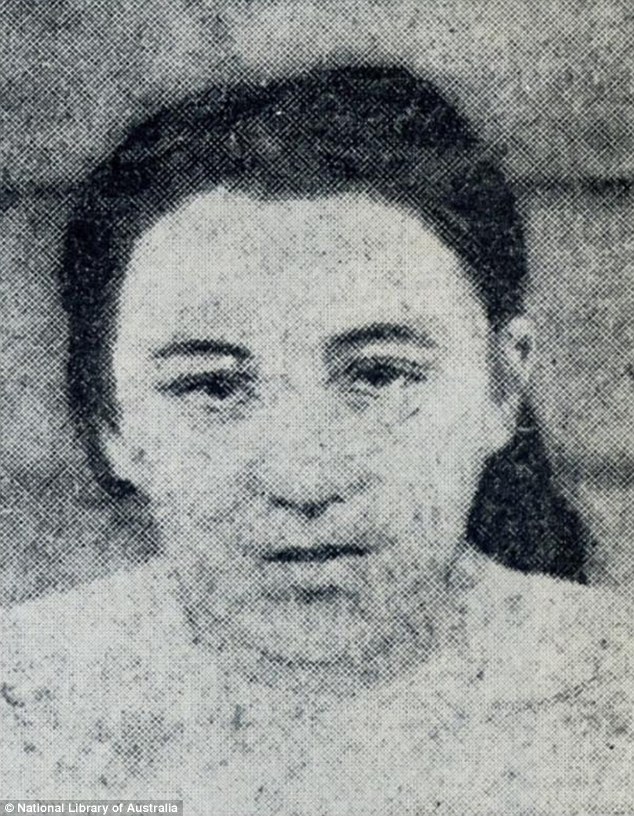
Everything began on April 1, 1921 — a detail that did not go unnoticed — when the Bowen family of a four-room weatherboard cottage on the outskirts of Guyra awoke to a shower of stones crashing onto their tin roof and flying through their windows. The family consisted of council worker William Bowen, his wife Catherine, and their three children, the eldest of whom was a 12-year-old girl named Minnie Bowen.
The phenomena continued through April and beyond: rocks and stones of all sizes — up to brick-sized — pelted the house night and day, smashing every window in the cottage. Blake points out that a tin (corrugated iron) roof amplifies even small impacts dramatically, making the experience genuinely alarming. Neighbors’ homes were also struck. The Guyra police were called almost immediately, and officers personally witnessed the activity. Night after night, crowds formed a cordon around the house — first 40 people, then 80 — with floodlights trained on the building. The activity continued regardless.
👻 Theories, Spiritualists, and a Lost Film
A number of explanations circulated in real time. Minnie reported that a strange, unidentified man had chased and pelted her with rocks in a nearby paddock the day it all began — a claim no one else could corroborate. Police entertained the theory of local larrikins (an Australian term for boisterous, mischievous young men) or even a land-grab scheme by neighbors, given that housing was scarce in the area at the time. But this was also the immediate post-WWI height of Spiritualism, and many in the community were convinced the disturbances had a supernatural origin.
A local spiritualist named Ben Davey visited the family and discovered that Minnie had recently lost her half-sister, May Hodder — a 21-year-old who had died of apparent congenital heart failure three months earlier, leaving behind an 18-month-old baby named Clifford (whose paternity was itself the subject of small-town gossip). Davey encouraged Minnie to communicate with May’s spirit, and soon knocks were being interpreted as messages — culminating in a suspiciously tidy conversation in which May reportedly told Minnie to tell their mother not to worry, that she was happy and would watch over them. Karen reads this moment as a significant tell: Minnie, under mounting pressure, had effectively provided a narrative frame for the chaos.
A businessman named Harry J. Moores — a close friend of both Sir Arthur Conan Doyle and Robert Louis Stevenson — also visited. (Various secondary retellings have since conflated Moores with Doyle himself, a game of telephone Karen traces in her article.) Moores described Minnie as a clever, imaginative girl.
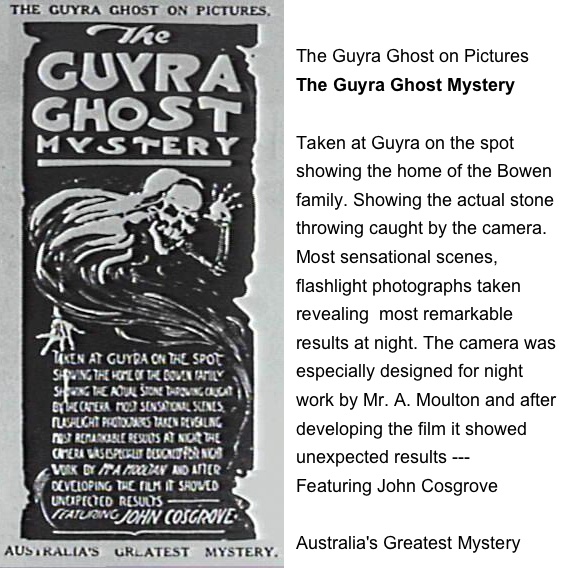
Most remarkably, while events were still unfolding, a comedian and stunt artist named John Cosgrove filmed a contemporary comedy on location called The Guyra Ghost Mystery — described at the time as “five reels of laughter,” with a character parodying Moores under the name “Sherlock Doyle.” The film was a box-office disappointment and is now considered lost. Karen puts out a call: if any listener can track down surviving reels or documentation, it would be a significant find.
🏘️ Community Panic and Copycat Cases
The Guyra Ghost didn’t stay contained to the Bowen household. An 82-year-old woman named Mrs. Doran was found wandering a paddock carrying potatoes and speaking about returning to Ireland — likely dementia, Karen suggests, but her eventual death (her body and clothing were found in a nearby river) was attributed by locals to the ghost’s malevolent spread. Residents armed themselves with guns; accidents followed, including at least one child shot in the head (apparently surviving with a bullet lodged in the skull). Livestock were shot. The town, Karen observes, was experiencing a kind of collective heightened alertness in which ordinary mishaps were absorbed into the poltergeist narrative — a dynamic familiar from vampire panics and other historical moral contagions.
The story was covered across Australia and internationally, and copycat “hauntings” broke out from Sydney to Melbourne to Brisbane — several of them ending with the original complainants caught red-handed throwing rocks themselves.
🔍 Resolution — Such As It Is
New South Wales state constable Constable Hardy was sent from Sydney, skeptical from the outset. Together with local Sergeant Ridge and a neighbor, he conducted a stakeout and claims to have directly observed Minnie throwing rocks at the house. Minnie later confessed to some of the activity — she said she had been tapping a stick against walls and throwing rocks, citing a desire to scare her sister-in-law.
When public pressure made Guyra intolerable, Minnie was sent to Glen Innes — and the phenomena followed. Activity continued there from May through August before finally ebbing away. She was eventually sent back to Guyra, and the case quietly closed.
Karen’s skeptical read: Minnie almost certainly originated the activity, possibly as a prank that snowballed catastrophically out of her control. The context matters — she was a 12-year-old under serious stress, responsible for raising her half-sister’s infant, coping with a complicated family situation, and likely overwhelmed when her small prank became a national spectacle. Karen reads Minnie’s silence on the subject for the rest of her life not as guilt but as understandable self-protection. Minnie died in 1970, aged approximately 62, struck by a vehicle while crossing a road outside Armidale. Her younger sister Mary Ellen Jones — the last surviving sibling — died in 2015 at age 104, and her passing was marked by the local newspaper as the close of a chapter of Guyra history.
Today the local football team is called the Guyra Ghosts. The original house still stands but has been significantly renovated — in part, locals say, to deter legend-trippers. Several other properties in the area are also falsely claimed online to be the original site.
🗞️ The Case in Context
Karen notes the Guyra Ghost predates better-known poltergeist cases including the Enfield Poltergeist and the Columbus Poltergeist (involving Tina Resch), and fits the common pattern noted by parapsychologist William Roll and others: a young adolescent at the center of the activity, phenomena that appear to follow that individual when removed from the scene, and a mix of genuine belief, social pressure, and probable deception that resists clean resolution. The case is documented extensively through contemporary newspaper articles, many available through the Australian digitized archive Trove.
Karen also mentions two short stories she wrote inspired by the research: Welcome Home (directly inspired by the Guyra Ghost) and Room for One More (inspired by the Lord Dufferin omen legend), both available on Amazon Kindle. A future MonsterTalk episode on Lord Dufferin is promised.
📚 Further Reading
– Karen Stollznow’s article on the Guyra Ghost: Fortean Times, January 2020 issue
– 📚 The Witch: A History of Fear, from Ancient Times to the Present 💵 by Ronald Hutton (Blake’s Audible recommendation for this episode)
– 📚 Ghostland: An American History in Haunted Places 💵 by Colin Dickey
🔗 Related Links
– Guyra, New South Wales — Wikipedia
– Trove — National Library of Australia digitized newspaper archive
– Enfield Poltergeist — Wikipedia
– Columbus Poltergeist (Tina Resch) — Wikipedia
– William G. Roll, parapsychologist — Wikipedia
– Recurrent Spontaneous Psychokinesis (RSPK) — Wikipedia
– Spiritualism — Wikipedia
– Lord Dufferin / “Room for One More” legend — Wikipedia
Note: ads inserted into the distributed audio alter the timestamps in unpredictable ways, so timing references in these notes are approximate.
Karen tells us about her research into the strange 1921 case known as “The Guyra Ghost.” Rocks thrown, windows broken, strange knockings, spiritualists, and more! Her write up of this investigation appears in the January 2020 issue of Fortean Times.
Discussed in this episode:
The Guyra Ghost Mystery (1921) – lost contemporary comedy film shot on location

Related:
Karen’s two recent short stories:
Inspired by the events of The Guyra Ghost: Welcome Home
Inspired by the tale of Lord Dufferin’s omen: Room for One More
Blake Smith
0
Tags :