Regular Episode
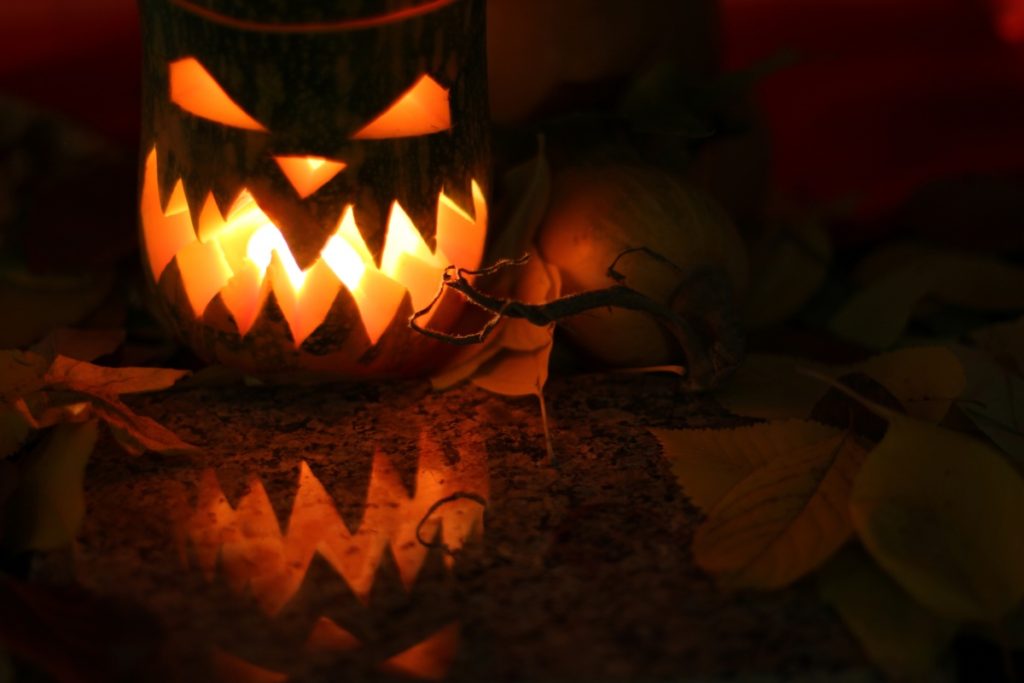
203 – Will o’ The Wisp
Blake notes in his intro that one thread they meant to cover but didn’t was the folk belief that phantom blue flames mark the location of buried treasure — a tradition that shows up, among other places, early in 📖 Dracula, when Jonathan Harker’s coachman makes a peculiar detour toward lights flickering in the dark Transylvanian countryside.
🌿 Will-o’-the-Wisps: Folklore and Etymology
Jerry traces the phenomenon across cultures, noting that virtually every tradition on Earth has its own name for mysterious nocturnal lights. The medieval Latin term was ignis fatuus (“fool’s fire”), which survives in variants like feu follet, foxfire, and the hinky-punk of English West Country lore. The lights are consistently associated with bogs, marshes, moorlands, and old-growth forests — and the consistent narrative warning is: don’t follow them.
A rich primary source, Jerry argues, is the Denham Tracts — collections of English folklore compiled by Yorkshire merchant Michael Aislabie Denham between roughly 1892 and 1895. The Tracts are notable partly because J.R.R. Tolkien drew on them for The Hobbit and The Lord of the Rings — including a famous scene in the Dead Marshes where Gollum warns Sam and Frodo not to follow the candle-lights into the water. Jerry also suggests the word “hobbit” itself may trace to the Tracts, via the hobgoblin tradition and the interchangeable folk names Rob/Hob (as in Robin Goodfellow).
Karen raises the related tradition of corpse candles (or corpse lights) — omens of death rather than simple lures — which she knew from Australian usage and Jerry recognizes from western Appalachian relatives near the Shoals in Alabama. References to spook lights also appear in at least one of the Icelandic sagas, suggesting the phenomenon’s reach across northern European tradition.
🔬 Natural Explanations (and Their Limits)
The hosts and Jerry work through the standard candidate explanations, applying varying degrees of skepticism to each:
– Swamp gas / methane: The go-to debunking explanation, first proposed by Alessandro Volta in 1776. Jerry, who grew up around genuine swampland, is unimpressed: methane bubbles can be collected and ignited, but they don’t spontaneously combust in the open air, form plasma spheres, and float around for half an hour. It doesn’t explain non-swampy locales either.
– Bioluminescence / foxfire: Foxfire — the cold glow of bioluminescent fungi — is real, genuinely eerie in total darkness, and capable of appearing at various heights in trees. Fireflies and glow worms round out the bioluminescent candidates. Blake mentions that luminescent barn owls roosting in old-growth trees have been proposed (though unproven) as an explanation in at least one famous case.
– St. Elmo’s Fire: Named for St. Erasmus, patron of sailors, St. Elmo’s Fire is a well-documented plasma discharge caused by static electricity building up around conductive points — ship mastheads, aircraft propellers (the famous WWII “foo fighters”). Benjamin Franklin recorded the phenomenon in his pre-storm experiments.
– Ball lightning: Possibly real, certainly rare, and only recently partially reproducible in the lab. A well-documented historical case is the Great Thunderstorm of 1638 at Widecombe-in-the-Moor, Dartmoor, where a fireball struck a church and killed four people. Jerry describes a possible childhood encounter — a glowing light that zipped across a polished wooden floor during a Georgia thunderstorm — though he personally favors a reflective optical explanation over genuine ball lightning.
– Static electricity misidentification: Jerry shares two recent field examples: ghost hunters at Gettysburg whose EMF detectors were spiking off a large iron trunk that the group had inadvertently charged up with static, and a similar effect in a humid train tunnel. Entertaining and instructive in equal measure.
– Optical / atmospheric effects: The Marfa lights and the Min Min lights of the Australian outback are both consistent with Fata Morgana mirages — distant headlights or other light sources refracted above the horizon by layers of air at different temperatures. Jerry saw a striking personal example as a child in West Texas: the town of Littlefield, some 35–40 miles away, appearing inverted and floating in the sky along the Blackwater Draw. The catch: this explanation works fine for modern sightings but cannot account for pre-automobile, pre-train reports.
💥 The J. Allen Hynek Swamp Gas Fiasco
One of the episode’s more entertaining detours concerns J. Allen Hynek, the astronomer hired by the U.S. government to investigate UFO reports who began as a skeptic and gradually shifted toward taking the phenomenon seriously. During a 1966 flap of UFO sightings near Ann Arbor, Michigan, Hynek was pressed into giving an unprepared press conference and mentioned — carefully, he later insisted — that swamp gas was one possible explanation among several. He reportedly watched journalists circle the phrase “swamp gas” and run for the phones. The result: “swamp gas” became permanent cultural shorthand for government UFO cover-ups, and Hynek spent the rest of his career qualifying the remark. Blake draws a parallel to the contemporaneous eDNA Loch Ness research, in which a passing mention that giant eels weren’t ruled out became “giant eels explain Nessie” in press coverage.
🇮🇸 Jerry’s Iceland Encounter
The episode’s centerpiece is Jerry’s firsthand account of seeing an unexplained light near Keldur — one of the oldest continuously occupied farmsteads in Europe, mentioned in the Njáls saga — during a January trip to Iceland with his wife Vicki. A bartender in Reykjavík had told Jerry that the local tradition of huldufólk (hidden people / elves) was not metaphorical: the “elves” were balls of light he had personally seen moving along ridges and crater rims at the crystal cave where he hosted dinners.
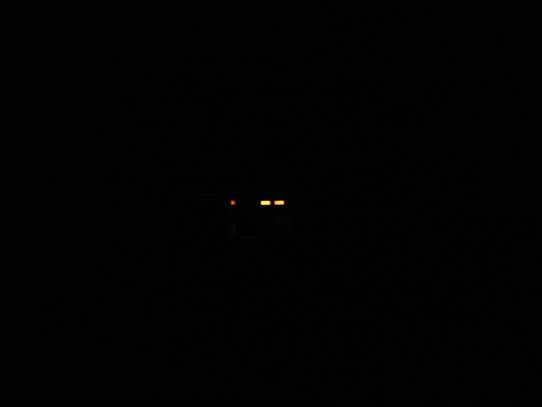
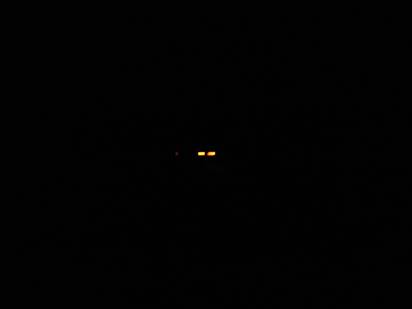
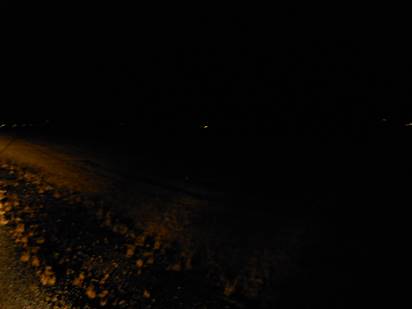
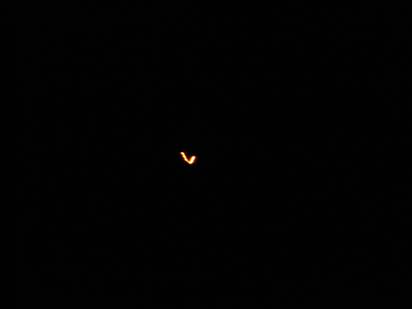
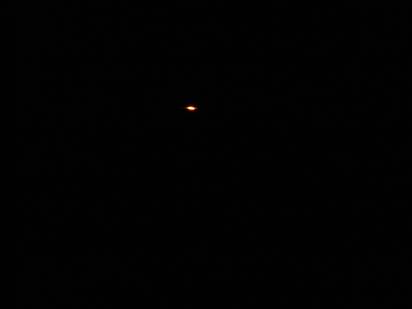
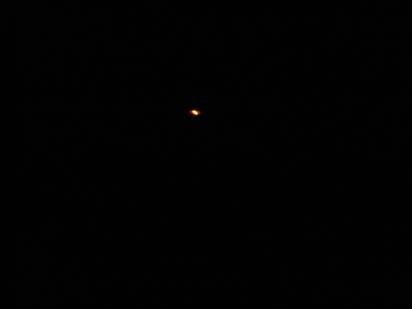
Driving toward Keldur late at night, Jerry and Vicki encountered a basketball-sized sphere of bright orange light approximately three to four feet off the ground, close enough to illuminate the interior of their car and cast a shadow underneath it — behaving, Jerry stresses, like a burning opaque object rather than a diffuse light source. It moved with the wind at roughly the speed of a drifting helium balloon, blinked on and off, passed through a tall reindeer fence without interruption, and was observed intermittently over roughly an hour and a half. The following morning they returned in daylight and found nothing — no structure, no burn mark, no source — at the location where the light first appeared.
Jerry’s preferred explanation is a form of mechanoluminescent plasma produced by geological stress — Iceland being about as geologically active a setting as exists on Earth. He notes that the piezoelectric effect in quartz-bearing rocks is well established, and that more recent laboratory work on mechanoluminescence has shown that materials under extreme structural stress can emit photons — though scaling that up to explain a sustained, self-propelled plasma ball outdoors remains an unsolved problem.
🏔️ Famous Light Locations: Brown Mountain, Min Min, and Silver Cliff
The conversation ranges across several well-known “mystery light” locations:
– Brown Mountain Lights (North Carolina): Jerry has investigated in person. Most lights visible from the standard overlook are identifiable with patience — ATVs, hikers, aircraft — but he and his companions observed one genuinely anomalous light that brightened sharply, lifted off the mountain, and vanished before he could photograph it. The mountain’s deep-woods remoteness and the fleeting, seconds-long duration of the anomalous events have so far defeated systematic investigation. Jerry and Blake float the idea of a coordinated MonsterTalk listener investigation using teams at multiple positions.
– Min Min lights (Queensland, Australia): Documented in print as early as 1838 and regularly observed from around 1918, associated with the settlement of Min Min between Boulia and Winton. Aboriginal tradition predates European contact. Karen notes that Aboriginal accounts suggest sightings increased after colonization — possibly cross-pollination of British fairy-light folklore with existing Indigenous traditions.
– Silver Cliff Cemetery (Colorado): Karen discusses her research for her book 📚 Haunting America 💵, tracing the “ghost lights” tradition back to a 1950s newspaper item in the Wet Mountain Tribune in which teenagers — and the newspaper itself — described the lights as reflections off polished marble tombstones. The National Geographic citation often invoked as validation turns out to be a brief, non-committal passage in a much longer article.
– Piezoelectric claims at the Stanley Hotel (Estes Park, Colorado): A ghost-tour staple, but Karen notes that a USGS geological survey of the site found the bedrock was simply not composed of the quartz-bearing rock needed to produce piezoelectric effects — just, as Blake memorably summarizes, a load of schist.
📖 Ghost Lights in Fiction
Jerry recommends F. Paul Wilson‘s novella The Barrens, set in the New Jersey Pine Barrens and first collected in 📚 Cthulhu 2000 💵, as the best fictional treatment of mystery lights he knows. Blake briefly connects the jack-o’-lantern tradition — from turnip lanterns to American pumpkins — directly to will-o’-the-wisp lore, and notes that the burning swamp sequence in 🎬 The Princess Bride 💵 seems heavily indebted to the same imagery. The hosts also discuss Charles Dickens’s 1866 ghost story The Signal Man in connection with the many ghost-light legends built around headless railway workers carrying lanterns — a possible pop-culture vector for spreading that particular variant of the lore.
📚 Further Reading
– 📖 Dracula by Bram Stoker (the buried-treasure blue-flame passage appears in Chapter 3)
– 📚 Haunting America 💵 by Karen Stollznow (includes original research on Silver Cliff Cemetery)
– 📚 Cthulhu 2000 💵 ed. by Jim Turner — contains F. Paul Wilson’s The Barrens
– 🎬 The Adventures of Ichabod and Mr. Toad 💵 (Disney animated film — Jerry and Vicki’s annual Halloween tradition)
– 🎬 Sleepy Hollow 💵 directed by Tim Burton
Note: ads inserted into the distributed audio alter the timestamps in unpredictable ways, so timing references in these notes are approximate.
This episode we look at Will O’ The Wisp, Ghost Lights, Ball Lightning and all manner of glowing monstrous and bizarre lucent phenomena. Joining us for the discussion is researcher, Jerry Drake. We discuss some quite peculiar case details and Jerry has sent me some photos that I’ve attached here in the show notes. Let us know what you think over at the MonsterTalk Facebook Group. Come on over and let Jerry (and us) know what you think.
Blake Smith
0
Tags :