Uncategorized
#201 – Serial Killers
A content note up front, consistent with what the hosts say at the top: the crimes discussed are graphic and disturbing. Listener discretion is advised.
🔪 Defining the Serial Killer
The term “serial killer” entered law-enforcement vocabulary in earnest in the early 1970s, when Robert Ressler, a special agent with the FBI‘s Behavioral Science Unit, coined the phrase “serial homicide.” Ressler and fellow agent John Douglas later partnered with criminologist Ann Burgess to interview 38 convicted killers, producing the foundational study Sexual Homicide: Patterns and Motives.
The original FBI definition required three or more victims, a cooling-off period between killings, and an “abnormal psychological gratification” — initially understood as sexual in nature. Stacy notes the definition has since been broadened: two or more victims now qualify, and motivations such as anger or financial gain have been added. He finds this dilution problematic, since it blurs the line between the classically understood serial killer and, say, a contract killer. The conversation also distinguishes serial killers from spree killers (multiple victims across an extended geography in a short time) and mass murderers (multiple victims in a single tightly contained event).
A recurring theme throughout the episode — rooted in Stacy’s domestic-violence background — is power and control. Serial killers, he argues, represent the extreme end of the same pathology that drives abusive relationships: the desire to exercise absolute dominion over another person’s life and death, sometimes described by the killers themselves as “being like a god.”
🧠 Organized, Disorganized, and the Psychology of Violence
The FBI’s crime-scene typology divides offenders into organized (methodical, high-functioning, low-risk behavior) and disorganized (impulsive, chaotic, often psychotic) categories, with a “mixed” designation for those who don’t fit neatly.
Richard Chase — the “Vampire of Sacramento,” responsible for six murders in California in 1977–78 — is the textbook disorganized offender. He believed his blood was turning to powder and injected animal blood into his veins; he killed in the middle of the day, tried random door handles (unlocked = invitation), used whatever weapons were on hand, made no effort to conceal bodies, and was caught partly because he walked into an acquaintance while covered in a victim’s blood. His mother was a diagnosed schizophrenic; Chase himself was found competent to stand trial despite his evident psychosis, was convicted, hoarded his medication, and died by suicide in prison. The docudrama Rampage is mentioned as a reasonably faithful fictionalized account of his case (not to be confused with the 2018 film with Dwayne Johnson).
By contrast, Dennis Rader — the BTK Killer (Bind, Torture, Kill), who murdered 10 people in Kansas between 1974 and 1991 and was not caught until 2005 — is the organized offender: meticulous, patient, evidence-conscious. His capture is a case study in ego overriding caution: furious that a lawyer planned to write a book about the BTK killer without his input, Rader began communicating with law enforcement through elaborately staged packages. When he asked whether sending a floppy disk would allow investigators to identify him and was told no, he sent one — containing deleted metadata linking the disk to his Christ Lutheran Church computer, where he served as congregation president.
The conversation is clear that most serial killers do not meet the legal standard of insanity. They tend to cluster diagnostically around antisocial personality disorder and borderline personality disorder, but Stacy pushes back on pop-culture reflexes: being a sociopath does not make someone a killer, and most serial killers are not the suave, silver-tongued geniuses fiction loves. Ego, however, is nearly universal — and it is frequently what gets them caught.
🎭 The Mythology of the Famous Killer (and the Forgotten Victims)
One of the episode’s most substantive threads is how popular culture constructs and then perpetuates specific serial-killer legends while quietly erasing the people they killed.
Ted Bundy is the central exhibit. Stacy’s argument: Bundy was a failed law student (he never finished his first year, having struggled to gain admission in the first place), not particularly successful by any conventional measure, and by multiple accounts not a pleasant person. Yet virtually every news segment and documentary leads with “handsome” and “law student.” The sanitized narrative, Stacy argues, was largely a media construction — one that necessarily suppresses what Bundy actually did to his victims, which was as graphic and brutal as anything in the case files. Meanwhile, Bundy’s confirmed and suspected victims (at least 30, likely more) are rarely named.
A parallel analysis applies to John Wayne Gacy, who murdered at least 33 young men and buried most of them in the crawlspace beneath his house. His media hook was visual: a clown who performed at children’s parties and was photographed alongside Rosalynn Carter. The “killer clown” image was commercially irresistible. His victims’ dismissiveness in his own words — he referred to them using slurs — exemplifies the depersonalization Stacy describes as universal to this category of offender.
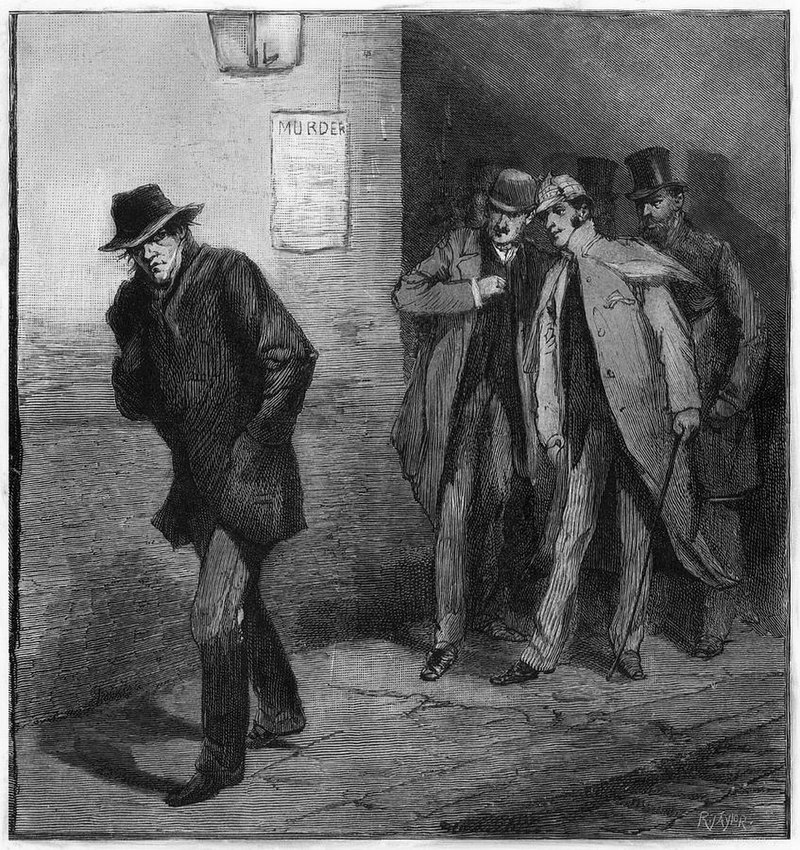
The victims-first impulse surfaces in a mention of The Five by Hallie Rubenhold, a book reconstructing the lives of Jack the Ripper‘s five canonical victims — an approach Karen notes is startlingly unusual given how thoroughly Ripper lore has always centered the unnamed killer. The same dynamic played out in Stacy’s hometown of Gainesville, Florida, where a mural on 34th Street still memorializes the five students murdered by Danny Rolling in August 1990. Stacy was stationed in the Navy at the time; he came home on leave that Friday and found the town unrecognizable — no guns, no dogs, no door locks to be had, law enforcement flooding every shadow.
🧩 Fiction, Fact, and the Buffalo Bill Patchwork
A lively section unpacks the real-case sources behind Thomas Harris‘s serial-killer fiction. Harris, who had access to the FBI’s Behavioral Science Unit and to Ressler and Douglas directly, gave his villains unusual depth — especially in the novels.
The character of Francis Dolarhyde (the Tooth Fairy) in Red Dragon was partly inspired by Dennis Rader — particularly the behavior of tying up entire families. Buffalo Bill (James Gumb) in The Silence of the Lambs is a composite of at least four real killers:
– Ted Bundy — the false-injury ruse (arm in a cast, asking women for help)
– Gary Hendrick — keeping captive women in a pit
– Ed Kemper — the detail (in Harris’s novel but not the film) that Gumb killed his grandparents; Kemper’s first victims, at age 15, were his paternal grandparents
– Ed Gein — the fixation with fashioning a suit of human skin
Gein, the “Butcher of Plainfield” (Plainfield, Wisconsin, 1954–57), confirmed two murders but is believed responsible for more, and his grave-robbing and use of body parts shaped three separate fictional archetypes: Buffalo Bill, Norman Bates in Psycho, and Leatherface. Stacy notes that the real Gein was nothing like any of them — and was insistent, even in his confessions, that he never stole money from the cash register and never had sex with the bodies he exhumed (on the grounds that they smelled too bad, an alibi the hosts find simultaneously implausible and, regrettably, plausible).
Hannibal Lecter, by contrast, is not meaningfully drawn from any real case. Both hosts agree that Hannibal Rising — the prequel novel and film — does not exist.
🔦 Profiling: What It Can and Can’t Do
Does criminal profiling actually catch killers? Stacy’s answer: it’s real, it has legitimate uses, and it does not work the way television suggests.
Profiling at its best can refocus an investigation, help agents know what to look for in a search warrant, and assist prosecutors in framing a case. It does not produce names, addresses, or phone numbers. Ressler and Douglas have both said publicly and repeatedly that what appears on procedural dramas bears little resemblance to actual practice, and that it is municipal and county law enforcement — not a team of telegenic FBI profilers — who actually arrest serial killers.
The episode’s history of profiling touches on several cases:
– George Metesky, the “Mad Bomber of New York”: the first famous profile, produced by psychiatrist James Brussel, was remarkably accurate in some respects (Metesky had been injured and never compensated by Con Edison, and said so in his letters) and embarrassingly wrong in others (the much-cited “double-breasted suit” detail was a post-hoc legend — Metesky answered the door in pajamas and then changed into the suit when asked to get dressed).
– Ted Kaczynski, the Unabomber: two competing profiles were prepared, both substantially wrong. What actually led to arrest was the decision — recommended by profilers — to publish Kaczynski’s manifesto, on the chance that someone might recognize the writing. His brother did.
– The Atlanta Child Murders: profiling shaped the investigation of Wayne Williams, who was convicted of two adult murders (with 23 child deaths attributed to the broader spree). John Douglas’s most consequential contribution was coaching prosecutors to press Williams aggressively on the stand — which resulted in Williams losing composure in a way that, as Stacy puts it, let the jury see the real person behind the soft-spoken defendant.
⚠️ Surviving the Monster: Victims Who Lived
Some of the episode’s most affecting moments concern survivors. Stacy’s point is partly practical — several real killers were caught or slowed because a victim made a deliberate choice — and partly a corrective to the anonymization of those who didn’t survive.
– At Lake Sammamish, Washington, Ted Bundy approached at least five women who declined. One walked as far as the parking lot, sensed something wrong about his Volkswagen, and returned to her friends. Another got as far as having a handcuff on her wrist before listening to her instincts and escaping.
– A survivor of Tampa serial killer Bobby Joe Long (executed shortly before this episode aired) was kidnapped on the very day she had planned to end her own life. While held captive, she methodically touched, licked, and spat on every surface she could reach to leave forensic evidence, then manipulated Long into releasing her, called 911, and later became a Hills
Note: ads inserted into the distributed audio alter the timestamps in unpredictable ways, so timing references in these notes are approximate.
We’re joined by Stacy Sharp, friend of the show and former USN law enforcement with Blake back in his Navy days in Bahrain. Stacy has spent much of his post-Navy career working in law enforcement, victims’ rights, and the judicial system.

Discussion is on serial killers, their motivations, their methodologies and how to balance fascination with the macabre with keeping the victims rather than the killers foremost in mind. The crimes discussed in this episode are graphic, disturbing and will not be suitable for all audience members. Listener discretion advised.
Patreon Bonus segment:
Discussion of Balmain Bug – an edible crustacean of Australia. It looks like an unarmed lobster.

Serial Killers:
- Ted Bundy
- John Wayne Gacy
- Jeffrey Dahmer
- Jack the Ripper
- Definition of Serial Killer
- Richard Chase
- Rampage (docu on spree killers, not the giant critter movie with The Rock)
- BTK Killer (Dennis Rader)
- Ed Kemper (Audiobooks read by Ed Kemper)
- Mad Bomber of New York
- Profilers
- Mindhunter
Blake Smith
0