Regular Episode
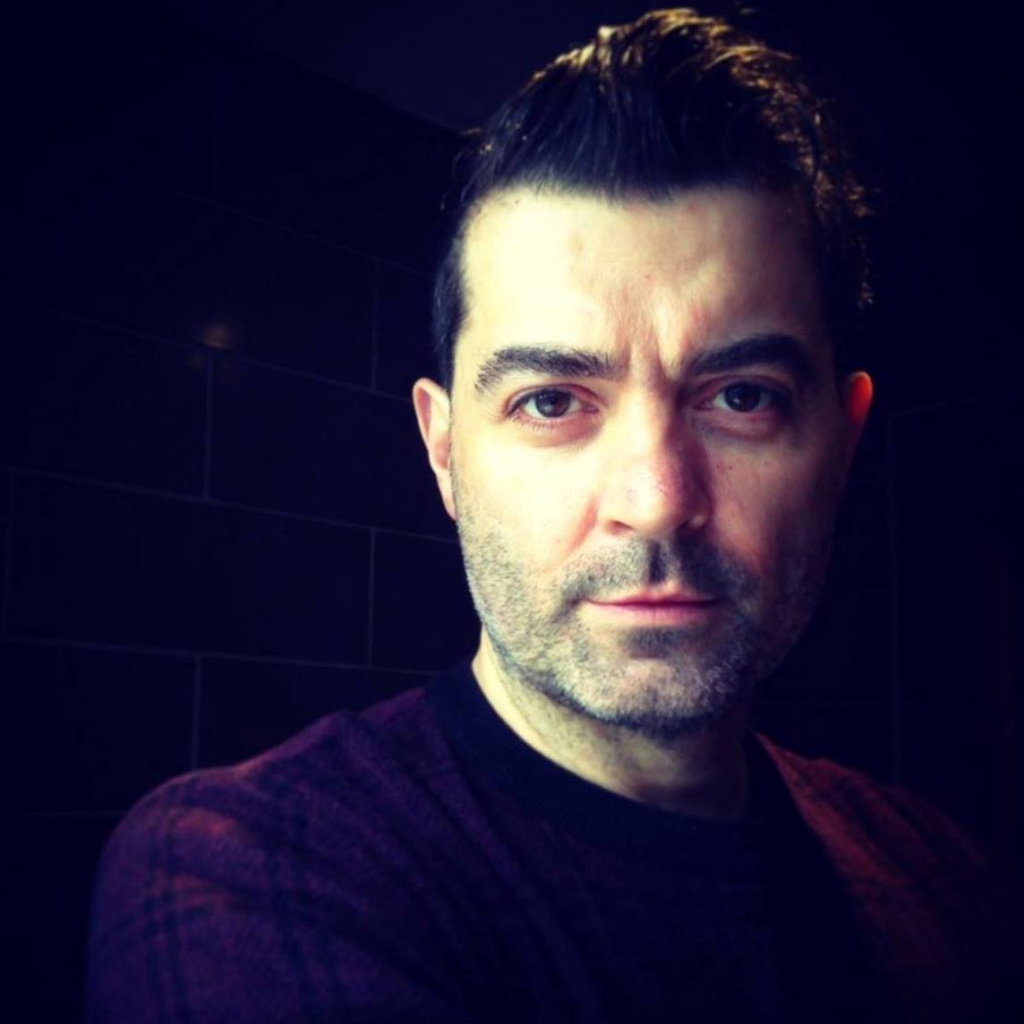
#197 – The Frighteners
The conversation centers on Laws’ 2018 book 📚 The Frighteners 💵, a thoughtful examination of the cultural stigma surrounding fandom of horror, gore, and the macabre — and the argument that our attraction to dark content isn’t pathology, but something altogether more human.
⛪ The Horror-Believing Minister
Laws grew up deeply anti-church — he was in a teenage band called Creatures of the Night, writing songs about Satan and generally treating organized religion as the enemy of excitement. Ironically, it was horror films like 🎬 The Exorcist 💵 — the very things some Christians warned him away from — that re-enchanted his worldview and eventually drew him toward faith. For Laws, horror and Christianity aren’t in tension: both grapple seriously with darkness, evil, and mortality. His complaint about many fellow Christians is that they are, paradoxically, more frightened of the world than he is.
He recounts interviewing Lucien Greaves of The Satanic Temple (the non-theistic one) — and finding him a reasonable interlocutor — while his Christian friends reacted with alarm. Blake connects this to growing up during the Satanic Panic, when demonic threat was perceived in He-Man action figures and Dungeons & Dragons.
🧠 The Spooky Gene and Horror Fandom
Laws introduces the concept of the “spooky gene” — a phrase borrowed from Christian author Lynn Thatcher‘s book The Magic Eight Ball Test, a pro-Halloween polemic from within Christian circles. The idea is simple: some people are just wired to find mystery and darkness exciting rather than threatening. Those without it look at horror fans and see pathology; those with it look at a creepy house on the corner and see possibility.
This bleeds into a discussion of horror fan signaling — the difference between the person covered in tattoos and Halloween franchise shirts versus the person wearing a Silver Shamrock shirt from 🎬 Halloween III: Season of the Witch 💵 that only genuine genre obsessives will recognize. Laws calls it a “horror dog whistle.” Blake approves.
💀 Murderabilia, Monster-Making, and True Crime
Laws covers the murderabilia industry — the market for souvenirs connected to real killers — in a dedicated chapter of The Frighteners. He personally handled a lock of Charles Manson‘s hair at a shop in York, England, where individual strands sold for £40. Half-eaten burritos, crime-scene soil bagged near BTK‘s locations — the market is stranger and more extensive than most people realize.
The group discusses the psychological concept of psychological contagion, drawing on the work of psychologist Bruce Hood, whose experiments found that most people refuse to put on a sweater once told it belonged to a serial killer — even knowing it has been laundered. The object becomes psychologically tainted. The same magical-thinking mechanism, Laws notes, drives the market for celebrity memorabilia on the other end of the moral spectrum.
Laws also observes that when killers cross a certain threshold of savagery, our language shifts: we stop using their names and give them monster monikers — the Ripper, the Werewolf of wherever, the Vampire of Sacramento. Blake mentions that the TV show Dead Famous DNA explored the celebrity-relic impulse scientifically, with a researcher DNA-testing purchased memorabilia — including hair attributed to Eva Braun that apparently revealed some Jewish ancestry. Laws also brings up the London house where serial killer Dennis Nilsen murdered most of his victims — listed at a steep discount — and how his lawyer wife’s reaction (“it’s £100,000 cheaper, who cares?”) illustrates the gulf between the “spooky gene” personality and the purely logical one.
👻 How the Church Handles Ghosts
Blake asks how different Christian denominations handle the contemporary explosion of interest in ghosts and ghost hunting. Laws gives a brisk denominational tour:
– Catholic theology, with its concept of purgatory, already has a built-in framework for the lingering dead — prayers for and to the departed are part of the tradition, and some Catholic writers treat benign spirits as theologically permissible.
– Strict evangelical Protestants tend toward the all-ghosts-are-demons position, which Laws finds both theologically lazy and inconsistent with scripture: the Witch of Endor episode in 1 Samuel has King Saul consulting the ghost of Samuel, and Jesus on the Mount of Transfiguration converses with Moses and Elijah — the text doesn’t call either encounter demonic.
– Church of England Anglicans and British Baptists (emphatically not the same as Southern Baptists, Laws notes — “we’ve been ordaining women for a hundred years”) are considerably more relaxed about the subject.
Laws himself brings a skeptic’s eye to ghost reports, noting that a ghost seen at the end of the bed while drifting off to sleep is almost certainly a hypnagogic hallucination. Karen shares her own experience of mistaking an illuminated cemetery angel statue for a supernatural apparition — a reminder that perceptual errors don’t require a supernatural explanation.
🎭 Horror as Therapy: Dark Play and the Mastery of Fear
The richest section of the conversation unpacks the psychological case Laws makes in Chapter 8 of The Frighteners (“Dead Time Stories”) for horror as a legitimate therapeutic tool. After the September 11, 2001 attacks, child psychologists observed children who had lost relatives compulsively redrawing burning buildings and crashing Lego airplanes into Lego towers — repeatedly, flatly, without visible grief. Parents wanted to stop them. Child psychologists intervened: don’t. The children were not trivializing the event; they were doing exactly what trauma processing requires — taking an overwhelming, chaotic, uncontrollable experience and rendering it into a repeatable, controllable game until they achieved mastery over it.
Laws cites a parallel therapy case in which a child attacked by a large cat in a pet shop would repeatedly role-play as the animal and “attack” his therapist. The mechanism is the same: narrative control over terror. Laws argues that genre horror operates at a societal scale on exactly this principle — the predictable conventions of the slasher film (car breaks down, they go inside, one person survives) function as a shared ritual for managing the universal fear of death. He connects the modern zombie boom to the simultaneous disappearance of visible death from everyday life: as real corpses have been removed into hospitals and funeral homes, their pop-culture doppelgängers have multiplied.
The discussion also touches on dark tourism and legend tripping — the human appetite for novelty, and an evolutionary case for rubbernecking: witnessing someone else’s disaster gives the brain data on what went wrong and how to avoid the same fate.
📖 Matt Hunter and the Skeptical Ex-Minister
Laws discusses his fiction series featuring Matt Hunter, a former church minister turned sociologist and crime consultant called in on cases with ritual or occult elements — and a committed atheist. Laws created the character partly to preempt accusations of using fiction as a conversion vehicle: in the Hunter books, the Christians tend to be the psychopaths and the skeptics tend to be the decent people. The first novel, 📚 Purged 💵, features a Christian serial killer whose logic is brutally efficient: baptize the convert, then immediately kill them — locking in their salvation before they can backslide. Laws notes, somewhat ruefully, that in the months after writing it he read a real news story about someone attempting exactly this.
At time of recording, Laws was finishing the fourth Hunter novel, Possessed, exploring demonic possession.
📚 Further Reading
– 📚 The Frighteners 💵 by Peter Laws
– 📚 Purged 💵 by Peter Laws (Matt Hunter series, Book 1)
🔗 Related Links
– Murderabilia — Wikipedia overview of the market for serial-killer collectibles
– Bruce Hood — psychologist whose contagion experiments are discussed in the episode
– Satanic Panic — the moral panic over occult themes in games, music, and media
– Dark Tourism
– Legend Tripping
– Hypnagogia — sleep-transition hallucinations, a common mundane explanation for “ghost sightings”
– Witch of Endor — the Old Testament episode Laws cites as biblical precedent for contact with the dead
– Dennis Nilsen — the London serial killer whose former home is referenced in the episode
– The Satanic Temple and its spokesperson Lucien Greaves
Note: ads inserted into the distributed audio alter the timestamps in unpredictable ways, so timing references in these notes are approximate.
Check out our Audible deal, where you can select Peter Laws’ book The Frighteners or any of the amazing titles from the Audible collection.

What is it like to be an ordained minister who loves the macabre? And is there a value to the morbid, horrific and dark milieu beyond the financial? What if it turned out that horror can even be therapy? We talk with author Peter Laws about these questions and more.
Peter’s author page
Peter on Twitter
Peter’s website
Want to support MonsterTalk’s website re-design? Help us out here: http://bit.ly/gofundmonstertalk
Blake Smith
0
Tags :