Regular Episode
#134 – THE SCIENCE BEHIND MONSTERS
🧬 DNA, New Species, and the Bigfoot Evidence Problem
Blake revisits the show’s very first guest, primatologist and DNA researcher Dr. Todd Disotell of NYU (then sporting a signature Mohawk — now retired). Disotell’s appearances introduced listeners to how DNA analysis actually works: even small environmental samples can be chemically amplified and compared against catalogued genomes to identify species or close relatives. Blake notes he originally assumed a Bigfoot body or hair-with-root would be the minimum for analysis — one of many things the show taught him he was wrong about.
For science to formally accept a new species, the bar is high: at least one physical specimen must be obtained to serve as a holotype, accompanied by detailed morphological write-ups and a formal name complying with Linnaean nomenclature. No conclusive Bigfoot DNA has emerged, but Blake explains what a positive result would actually need to look like to be scientifically meaningful.
🐺 Werewolves, Darwin, and the Beast of Gévaudan
Werewolves hold a special place in Blake’s monster heart (his entry point: 🎬 Abbott and Costello Meet Frankenstein 💵). The show explored a paper by Dr. Brian Regal titled Darwin Killed the Werewolf, which argued that Darwin’s theory of natural selection provided a naturalistic explanation for biological transformation, effectively displacing magical shapeshifting from serious discourse.
The multi-part episodes on the Beast of Gévaudan remain some of Blake’s favorite MonsterTalk work — weaving together the real dangers of wolves in an agrarian wartime society, the rise of tabloid media, and how legends accrete new elements (like the silver bullet) over time. Those episodes earned MonsterTalk a Parsec Award.
🦑 Sea Monsters and the Plausibility of Deep-Ocean Cryptids
Blake considers sea monsters the most scientifically plausible category of cryptid, given the vast unexplored volume of the ocean. The show has discussed oarfish, blobsters (enormous gelatinous masses of decomposing biomass that wash ashore), and the now-documented giant squid — the inspiration behind fears of sea travel stretching back well before Jules Verne‘s Twenty Thousand Leagues Under the Sea. Guests Darren Naish and Charles Paxton brought science and mathematics to bear on what might — or might not — lurk in the deep.
🦠 Chupacabras, Folklore, and the Metamorphic Property of Monster Legends
Blake credits Ben Radford‘s 📚 Tracking the Chupacabra 💵 for demonstrating how closely the original 1995 eyewitness description by Madelyne Tolentino maps onto the creature design in the film 🎬 Species 💵 — suggesting a pop-culture origin for the iconic spiny humanoid. Yet within a decade, “chupacabra” had morphed almost entirely into reports of hairless canids — a textbook example of folkloric drift.
The show has also examined how mange-ridden or waterlogged animal carcasses — like the famous Montauk Monster — can render ordinary animals unrecognizable, and why comparative osteology is the right tool for identifying mystery carcasses (online crowd-sourcing of opinions, Blake notes dryly, is not).
🦕 Living Fossils, Pterosaurs, and the “Disprove Darwin” Agenda
The show’s investigation of the Ropen of Papua New Guinea led to a conversation with paleontologist Dr. David Martill, who explained why pterosaurs are a poor fit for ropen descriptions — and flagged a recurring agenda in some cryptozoology circles: the hope that a surviving “living fossil” would somehow overturn evolutionary theory. Blake notes the same logic surfaces around Mokele-mbembe, Nessie, and Champ — and that it wouldn’t actually accomplish what its proponents imagine even if a living plesiosaur turned up tomorrow.
🧠 Perception, Hoaxes, and the Limits of Human Memory
Blake reflects on how the show has increasingly shifted his attention toward the fallibility of human perception. Classic hoaxes — the Cardiff Giant, the Fiji Mermaid, and the Minnesota Iceman — reveal less about the monsters themselves and more about how people process extraordinary claims. The show’s dives into cognitive biases and the psychology of eyewitness testimony have reinforced a core MonsterTalk theme: our memories are good enough to navigate daily life, but not reliable enough to settle questions about creatures at the edge of the possible.
The supernatural roster has been equally broad: the Warrens and Annabelle (a Raggedy Ann doll in a glass case, it turns out, is considerably less frightening than Hollywood suggests), zombies both Romero-style and real-world parasitic (zombie ants, ophiocordyceps fungi, toxoplasma-addled rats), and a memorable episode on the Soviet humanzee project — plus a detailed look at what CRISPR gene-editing actually can and cannot do. (The ear-on-a-mouse photo, Blake assures us, is not what it seems.)
📚 Further Reading
– 📚 Tracking the Chupacabra 💵 by Benjamin Radford
– 📚 Zombie Autopsies 💵 by Dr. Steven Schlozman
– 📖 Twenty Thousand Leagues Under the Sea by Jules Verne
🔗 Related Links
– Todd Disotell — Wikipedia
– Beast of Gévaudan — Wikipedia
– Parsec Award — Wikipedia
– Ropen — Wikipedia
– Mokele-mbembe — Wikipedia
– Cardiff Giant — Wikipedia
– Fiji Mermaid — Wikipedia
– Minnesota Iceman — Wikipedia
– Montauk Monster — Wikipedia
– CRISPR — Wikipedia
– Ophiocordyceps unilateralis (zombie-ant fungus) — Wikipedia
Note: ads inserted into the distributed audio alter the timestamps in unpredictable ways, so timing references in these notes are approximate.
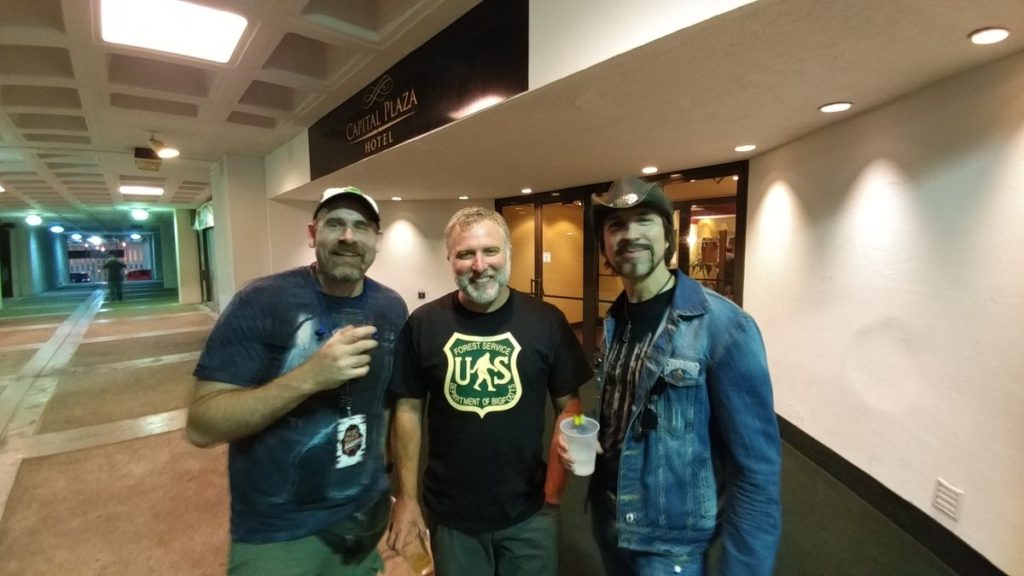
In this episode of MonsterTalk, we take a look at the convergence of science and monsters, as Blake Smith prepares to talk at 2017’s CryptidCon in Frankfort, Kentucky. What does science have to tell us about monsters?
Music
- Monstertalk Theme: Monster by Peach Stealing Monkeys
MTArchivist
0