Regular Episode
#112 – FOLKLORE AND URBAN LEGENDS
MonsterTalk has touched on folklore in nearly every episode, but this is the first time the hosts have brought in a credentialed folklorist to put the whole enterprise in academic context — from the friend-of-a-friend chain that gives urban legends their false authority, to the way those legends function as unofficial community news, moral warnings, and psychological pressure valves.
📖 What Is Folklore, Actually?
Heather describes folklore not as a synonym for “false story” but as an academic discipline that examines the full range of informal cultural expression — narratives (myths, fairy tales, jokes, proverbs, urban legends, rumors, internet-driven stories), but also folk art, folk religion, superstition, music, tattooing, graffiti, and vernacular behavior of all kinds. The core methodological tool is fieldwork (sometimes called ethnography): the conviction that the richest data comes from talking to people face to face.
She draws a useful distinction between folklore and history using her own family’s story: official history records that a local administrator raised taxes on Jews in Baghdad and drove them out; her great-grandmother’s oral history recounts the men being dressed as women and smuggled onto a ship to India. Same event, completely different register of truth — and the oral version is no less meaningful for being unverifiable.
Heather also introduces the key taxonomic distinctions:
– Myth: a sacred narrative told as true, usually featuring gods and an etiological explanation for how things came to be.
– Fairy tale: explicitly fantastic, not told as true — kings, witches, talking spit.
– Urban legend: folk news told with authority, loaded with circumstantial detail, and attributed to a friend-of-a-friend rather than a named source.
– Personal experience narrative: first-person accounts that follow recognizable structural types.
🪝 Urban Legends: How They Work and Why They Spread
Urban legends, Heather explains, share a cluster of features: apparent specificity (names, dates, locations), authority-boosting attribution (always one step closer to an eyewitness than the actual chain of transmission), and an almost magnetic attachment to community anxieties. They tend to be “too good to be true” in either direction — deliciously gross or satisfyingly punitive.
Blake brings up a particularly vivid illustration: the Mountain Dew mouse dissolution case, in which a plaintiff claimed a mouse had dissolved in a sealed can of soda. Blake admits he actually staged a time-lapse experiment putting a trapped mouse in Mountain Dew for 30 days. The mouse did not dissolve (though it did eventually liquefy; the jar, he notes, is still in his basement). This leads Heather to the concept of ostension — real-world action taken on the basis of a narrative — ranging from the trivial (avoiding a fast-food chain because of contamination rumors) to the catastrophic.
The gravest example Heather raises is the blood libel legend — the medieval and early-modern European claim that Jews used the blood of Christian children to make matzah at Passover. Belief in the narrative was strong enough to produce pogroms, mass hangings, and the burning of entire communities, even in cases where the supposedly murdered child turned up alive and well.
A more structural example: Heather describes parallel cannibalism legends circulating simultaneously in West Africa and colonial America during the slave trade. For Africans, the rumors that white slavers were cannibals explained disappearances and warned communities away. For Americans, the mirror-image legend that Africans were cannibals served to suppress guilt about enslavement. Same narrative function, opposite moral valence — and Heather argues this is what triggered the rebellion aboard the Amistad.
🛸 Ancient Aliens, the Mahabharata, and Fourteen Hours of Research
Heather describes being hired as a consultant for a television show about UFOs in ancient texts. The producers wanted her to discuss alleged spacecraft blueprints in the Mahabharata and related Indian scriptures — a claim that circulates heavily in ancient-astronaut communities. After roughly fourteen hours of digging, she traced the claim to a preface written in 1919 (and updated in 1969, conveniently post-Roswell) in which the “blueprints” are attributed to a 3,000-year-old mystic being channeled by a medium. The lesson: the internet amplifies a claim to the point where fifty pages of confident citation all trace back to a single, deeply credulous preface. She told the producers she couldn’t help them — there are no UFOs in the Mahabharata, only mythical flying vessels that are exactly as mythical as everything else in the text.
👻 Sleep Paralysis, EVPs, and the Stories We Need
The conversation turns to why shows like Ghost Hunters and Finding Bigfoot sustain so many seasons with so little evidence. Heather’s read: they answer a genuine social need for mystery and whimsy when ordinary reality isn’t providing enough of either. She notes a consistent ~10% of her students report having experienced sleep paralysis — the sense of a crushing presence while unable to move — and attributing it to aliens, witches, demons, or the old hag, depending entirely on their cultural context. Blake notes that an episode of a 1990s urban-legends TV show (featuring Michael Shermer discussing sleep paralysis) was the moment he realized his own apparent haunting had a mundane neurological explanation.
On EVPs (electronic voice phenomena), Heather takes a characteristically folklorist line: the phenomenon fascinates her less as evidence and more as narrative — people are projecting coherent stories (“I’m Mildred Smith and I died in a factory fire”) onto ambiguous audio, which is a form of apophenia serving a very human storytelling need. Blake promises to add links about the thermal flashlight effect to the show notes.
🎓 The Endangered Discipline
One of the episode’s more sobering threads: Heather confirms that folklore as a standalone academic department is nearly extinct in the United States. UCLA’s own program — the department she graduated from, whose graduate students regularly published books before finishing their degrees — was folded into a “World Arts, Cultures, and Dance” umbrella after administrative priorities shifted toward a new dance building. Penn eliminated its program. As of this recording, Indiana University offers essentially the only remaining PhD in folklore in the country, with a handful of master’s programs surviving elsewhere. Heather argues the irony is acute: the internet has made folklore more relevant than ever, accelerating the spread of legends and creating an urgent need for rigorous analysis — while universities are quietly eliminating the people trained to do that analysis.
📚 Further Reading
– 📚 The Vanishing Hitchhiker: American Urban Legends and Their Meanings 💵 by Jan Harold Brunvand
– 📚 Too Good to Be True: The Colossal Book of Urban Legends 💵 by Jan Harold Brunvand
– 📚 Be Afraid, Be Very Afraid: The Book of Scary Urban Legends 💵 by Jan Harold Brunvand
– 📚 The Big Book of Urban Legends: 200 True Stories Too Good to Be True 💵 by Jan Harold Brunvand
– 📚 Encyclopedia of Urban Legends 💵 by Jan Harold Brunvand
– 📚 American Folklore: An Encyclopedia 💵 edited by Jan Harold Brunvand
– 📚 Folklore: A Study and Research Guide 💵 by Jan Harold Brunvand
🔗 Related Links
– Jan Harold Brunvand — the folklorist whose urban-legend books introduced many listeners to the field
– Urban Legend — Wikipedia overview
– Ostension — real-world action driven by belief in a narrative
– Blood Libel — history of the antisemitic legend and its consequences
– Amistad — the slave ship rebellion discussed in the context of parallel cannibalism legends
– Sleep Paralysis — the neurological phenomenon behind old-hag, alien-abduction, and demon-visitation experiences
– Electronic Voice Phenomenon (EVP) — skeptical overview
– Ancient Astronaut hypothesis — the pseudoarchaeological claim examined in the Mahabharata segment
– Snopes.com — urban-legend fact-checking resource discussed in the episode
– Indiana University Folklore Institute — one of the last remaining PhD programs in folklore in the United States
Note: ads inserted into the distributed audio alter the timestamps in unpredictable ways, so timing references in these notes are approximate.
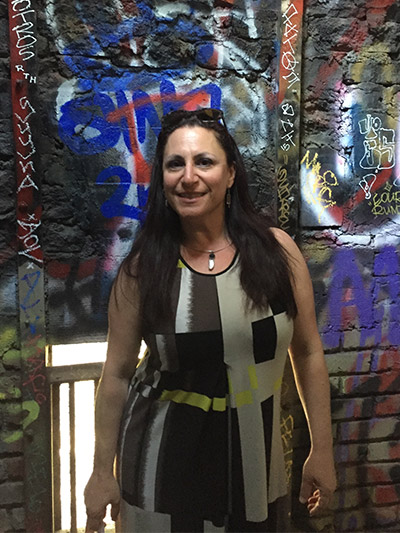
We are joined by Heather Joseph-Witham, Associate Professor in the Liberal Arts and Sciences Department at Otis College of Art and Design in Los Angeles. She has a PhD in Folklore and Mythology from UCLA. In this episode, we talk about folklore as an academic field, urban legends, the nature of culture and story, and much more…
Further Reading
- Star Trek Fans and Costume Art (Folk Art and Artists)
- Electronic voice phenomenon (EVP) skepticism
- Encyclopedia of Urban Legends
- Be Afraid, Be Very Afraid: The Book of Scary Urban Legends
- The Vanishing Hitchhiker: American Urban Legends and Their Meanings
- The Big Book of Urban Legends: 200 True Stories, Too Good to be True!
- Too Good to Be True: The Colossal Book of Urban Legends
- American Folklore: An Encyclopedia
- Folklore: A Study and Research Guide
- more books on urban legends and folklore, by Jan Harold Brunvand
Music
- Monstertalk Theme: Monster by Peach Stealing Monkeys
MTArchivist
0