#011 – First Impressions
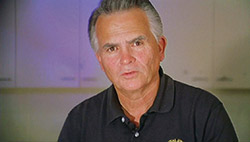
Chilcutt came to wider public attention through the documentary Sasquatch: Legend Meets Science, where he declared — on camera, staking his reputation — that some casts showed friction-ridge evidence pointing to an unknown great ape in North America. As you’ll hear, what he’s actually willing to stand behind is somewhat more measured than that TV moment suggests. This is MonsterTalk’s first interview with someone on the “believer” side of cryptozoology, and it’s a genuinely interesting conversation.
🖐️ What Are Dermal Ridges?
Karen opens with a primer on the science. Friction ridges — the patterned, raised skin on fingertips, palms, toes, and soles — are also called dermal ridges or dermatoglyphs, and their study is called dermatoglyphics. Fingerprints begin forming in utero around the 10th week of gestation and are fully established by the 17th week; they persist for life and survive superficial skin damage (though chemotherapy-induced hand-foot syndrome and certain diseases can cause temporary loss).
Friction ridges are not unique to humans. Other primates have them, as do koalas — a remarkable case of convergent evolution. Some primates even have friction ridges on their prehensile tails. Bears, felines, and canines, by contrast, have pads rather than ridges. The evolutionary logic: friction ridges enhance grip and tactile sensitivity in animals that climb and manipulate objects. If Bigfoot exists and is a primate, we’d expect its tracks to show them.
🔬 Chilcutt’s Background and How He Got Into This
Chilcutt spent the last 18 years of his career as a crime scene investigator and latent fingerprint examiner for a Texas police department, holding a master police officer certificate from the state of Texas. His original research interest was determining gender and race from fingerprints — an effort that led him to spend a week at the Yerkes Primate Research Center printing gorillas, orangutans, chimpanzees, and monkeys. That work made him, in his own estimation, one of the few latent print examiners with a working comparative database of non-human primate prints.
The Bigfoot angle began when he saw Dr. Jeff Meldrum of Idaho State University discussing dermatoglyphics on a Discovery Channel program. Chilcutt called Meldrum, explained his primate fingerprint credentials, and was invited to spend three days in Meldrum’s lab in the summer of 1999, examining roughly 100 casts entirely on his own — Meldrum, he says, left him alone and made no attempt to bias his conclusions.
👣 The Three Casts
Out of approximately 100 casts examined, Chilcutt identified three he considers to show genuine dermal ridges:
– Onion Mountain cast (also referred to as the Blue Mountain cast, August 1967, cast by John Green) — notable for ridge-flow changes exceeding 45 degrees, consistent with the biological “deltas” found in primate friction-ridge patterns.
– Walla Walla cast (cast by Paul Freeman, circa mid-1980s) — the most compelling to Chilcutt personally, because it shows a scar crossing the ridges. As a fingerprint examiner, he knows that healed cuts across dermal ridges produce a characteristic inward curl at the scar site — a biological artifact impossible to fake convincingly, in his view.
– Elkins Creek cast (Georgia, cast by a deputy sheriff, apparently 1990s) — which appeared to show possible sweat pores within the ridges, though Chilcutt is careful to hedge that observation.
Key to his non-human primate conclusion: in all three casts, ridges run up the side of the foot — a pattern seen in gorillas but not in humans, where ridges fade out rather than wrap around. He also notes that ridge thickness on the casts is roughly twice that of known great apes.
🧪 Matt Crowley and the Casting-Artifact Problem
The hosts raise the work of Matt Crowley, an independent Bigfoot researcher who demonstrated that the casting process itself — specifically plaster or dental stone poured into moist soil — can produce ridge-like surface textures Crowley calls desiccation ridges (Chilcutt calls them casting artifacts). The two have actually met in person at a roundtable in Jefferson, Texas, alongside Meldrum and researcher Rick Noll.
Chilcutt’s response is nuanced: he accepts Crowley’s work as valid and says it has made him more careful. His counter-argument is that in Crowley’s controlled experiments, ridge artifacts tended to cover the entire cast surface uniformly, whereas the ridges on the casts he finds convincing appear only in areas of good substrate contact — precisely the patchy distribution you’d expect from a biological foot pressing into uneven soil. The distinguishing feature he looks for is a delta — a point where ridges change direction by more than 45 degrees — which he has not seen reproduced in Crowley’s artifact tiles. He acknowledges he is not an expert in casting materials and is candid that Crowley’s more recent research (using more realistic substrates) may complicate his position.
📺 The “Staking My Reputation” Moment
Blake presses Chilcutt on his dramatic on-camera declaration in Sasquatch: Legend Meets Science — the “I stake my reputation on it” line. Chilcutt’s answer is illuminating: documentary producers pushed him to make a stronger, more quotable positive statement than he’d naturally deliver. His actual considered position is more measured: the ridges on those three casts look, to him, like non-human primate friction ridges. He does not say “Bigfoot.” He says “a primate.” He also recounts a federal court appearance in Houston where a prosecutor tried to use his TV Bigfoot association to impeach him — and the judge let Chilcutt explain himself at length, to the prosecutor’s evident regret.
❓ What Would Actually Constitute Evidence?
The hosts push on the evidentiary gaps. Latent prints allegedly left by Sasquatch on smooth surfaces (doors, windows, refrigerators at a purportedly attacked Canadian cabin) have all turned out human. Chilcutt has been sent jelly jars and other items; none have produced non-human primate latent prints. The Skookum cast — the supposed full-body impression found by the BFRO in Skookum Meadow, Washington — Chilcutt rates as inconclusive: he saw some ridge characteristics but not enough to make a positive identification, and he hadn’t examined most of the cast since he was only sent two small sections. Ben’s explanation that the Skookum cast likely represents a kneeling elk (per researcher Dr. Anton Wroblewski) is something Chilcutt finds interesting but unfamiliar with.
Chilcutt agrees with Blake that the ideal evidence would be a trackway series — at minimum two left and two right prints from the same individual — that would allow him to make a match the way he would in a criminal case. He believes his existing ridge data is specific enough to identify an individual if a matching cast were found. He also acknowledges that he has examined only a small fraction of existing Bigfoot cast collections (he has not visited John Green’s collection, Grover Krantz’s collection, or others), which means the three positive results should not be taken as the final word.
His self-description: not a Bigfoot enthusiast, not a field researcher — a “cheerleader,” as he puts it, who examines evidence brought to him and tries to apply the same standards he’d use in a courtroom. The Bigfoot work, he estimates, is less than half of one percent of his life.
📚 Further Reading
– 📚 Sasquatch: Legend Meets Science 💵 by Jeff Meldrum (contains the most complete write-up of Chilcutt’s dermal ridge findings)
– 📚 Evolution: How We and All Living Things Came to Be 💵 by Daniel Loxton (recommended by Blake in the episode outro)
🔗 Related Links
– Ben Radford: “Fifty Years of Bigfoot” (Skeptical Inquirer)
– Matt Crowley’s research on casting artifacts and desiccation ridges
– Dermatoglyphics (Wikipedia)
– Jeff Meldrum (Wikipedia)
– Skookum Cast (Wikipedia)
– Paul Freeman (Wikipedia)
– Patterson–Gimlin film (Wikipedia)
– Grover Krantz (Wikipedia)
Note: ads inserted into the distributed audio alter the timestamps in unpredictable ways, so timing references in these notes are approximate.
This week on MonsterTalk we talk with fingerprint expert and self-described Bigfoot research “cheerleader” Jimmy Chilcutt. Chilcutt, a retired Texas lawman and crime-scene investigator, came to prominence in the Bigfoot community when he joined Dr. Jeff Meldrum in the documentary Sasquatch: Legend Meets Science making the pronouncement that his research had found evidence that some Bigfoot track-castings showed signs of dermal ridges — the equivalent of primate fingerprints. This is the first time we have interviewed someone on the “believer” side of the fence in cryptozoology, though you’ll hear in the interview that what Chilcutt is willing to attest to is somewhat different than the impression you’d get from his TV appearances.
In this episode
Topics in this episode include:
- How did Chilcutt get involved with Bigfoot?
- Did he identify any hoaxed tracks in the casts he examined?
- What are “dermal ridges?”
- Has he examined any latent Bigfoot prints?
- How many casts showed the ridges?
- Has anyone replicated his findings?
We also discuss Matt Crowley’s research which shows that it is possible to mimic dermal ridges during the casting process. Crowley’s excellent research is detailed on his website in a series of essays and articles. His work on casting artifacts and the track hoaxing of Ray Wallace should be required reading for Bigfoot researchers.
Resources of Interest
- Ben Radford: 50 Years of Bigfoot
- Matt Crowley: Bigfoot Research into Casts & Hoaxing
- “Bigfoot Encounters,” reprinted from Bigfoot Times
Music
- Monstertalk Theme: Monster by Peach Stealing Monkeys
- Celestial Stereogram by Sinfonia Electronique