Regular Episode
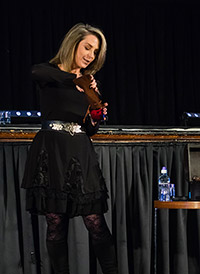
#108 – SKEPTICS TALKING ABOUT MONSTERS
🐺 Werewolves, Witch Trials, and the Birth of Modernity
Deborah’s passion for werewolf lore is grounded in a specific historical moment: the late medieval and early Reformation period in Europe, when the great witch hunts were in full swing. Werewolf accusations were frequently bundled into witch trials, prosecuted largely by Dominicans whose legal framework had evolved from earlier campaigns against Cathar heresy. The learned debates of the era — whether a witch’s body had genuinely transformed into a wolf, or whether Satan had merely conjured an illusion — generated reams of scholastic ink without generating much light.
The idea of werewolfism as a curse or transmissible disease, so central to modern pop culture, is actually quite recent — probably a late-nineteenth to early-twentieth-century invention. In the older accounts, becoming a werewolf required deliberate effort: a pact with the devil, an explicitly antisocial act. That framing, Deborah notes, makes several famous cases look less like supernatural horror and more like political theater. The Peter Stumpp trial (1589, Bedburg) — complete with a famous woodcut souvenir that functioned as a kind of sixteenth-century viral media campaign — looks to Deborah like a political assassination dressed up in werewolf clothes, given Bedburg’s contested Catholic-Protestant loyalties during the Reformation. Similarly, the so-called Werewolf of Châlons (presented to the Parliament of Paris around 1598), a man found with casks of children’s bones in his shop, reads straightforwardly as a serial killer case reframed through a supernatural lens — a way of marking the perpetrator as something less than human.
🧛 Vampires, Contagion, and the Epidemiology of the Undead
Deborah argues for keeping the word “vampire” tightly anchored to the Greek and Balkan tradition, distinguishing it from the much broader global category of blood-drinking monsters. In that tradition, the epidemic logic is clear: one person dies, then others follow. Communities would exhume recent burials, and corpses that appeared well-preserved were identified as the source of ongoing contagion — the “head vampire” maintaining the outbreak.
The case of Arnold Paole (died 1725, Serbian village of Medveđa) is a textbook example: he died, and deaths attributed to him appeared some six or seven years later, with livestock proposed as an intermediate reservoir. Deborah notes that while vampirism as a disease doesn’t exist, the basic model — isolating potential vectors, tracing contagion through animal populations — isn’t an entirely unreasonable framework given the available knowledge of the time.
What actually explained the variation in corpse preservation? Decomposition rates are highly sensitive to soil pH, temperature, season, and burial depth. The Mercy Brown case (Exeter, Rhode Island, 1892) is instructive: her corpse was reportedly in fine condition largely because it had effectively been kept in a natural freezer through a New England winter. Without the modern science of taphonomy, Deborah argues, most of us would reach the same alarmed conclusions the exhumers did.
The Rhode Island cases raise a genuine puzzle of cultural diffusion: how did Balkan vampire-disposal practices — exhumation, heart-burning, feeding ashes to the sick — turn up nearly intact in 1890s New England? Deborah suggests oral transmission via seafaring communities, possibly including French Huguenot emigrants, though no definitive route has been established. Rhode Island’s religiously independent settlement pattern, with families burying their dead on private land far from any central authority, may also have allowed the practice to persist unnoticed for generations.
🦠 Tuberculosis, Fairy Lore, and the “Joint Eater”
The conversation turns to tuberculosis as a likely driver of vampire folklore: the disease’s tendency to cause sudden-seeming wasting, its appearance of “sucking life” from a patient, and its household transmission pattern all map onto the vampire template. But Deborah extends the argument further into fairy lore, describing a creature from Scottish tradition called the joint eater (or alp-luachra) — an invisible being that sits beside you and consumes the foison, the essential goodness, of your food, leaving you to “continue lean like a hawk or a heron” in the words of Robert Kirk. Mysterious wasting illness given a supernatural explanation — a pattern that repeats across cultures and centuries.
The wider point: germ theory didn’t simply replace supernatural explanations. Deborah observes that the “how” (a tuberculosis bacillus) and the “why” (a vampire, a witch, a divine punishment) answer different questions, and that people who hold both simultaneously aren’t being irrational — they’re operating on two separate explanatory levels. Sleep paralysis experiences still get attributed to demonic assault in some London churches today.
⚰️ Burial Practices, Crossroads, and Keeping Corpses Down
The episode surveys the practical logic behind seemingly supernatural burial precautions. Staking a corpse is, at one level, simply a way of anchoring a body that might be too close to the surface — corpses move, gas, and attract predators. The confusion between wolf activity and vampire activity around a shallow grave is entirely understandable: a wolf digging up a body could look like a vampire escaping, or a vampire shapeshifting.
Crossroads burial for suicides and other “unnatural” deaths — common in Christian Europe where self-killing was considered a sin against a God-given life — carried the additional folkloric benefit of disorienting a revenant emerging from the ground. The last crossroads burial in London was, Deborah notes, relatively recent and not far from where she lives. In Christian Europe, above-ground burial (as in New Orleans) and burial under stones both served partly practical purposes, keeping predators out and bodies in, whatever their supernatural rationale.
A particularly striking case: Demetrio Myiciura, a man from Eastern Europe living in Stoke-on-Trent, found dead in the 1970s having choked on a clove of garlic he had placed in his own mouth to ward off vampires, his room sealed with salt, garlic, and excrement at every window. Deborah’s conclusion is blunt: as far as the historical record shows, no vampire has ever killed anyone — but fear of vampires demonstrably has.
🎬 Horror Cinema and the Virtue of Ambiguity
Deborah cites 🎬 Alien 💵 and 🎬 The Exorcist 💵 as formative influences, making the point that good horror films are simply good films — the genre label is incidental. She and Blake discuss 🎬 The Witch 💵 (Robert Eggers, 2015) at some length: Deborah reviewed it for BBC Radio’s Front Row and praises its historical authenticity with respect to witch lore, while suggesting the film might have been stronger with a more ambiguous ending. Her gold standard for supernatural ambiguity is 🎬 Night of the Demon 💵 (1957, based on M.R. James‘s story Casting the Runes), where the director famously did not want to show the demon and James’s source text never resolves the question of whether anything supernatural occurs at all.
🔍 The Skeptic Community and the Value of Monster-Loving Skeptics
Deborah found organized skepticism through Skeptics in the Pub in London, where her first event featured Professor Chris French — whose predecessor as editor of The Skeptic she eventually succeeded. The episode closes with a meditation on what Monster Talk has always argued: it is entirely possible — and perhaps intellectually productive — to think critically and to love monsters at the same time. The monsters are often the most interesting way in.
📚 Further Reading
– 📚 Borderlands 💵 by Mike Dash (includes coverage of the Green Children of Woolpit)
– 📚 The Ghost Map 💵 by Steven Johnson
– 📚 Mummies, Cannibals and Vampires 💵 by Richard Sugg
🔗 Related Links
– Green Children of Woolpit
– Mercy Brown Vampire Incident (Rhode Island, 1892)
– Arnold Paole
– Peter Stumpp (the Werewolf of Bedburg)
– Clever Hans — the horse whose apparent mathematical ability was explained by unconscious handler cueing
– The Skeptic (UK)
– “Casting the Runes” by M.R. James (basis for Night of the Demon)
Note: ads inserted into the distributed audio alter the timestamps in unpredictable ways, so timing references in these notes are approximate.
In this episode of MonsterTalk, we talk with Deborah Hyde, editor of the British magazine The Skeptic. Deborah is deeply interested in folklore, anthropology, monsters and skepticism. Our conversation covers a variety of topics including vampires, werewolves, ghosts and movies. Follow Deborah on Twitter @jourdemayne.
Mentioned in this episode
Music
- Monstertalk Theme: Monster by Peach Stealing Monkeys
MTArchivist
0