Regular Episode
052 – THYLACINEMA AND NOCTURNAL SUBMISSIONS
🐾 The Thylacine: Myth, Loss, and National Guilt
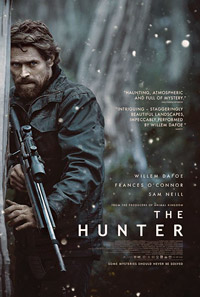
Nettheim adapted The Hunter from the award-winning novel by Julia Leigh (credited in the transcript as “Alice Addison” — the published novel is by Leigh). The film stars Willem Dafoe and Sam Neill, and was shot entirely on location in Tasmania.
The thylacine (also known as the Tasmanian tiger) occupies a singular place in Australian cultural memory. The last known individual died in captivity at the Hobart Zoo in 1936 — the result of a deliberate government bounty system that incentivized farmers to kill the animals as a perceived threat to sheep. Nettheim describes the well-known archival footage of that final captive animal pacing in circles as “very poignant” — footage the production secured the rights to use in the film itself.
For Nettheim, the thylacine functions on two levels simultaneously: literally, as something unobtainable; and symbolically, as an embodiment of humanity’s capacity for irreversible environmental destruction — a theme he carefully kept from tipping into heavy-handed messaging. The same dynamic, he notes, plays out today in Tasmania’s ongoing old-growth logging controversies.
🧬 Cloning, Redemption, and the “Off the Hook” Problem
The conversation touches on the now-abandoned attempt to clone the thylacine using DNA extracted from a pup specimen preserved in formaldehyde at a museum — a project ultimately shelved when the genetic material proved too degraded to be usable. Nettheim is candid about the emotional appeal of the project while acknowledging its darker implication: the fantasy of de-extinction can serve as a psychological escape valve, letting society avoid confronting the ongoing destruction of living species.
The discussion also raises the classic cryptozoological debate — capture versus kill — and whether proving the existence of a critically endangered animal would ultimately help or harm it. Nettheim notes that when the crew informally surveyed Tasmanians on location, the overwhelming majority said that if they ever spotted a living thylacine, they would tell no one. Loggers, environmentalists, and ordinary citizens all arrived at the same answer, for their own very different reasons.
🎬 Making The Hunter: From Script to Screen
The film was financed through the Australian system, with a combination of government subsidy and foreign sales interest. The crucial turning point, Nettheim explains, was attaching Dafoe to the project — once his name was on it, international distributors understood immediately what kind of film it was. Nettheim flew from Sydney to New York for a face-to-face pitch meeting, and Dafoe committed after roughly an hour of conversation.
The Hunter screened as a special presentation at the Toronto International Film Festival, where it sold to Magnolia Pictures for the U.S. and to roughly 25–30 additional territories. It received a U.S. theatrical release on April 6, 2012, alongside a premium VOD window that had already opened at the time of recording.
🧪 Scott Sigler’s Midnight Monster Pitch
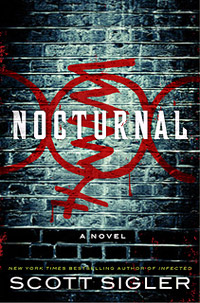
In the episode’s second half, Scott Sigler — author, podcaster, and self-described purveyor of “skeptical horror” — calls Blake at 3 a.m. to discuss 📚 Nocturnal 💵, his then-new hardcover novel set in San Francisco.
The book follows two SFPD homicide inspectors, Brian Clauser and Pookie Chang, as they investigate a series of killings linked to a subset of humanity living in the city’s shadows — creatures that only emerge at night. Sigler describes the plot as part police procedural, part coming-of-age story involving a bullied teenager named Rex Deprovichuk, with a Punnett Square featuring three sex chromosomes as a key plot device. No vampires, no zombies, no Bigfoot — Sigler is emphatic that these are entirely original, scientifically grounded monsters.
Blake, perhaps not entirely seriously, suggests Sigler might find greater commercial success by replacing the original monsters with a sparkling Bigfoot. Sigler declines.
📚 Further Reading
– 📚 Nocturnal 💵 by Scott Sigler
– 🎬 The Hunter 💵 — directed by Daniel Nettheim, starring Willem Dafoe and Sam Neill
🔗 Related Links
– Thylacine (Tasmanian Tiger) — Wikipedia
– Thylacine cloning attempts — Wikipedia
– Hobart Zoo — Wikipedia
– Benjamin — the last known thylacine — Wikipedia
– Scott Sigler’s official website
Note: ads inserted into the distributed audio alter the timestamps in unpredictable ways, so timing references in these notes are approximate.
Interview with Daniel Nettheim
Join the hosts of MonsterTalk for an interview with Daniel Nettheim, director of a new film about a man hunting for thylacines. The Hunter stars Willem Dafoe as the eponymous character tasked with seeking out the last living thylacine in the wild.
Watch the trailer for the film on iTunes or YouTube.
Cameo with Scott Sigler
Scott Sigler calls in to discuss his newest monster book, Nocturnal.
WATCH THE TRAILER FOR THE BOOK
Music
- Monstertalk Theme: Monster by Peach Stealing Monkeys
MTArchivist
0