S05E16 – Greenland Sharks with Greg Skomal
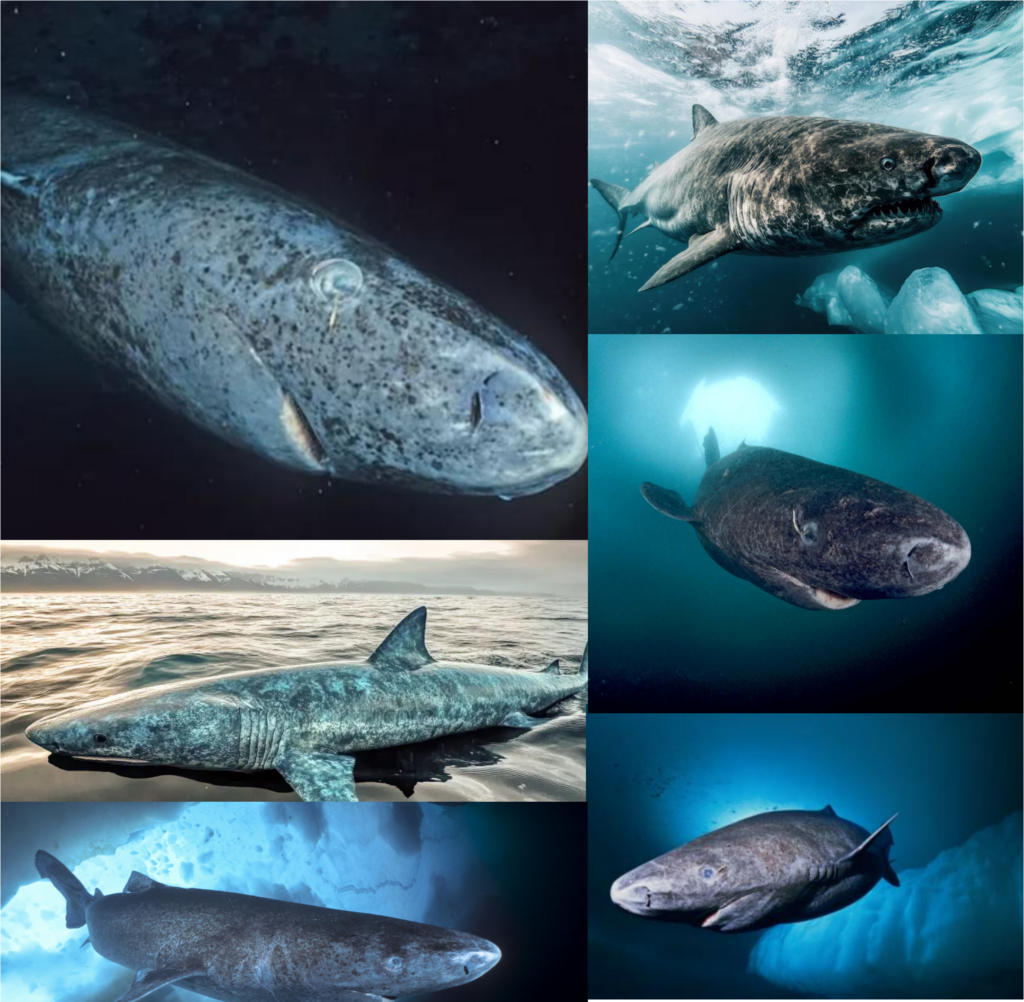
We are joined by author and researcher Greg Skomal to talk about the mysterious and long-lived Greenland Shark.
Books by Greg:
Chasing Shadows: Unraveling the Mysteries of the Great White Shark – Greg’s book about Great Whites
The Shark Handbook 3rd Edition: The Essential Guide for Understanding the Sharks of the Worldby Greg Skomal
The Great White Shark Handbook
Additional online reading:
Ommatokoita – the eye parasite endemic to Greenland Sharks
New paper on the visual system of Greenland Sharks (Jan 2026) suggests the parasites don’t make the sharks blind, despite longstanding belief that they must.
SEO Transcript
This is not a fully accurate transcript, and was machine generated. It’s here for helping search engines find the episode but not intended to be a faithful transcript of the episode. (But it’s not AWFUL.) Some of the material in this transcript only exists in the Patreon/Premium edition of the show and was excised for the commercial version.
———————
Monster House presents…
This is the ad-supported version of Monster Talk.
We’re dependent upon the revenue from these ads and from the support of our patrons at patreon.com forward slash monster talk to continue making this show.
As a disclaimer, your hosts are unable to control what ads you will hear, and while we have done what we can to avoid ads that are divisive, the system that injects them sometimes ignores our preferences and always seems to ignore our efforts to not interrupt the conversational flow.
While we understand this can be disruptive, we’re trying our best.
Patreon remains the best way to enjoy commercial-free listening to our content.
Plus, you generally get extended coverage of the subject.
We’re working on other ways to consume our content as well, so please stay tuned.
In Loch Ness, a 24-mile-long bottomless lake in the highlands of Scotland, it’s a creature known as the Loch Ness Monster.
Monster Talk.
Welcome to Monster Talk, the science show about monsters.
I’m Blake Smith.
And I’m Karen Stollznow.
People are always asking me the same question.
You identify as a skeptic of monsters, but are there any monsters you think might be real?
And I’m always really iffy about terrestrial monsters.
But the ocean, it’s full of monsters.
H.P.
Lovecraft famously turned his fear of various sea creatures into the template for a menagerie of the monstrous.
Now, Greenland sharks aren’t monsters, but there’s some deeply weird things about them that make them mysterious, distinctive, and disturbing.
These animals seem to have open-ended lifespans, and as adults, they don’t have any obvious predators besides humans.
And they live beneath the ice in the darkness, and they eat dead things down there.
And they’re enormous, and they’re ancient.
And most of them have worms where their eyes should be.
I’m afraid you may not be able to unsee what you’re about to hear.
But wow, are these animals fascinating.
We’ve had so many requests for this topic to be discussed over the years, and Blake and I have both been interested in the Greenland shark.
I think I first heard about it a couple of years ago, maybe more than that.
I’ve always been a big fan of Tudor history, and I saw an article that said this shark was around since the time of Henry VIII.
And I thought, wow, that just sounds so bizarre.
And then there’s just, I think, so much interest in sharks in general.
Now, I grew up in Australia, I’m sure you can tell, and I have been hearing just over the past couple of days about…
a sudden spate of shark attacks around the area of Sydney that I grew up in, so the Manly area.
And so I think that people are always interested in sharks and are very fearful of them.
So I guess we wanted to talk about sharks, but particularly the Greenland shark, and maybe get you to tell us about some of the biology of these creatures and also to dispel some myths too.
But I guess to start with, could you…
Give us a little bit of an introduction about your work and what you do.
Yeah, absolutely.
First, I want to thank you for inviting me.
It’s nice to be with you and talk about monsters and get that opportunity.
Yeah, I’ve got many years of research under my belt.
I started…
studying sharks way back in the mid-80s.
And so while I was doing my master’s degree and then on to a PhD.
And so I’m particularly interested in life history, how these animals live from day to day, how they reproduce, what they feed on, those kinds of aspects of their biology.
I’m really interested in what we call movement ecology, where they go in time and space over multiple scales.
You know, so, you know, how they migrate, when they migrate, what they do when they migrate.
And then, you know, right down to some of their really fine scale behavior, you know.
So the kinds of research we do spans from what they do from second to second to what they do from year to year.
And that really fascinates me.
And then, you know, I’m also interested in their physiology.
You know, what makes them tick?
How does their body work?
You know, in particular, how does the working of its body relate to its environment?
You got to remember that sharks are fish and fish live in a three-dimensional environment.
And so I’m super interested in how their bodies tick.
And so I’ve been doing all kinds of research on a variety of species from the Greenland shark to tropical sharks to the great white shark and to planktivorous sharks like the basking shark.
So just one of these animals I’m super fascinated with.
And when people ask me how I get into it, I really just, how I got into it, I really just talk about how I was, like many kids, I’m fascinated by sharks and I just never outgrew it.
They are kind of spectacular.
I mean, I’m not sure how old you are, but I know people of my generation are in the, I guess, I grew up with Jaws.
It came out when I was eight.
So, you know, that really influenced, I think, a lot of…
sharks as monsters.
But I also grew up when Jacques Cousteau was, you know, constantly having specials on television.
So between that and PBS, you know, my fascination with them as just as animals was probably even greater than my interest in them as monsters.
So I’m thinking here, like, there are some really…
interesting and sort of monstrous aspects to these creatures.
But I think we should probably start with the more mundane.
And this will be a peculiar question, but what makes a shark a shark versus any other kind of fish?
Well, yeah, it’s a good question.
I mean, a lot of people don’t think of sharks as fish, you know, and just as a sidebar, you know, you mentioned your interest in these animals and, you know, mine really mirrors yours.
You know, the movie Jaws was inspirational for me, you know.
Talk about this in my book, Chasing Shadows, how Jaws kind of pushed me into the water.
And Jacques Cousteau, Undersea World of Jacques Cousteau was really big in my house and those kinds of things.
And so that really is what inspired me to.
to uh i realized after watching jaws that people there was an actual job out there where a guy was being paid to study sharks and that was matt hooper of course and uh and that’s how i got into it um but you know sharks are indeed unique creatures in terms of their you know what we call their morphology how they’re built you know and their physiology and i think the most conspicuous act you know aspect of this animal that differentiates it from
what we call the bony fishes, you know, the teleost fishes, it’s cartilaginous skeleton.
You know, all sharks have cartilaginous skeletons.
And that means that, you know, they’re very rubbery, so to speak, you know.
So when we think of cartilage, think about your ear or the tip of your nose, right?
And so it’s very plastic, elastic.
that provides support for the body of the shark, and it makes them truly unique.
There are other aspects as well.
They have scales that are very different from the scales that most fish have.
They have what are called dermal denticles, which are really tiny little teeth.
So we’ve all heard that sharks’ skin is like sandpaper, right?
And I guess that’s one of the monstrous aspects of them.
But, you know, these little scales are shaped like teeth and they can be sharp in one direction and smooth in the other.
And that’s another aspect that makes them unique.
Like a cat’s tongue.
Yeah, a little bit, I guess, a little bit.
Yeah, yeah.
And when you talk about shark cartilage, it makes me think about the supplements for shark cartilage and how people, I don’t know if it’s still a popular thing, but how people were taking that for cancer as a kind of alternative medicine cancer treatment.
And I heard that that I think was affecting populations of sharks.
Is that true?
Yeah, yeah, Karen, absolutely.
Yeah, I mean, so shark populations have suffered greatly over the last half century.
And, you know, for a variety of reasons, you know, one of them being shark cartilage was thought to, you know, protect people from getting cancer.
Because there is this thinking out there that sharks don’t get cancer.
And that’s actually not true.
I remember hearing that.
Yeah, yeah.
And so many sharks were killed to produce pills that…
really were ineffective, and there really hadn’t been much clinical work done to demonstrate that cartilage would protect you from getting some of these cancerous tumors.
But nonetheless, it took off, and for many years, shark populations were exploited for that purpose, among others, of course.
Very sad.
Well, so…
You’ve spoken about sharks being unique in general.
And from what I know, the Greenland shark is described as one of the most unique and mysterious sharks on Earth.
So can you tell us a little bit about what makes it so unique compared to the other species that we know more about?
Yeah, I mean, the Greenland shark is fascinating, absolutely fascinating shark.
And the opportunity for me to study Greenland sharks came up, well, 25, 26 years ago.
And one of the things I’ve done throughout my career is try to leverage.
different funding sources to get research done and this particular funding source was actually from you know put from a network and a production company and so we spent some time up in the arctic circle but the greenland shark is so cool because it is really one of the few species of of sharks that can live in under arctic conditions you know and so
The work we did up there way back when was under Arctic ice.
And a lot of people don’t associate, you know, fish living as living under ice, except for those of us who live in northern latitudes and occasionally do some freshwater ice fishing.
But, yeah, the Greenland shark is unique because it’s capable of living under Arctic ice, living at really, really high latitudes in extremely cold water, you know, on the order of, you know, minus one, minus two degrees Celsius, you know, so 28, 29, 30 degree water Fahrenheit.
And that’s really quite remarkable.
And it’s also, you know, at the time we did our research back in the early 2000s, we knew virtually nothing about this species.
And that, to me, from a scientific perspective, is really neat to be able to, you know, in the 21st century, study something we know very little about is an awesome opportunity.
um we’ve come a long way since that early research but you know we’ve discovered that they’re they’re incredibly long-lived you know estimates on the order of two three hundred years for some individuals um we still know very little about its basic biology in terms of reproductive biology
Even a growth rate.
We know longevity, but don’t have a good sense of its growth rate.
Size at maturity.
How many young do they have?
Where do they mate?
Those kinds of aspects.
One of the coolest things about, in my mind, about Greenland sharks, and maybe if you’re a Greenland shark, you don’t feel this way, is they’ve got this really unique parasite that bores into its eyeball.
He’s feeling Blake’s thunder here.
Oh, I’m sorry.
It’s okay.
If I’m talking too much and jumping ahead, just feel free.
No, no, no.
This is what we’re having you on.
Just wave your arms and say, I’ll get to that, Greg.
I’ll get to that.
Let my eye worms wiggle at you.
Yeah.
Karen has a real strong aversion to parasites.
So we’ve necessarily had to talk about them several times on the show because it falls under all sorts of monstrous concepts, body horror, et cetera.
But I was really surprised because the first thing I thought was, oh.
Well, if they’ve all got literally eye worms and we’ll put some pictures in the show notes.
These are really nasty looking.
But I was like, how are they navigating?
Are they all blind?
But I saw a very recent paper that suggested maybe they’re not blind, that even with the eye parasites, maybe they still have sight.
And I didn’t know if you’d read that paper or if you had what your thoughts were, because it’s very fresh.
And sometimes these things are controversial.
Yeah, to be honest, I haven’t seen it yet.
We’ve been really focused on some other species of sharks.
So every now and then I’ll dabble back in the Greenland shark world when a cool paper comes out.
So I’m very excited to see that one.
The early work that my colleague George Benz was doing with a pathologist by the name of Johanna Boruczynska out of Hartford University was looking at the cornea.
in these sharks resulting from, you know, the damage done from these eye parasites.
And virtually all of the ones that they looked at had corneal damage that would be scar tissue.
And so their conclusions were, you know, the animal is not blind.
You know, the Greenland shark, even if it’s had multiple infestations of this lovely parasite, is not rendered blind, but it doesn’t have the visual acuity.
um that an eye without those that scar tissue would have so you know their conclusions were along the lines of think of the eye as operating more like a a light meter you know as opposed to you know an an organ that would be used for uh with great visual acuity um but i’m i’m anxious to see that paper um
At least there used to be this creationist argument of like, what good’s half an eye?
And I think Richard Dawkins retorted, well, it turns out there’s lots of uses.
You know, being able just to see light versus dark is a huge advantage.
And so.
I had really not considered it.
I mean, this is a perfectly functional eye that’s been very severely damaged by a parasite.
But in the amount of darkness that they’re living in, I don’t know how much use an eye is exactly.
But I’m really curious about that.
Like, to what extent are their eyes part of their hunting ability to navigate, to mate, all the things that we do with…
with eyes, at least up in the surface world.
I wonder to what extent it impairs them, or does it impair them?
No, it’s a great question.
And the question we were trying to answer back in the early 2000s, when we went up to the Arctic Circle, drilled through the ice, captured these animals, did some diving with them.
which is horrifying unto itself.
And, you know, it was along the lines of, you’ve got this really large sluggish animal with, that’s virtually blind, you know, low visual acuity.
How is it, yet you’ve, in its stomach, we have found fast moving animals such as seals.
or some of the fishes that live up there.
So how does this animal do that?
And it’s living in a very deep water environment.
And for the most part, we were fishing in areas that were 300, 400 meters deep in order to capture these things.
So your point, Blake, is maybe these animals don’t need eyes.
You have very, very low light levels down there.
And when you look at the…
The nose of this shark, it really does look like, I mean, it’s not the most attractive shark I’ve ever worked with.
You know, it’s like a swimming cigar.
And it’s got just the biggest schnoz on.
It’s got a big nose.
It’s got a giant nose.
And it’s probably because the shark really relies quite heavily on that nose to seek out its prey.
And the great debate among the scientists who are interested in the species is, you know, is this an active predator or is it just a scavenger?
Using that big nose to find dead things on the bottom and to feed on them.
And I think the debate rages on.
Every time that kind of dichotomy comes up in biology, it almost always turns out to be, why not both, right?
And I think you’re right.
I think it is both.
I was wondering, though, you know, they’re famously long-lived, and it occurred to me, it was like, well, how do they know?
How do they know they lived that long to be in the time of Henry VIII?
Because when they did a dissection, I bet they found a codpiece.
I should have warned you about the puns and the jokes.
Yeah, that’s good.
It does make me wonder.
I mean, so many questions I have still, but they’re famous for their longevity.
What do we know actually kills these creatures if they can live for hundreds of years?
What finally makes them meet their end?
It’s a wonderful question, Karen, and I think you’d be hard-pressed to find anybody who could.
who could answer it.
The reason we don’t know a lot about Arctic animals in general is because the conditions under which you are exposed to in order to study them are extremely difficult.
And that goes for terrestrial and it’s even more complicated when you start talking about subsurface, particularly when half the year the area can be frozen solid.
And so this animal has been shrouded in mystery because it’s been so difficult to study.
And it’s only because of the new technologies that have emerged that allow us to see how this animal lives in three-dimensional space.
And that’s slow to come back, and it’s difficult to do.
But it’s a great question.
What can take out a Greenland shark?
I mean, the skin on these animals is thick.
It’s sharp.
They’re very well protected.
They’re dark.
They’re difficult to see.
They live on or close to the bottom in hundreds of meters of water.
I don’t know what would take them out.
I mean, arguably, probably an orca.
could, but I don’t know how much orcas actually overlap with Greenland sharks.
I mean, let’s face it, the top predator of the Greenland shark historically is probably human beings.
Which is weird, right?
Because this is an interesting thing to me that they have, I want to say, do they have a high level of ammonia or is it just uric acid?
Something in them is pretty toxic to humans.
Right.
They’re high levels of a substance, you know, abbreviated as TMAO, which is a derivative of urea.
So it’s helped to balance their, allow osmotic balance, which I’m really not going to bore you.
With explaining what that means, unless you want me to.
But the bottom line is very high concentrations of that, which has rendered the meat poisonous to some extent.
And so, you know.
most locals do not consume, you know, Greenland shark.
They may be fishing for Arctic cod, other species, which are preferred.
If they catch a Greenland shark, it would not be unusual though, for them perhaps to feed it to their dogs, you know, and it sometimes would make the dogs like almost drunk.
And that was how it was characterized, like drunken dogs, because of the consumption of this meat.
And I guess if they dry it or or let it ferment, which is the way they always freak me out.
Yeah, it becomes less.
I imagine it becomes less, less poisonous and perhaps less palatable.
Well, I’ve heard, I don’t know if this is true, but I’ve heard that Anthony Bourdain had tried eating Greenland shark and said it was the worst food he’d ever eaten.
Yeah, it wouldn’t be surprising to me.
And, you know, my nephew went to Iceland and he said it was served at a restaurant and he felt compelled to try it.
And I don’t believe he was…
I don’t think he liked it all that much.
Sometimes you have the restaurant for their ambience, sometimes for their ambulance.
Yeah, yeah.
Yeah, I mean, that just makes it more of a strange creature, right?
It really does, yeah.
And the less we know about something, and you guys know this, the more it becomes a monster, right?
Absolutely.
That that level of so I was thinking, though, that’s another one of those strange things like the the the giant squid and the colossal squid.
You know, we we find them as occasionally washed up on the shore or maybe as bycatch or inside the belly of a sperm whale or something like that.
But.
They’re so big and yet so hard to find, at least alive.
And I’m wondering, so with those kind of difficulties, studying these animals, what can we say about their population?
Because I’m unclear on how one would make an adequate study of the population density.
Yeah.
It’s difficult to do.
There have been a couple of attempts.
There was one in particular for the Greenland shark where an individual, a scientific team, used what’s…
And the new technologies open the door for this, you know, so they used an abated underwater camera system.
And by counting the number that passed within an area over a certain amount of time, they came up with a rough population estimate.
Very difficult to do.
And I’m not convinced that it was.
The best science, I mean, but it’s probably the best available science in terms of numbers.
But I can tell you this, when you’re talking about animals that are slow growing, which is the Greenland shark, very long lived and likely like most shark species reproduces very low levels.
very slow rate.
You’re talking about animals that don’t deal well with any level of exploitation.
And probably the best example of that is historically what we’ve done to whale populations, right?
Whale populations are slow growing, low numbers of young, and it’s very easy to crush those populations.
So if you…
And there are estimates of the numbers of Greenland sharks that had been harvested or killed historically.
And those numbers are just massive, which would be indicative of probably a severe population decline that occurred because, you know, they just don’t bounce back.
You know, they’re just reproductive rates are likely extremely low for such a long lived animal.
It’s like forests on Greenland.
Yeah, they may have once been there, but they don’t snap back, right?
Right.
Yeah.
But that’s interesting, too, that slow, slow growth.
And I guess maybe their best defense is that they taste terrible.
And that’s weird, but kind of true.
I mean, because if we had any kind of really good use for them, they’d be gone, right?
Absolutely.
Yeah.
Yeah, they absolutely would be.
And there was a time, I believe, where they were harvested.
I think some of the oil in the liver was of value.
Yeah.
So the meat may not have been, but the oil in the liver, like most species of sharks, they have very large…
very large livers and they yield high amounts of oil and the basking shark was exploited for that purpose um and you know that those kinds of fisheries can take out a population fairly quickly wow the question is of course is and those are the ones we’re trying to answer is you know what was it just a local population or these animals move great distances and therefore the larger population would be at risk
I mean, those are all the kinds of questions we try to answer by understanding their movement dynamics.
And do we know anything about their form of communication?
Do they use echolocation or is that more dolphins and whales?
Yeah, I mean, we don’t believe they use that.
We don’t know of any shark that uses echolocation.
Sharks are, for the most part, silent animals with very, very rare exceptions.
um it’s very creepy sounding yeah yeah um we we’ve been putting camera systems on on sharks and one of the things we’re adding to these systems is hydrophones to get a sense of what that animal might be perceiving from an auditory point of view what’s it hearing um and it’s really eerie because there’s very little sound very little sound um
Unless it gets into the shallow areas.
And so it’s like really eerie is the best way to describe it.
And so Greenland sharks probably communicate via…
olfaction, you know, and so chemical communication, you know, the secretion of hormones, those kinds of things.
Like most likely most species of sharks that there are species like the great white shark that will get combatant with its fellow white sharks.
And that communication is physical, you know, where it’s basically get the hell out of my neighborhood kind of stuff.
So they’ll bite each other.
And that does happen in some species of sharks.
We just haven’t seen that.
I mean, remember, we don’t know that much about this.
It’s mysterious.
It is.
But they’re so fascinating.
I mean, from a science fan perspective, it’s like when we run into animals that we don’t know much about, I’d be, oh, I wish I was a young student again.
You know, it’s like that’s exciting.
Right.
So the mysteries.
Oh, big time.
Yeah.
I mean, what I love is the fact that, you know, you write this paper, you do this research, you write this paper, you know, five people read it.
And it’s cool.
That’s wonderful.
But to me, it’s like it always opens the door to new questions.
Everything we publish opens the door to new questions.
Like, why is this?
Why is that?
Why are they doing this?
I mean, why did Greenland sharks spend their time doing this?
Why?
What’s to be gained from that?
I mean, that’s the fun part about science in my mind.
You know, I joked about it, but how did people find out how old these sharks live to be?
Like, what was the actual breakthrough?
Yeah, it was basically the eyes of the shark produced.
There were certain chemicals in the eyes, in layers of the eye, that the researchers were able to do dating on that allowed them to…
get a sense of how old that particular individual was.
We do similar things with muscle tissue and other parts of animals, particularly the vertebral column in other species of sharks.
It’s basically looking at carbon and nitrogen isotopes.
And that’s really…
boring stuff i’m not going to get into it no that’s okay this actually that i that makes sense someone something i read preparing for this said something about carbon dating the eyes of a living shark and i thought that doesn’t sound right but that it’s still a form of carbon dating okay exactly yeah exactly
So I think we have explained that before.
And at least with regular carbon dating, it’s like while we’re alive, we produce a certain amount of radiation.
And then when we die, we stop.
And then you can measure the half-life.
Is that roughly right?
That’s roughly right.
But in the case of…
long-lived marine animals what we really rely on is the the carbon signature put into the ocean during bomb testing that occurred in the 50s and 60s and so if you’ve got a shark that lived through that it’s basically um a marker that it put it puts in a carbon mark
so to speak, you know, in its eye or in its vertebrae that allows you to then count subsequent years after it.
If you know…
And we do know the degradation rate of that carbon isotope since the bomb, since that isotope entered the ocean during bomb testing.
And so it’s a really cool method.
It’s how we came up with longevity for the white shark, which is, you know, in excess of 70 years.
And it’s because we had specimens that lived through that period.
In the case of Greenland sharks, it was kind of easy because they’re so damn old that they lived way through that period and the period before that and before that and before that.
It’s like the K-T boundary for fish.
It’s amazing.
Yeah, yeah, yeah.
It certainly is.
So I guess, Greg, from a conservation standpoint,
Are we worried about the future of the Greenland sharks?
Where do they stand?
And can you tell us a bit more about what you’d like the public to better understand about how to protect species like this?
Yeah, I mean, the…
the exploitation rates for Greenland sharks have diminished greatly since those early years.
And I’m talking about probably the mid to late 20th century.
And I suspect that’s probably led to the extirpation of local populations.
But, you know, we’re at a point, we don’t even have a starting point, unfortunately, for this species.
You know, it’s really hard for us to model fish populations for those animals that are heavily exploited for the last, you know, 75 years, you know, Atlantic codfish.
So imagine trying to count fish we barely know anything about in a very remote part of the world.
But, you know, for me, you know, it’s been a long time since those exploitation rates were up, you know, and, you know, it’s best to leave them alone and respect these animals and realize having these mysterious creatures is kind of fun, you know, because, you know, we don’t know much about them and there’s so much to be learned.
Since this species is really tightly linked to water temperature that is cold, low water temperatures, this is an animal also worth paying attention to from a climate change perspective.
In a changing climate, one of the things we were trying to do is figure out how a Greenland shark uses ice to its advantage from a survival and predatory strategy point of view.
And so we were specifically trying to study what these animals were doing under two meters of Arctic ice.
And we came up with this hypothesis and we talk about it a lot in the paper we published with regard to how does a Greenland shark that’s partially blind hunt seals?
And we figured that it would seek out the layers that these seals build.
in the ice, in the frozen ice.
So seals will give birth to their young and live in these ice layers.
And these layers are also subject to attacks from polar bears on the ice.
But we were hypothesizing maybe they’re subject to attacks from below as well from Greenland sharks.
Now, if that’s true…
And then we remove Arctic ice.
We’ve impacted, you know, the natural history of that animal.
So paying attention to these, this species is kind of an indicator species.
Yeah.
As it relates to climate change, I think is important.
I’m just fascinated.
I’m sitting here thinking about environmental DNA and it’s like, you know how you can tag an animal, you can radio tag it.
It’s like, it’d be interesting if you could somehow.
Isolate to a single individual and collect environmental DNA from its poop intermittently, you know, so that you can sort of get a profile of what it’s been eating without being invasive.
That’d be interesting.
Yeah, it’s a great question.
And there have been a couple of, again, they’re isotope-based techniques.
So basically the adage that we are what we eat is true, you know, and it manifests itself through isotopes of carbon.
and nitrogen.
And basically the ratio of those isotopes changes with each, what we call trophic level.
So a fish eats plankton, a larger fish eats that fish, a larger fish eats that fish.
We could tell what trophic level they’re at based on.
isotope levels um and then if you examine other constituents of the muscle and we can get those those ratios from the muscle so if you take a little muscle sample you can figure out the the shark’s trophic level and then if you also look at the fatty acids in that muscle you could start to pin down specifically what it might be eating and so that’s a really interesting way to look at the diet of an animal without having to cut it open and examine its stomach contents
Neat.
And when I started in this field, that didn’t even exist.
So this is really cool.
I mean, we would kill sharks and look in their stomachs, which is still, I hate to say it, the best way to see what they’re doing.
But we all try to avoid that kind of invasive sampling.
And that’s where the science is going.
And it’s just getting better and better.
you’ve given us so much, which we really appreciate.
And this has answered so many questions.
And I think in a fascinating way, raise some new ones, which is great.
I’ve just, just one more time, go back to the, the, the behavior of the sharks.
Are there any adaptations that the Greenland shark has made beside being able to swim around with worms for eyes that make it exceptional to that, that ecosystem, that niche that it’s in?
Yeah, I mean, I believe, first of all, I’ve already mentioned it’s basically a swimming nose.
Yeah.
Large olfactory bulbs, which would indicate that it’s heavily reliant on its nose.
And you would expect that.
We’d also expect there would be a correlated enlarged area of the brain for sensing smell, too, I’m assuming.
Yes.
Yeah.
Yeah.
You would expect that.
And I’m not even sure if those, that kind of work has ever been done.
Let’s looking at the brains of these animals and that would certainly be useful work.
Yeah.
But you’ve got, yeah.
So it’s, and it’s dark.
It’s a very dark animal.
It is.
So, which means it’s very cryptic.
And, and one of the things that we did when we were up in the Arctic is we, we had a,
a seal a dead sea and it was from our guides it was basically his dinner and we bought it from him and we put it down on the bottom and we dropped an rov a remote operated vehicle with a camera system and we were able to capture the first ever footage of a greenland shark feeding on a seal carcass
And so what they have in these, it’s really cool.
It’s almost like we’ve all probably heard of cookie cutter sharks, which are able to take like a melon ball of flesh.
It’s basically a giant parasite is what it is, the cookie cutter.
And it’s able to take a ball of flesh out of a larger fish.
This greenling shark has a mouth very similar, jaws very similar to cookie cutters in that they have these cartilages that allow it to close its mouth fully around the carcass of the seal.
And its upper teeth are really sharply pointed needle-like.
And they sink its upper jaw into the flesh.
And then the lower jaw almost looks like a saw.
you know, the blade of a saw.
And the shark rotates its body slowly, holding its mouth onto the seal and cutting out a big hunk of flesh from the seal, you know, very slowly, methodically, and pulling that chunk of flesh out, consuming it, and doing it again and again.
And we were the first to actually see that, which was really cool.
But very unique feeding strategy, which we wouldn’t…
you associate with a scavenging shark, a shark that will take its time.
It’s got no place else to be, right?
It’s got lots of time, hundreds of years.
And so, you know, certainly the capacity to scavenge marine mammals that are on the bottom.
Wow.
Wow.
Well, I know what I’m going to be having nightmares about tonight.
Yeah.
Yeah.
Yeah.
But they are docile, you know, they are docile, you know, and I just think it’s because they’re living in such cold water.
They can’t react all that well.
Yeah.
Slow metabolism, but what’s the rush, right?
So.
Yeah.
They live in a different frequency, you know.
Well, I think I just have one more question before we ask our final question, and that was just about reproduction.
I know that you’ve said several times we don’t know that much yet, but I heard something on YouTube, and I don’t know if this is accurate or not, but when it comes to reproduction, the Greenland shark might not reproduce until they’re about 100 or even older.
Is that true?
It’s entirely plausible.
Yeah.
I mean, one of the hard parts is coming up with the growth curve for the Greenland shark.
And so if you have a growth curve and you know what its size is at various ages, you can come up with size.
And you know at what point it matures in terms of size, you can come up with an age at maturity.
That really hasn’t been established.
Much of it has been kind of guesstimated.
But if you’re talking about an animal that lives 200 to 400 years, in all likelihood, it’s not going to mature until much later ages.
We know that, for example, the white shark really doesn’t mature until it’s in its 20s.
And a lot of species of sharks, because they’re so slow growing, they have late ages of maturity when compared to other species of fish.
And in some cases, even mammals.
So the Greenland shark likely has very late age, ages of maturity.
It would not surprise me if they didn’t mature until they’re 100 years.
And that just blows my mind because, you know, how do species survive?
Well, they’re basically like elves, I think.
It makes me feel better about having a baby later in life.
Well, yeah, yeah.
So a lot of these poor sharks are fin cells.
They can’t, you know.
Well, thank you again so much for taking the time to talk with us today, Greg.
Oh, yeah, this has been wonderful.
We did give you a heads up that our final question is probably the hardest.
Yeah.
So what is your favorite monster?
You guys could probably guess, you know, because I spend so much time on the ocean or have my whole the last, you know, half century almost of my life.
You know, probably the scariest for me would be anything that could come out of the depths and engulf a ship.
And what would that be?
Of course, the Kraken.
Oh, yeah.
Oh, yeah.
Perfect.
The Kraken is definitely – and there are times where I’ve just been laying in my bunk on a ship, you know, 200 miles from the coastline wondering what was swimming below me.
And so, you know, and then you see the old drawings, the paintings, the carvings of the Kraken and the ship.
And then you see some of the movies with all the cool special effects.
And it’s like, wow, you know, imagine if that happened to you.
Oh, yeah.
I think the Kraken is probably it was second.
I mean, my second thought was the Loch Ness, because that to me is fascinating as well.
But, you know, the Kraken is definitely the monster that.
that I’d be most fearful of.
When you think about cryptids, although the conception of the Kraken has changed a lot over time.
Yeah.
But if you think of it as being a giant…
squid or octopus or something with tentacles, then it makes it one of the few sort of mythical creatures that turned out to be real to some extent, you know?
I mean, not to the scale that they usually show them or whatever, but just, it’s really neat that all those old images, woodcuts or whatever of giant squids or octopuses, you know, I don’t think we have much evidence that they reach up into boats and pull people out, but…
Just seeing one on the deck of your whaling ship had to be nightmare fuel of an extraordinary quality.
I mean, just wow.
Yeah.
And the fact that some ships just never came back, right?
Yes.
Yes, exactly.
Yeah.
Oh, boy, it had to be the Kraken.
Yeah.
I mean, I was in the Navy on an aircraft carrier.
Yeah.
You think that’s almost as big as a city, but you get out in the ocean and it’s a tiny thing.
And it’s the tiny thing that’s keeping you alive.
And it becomes so precious and desperate.
So true.
So true, guys.
I’m telling you.
Greg, thank you so much for sharing some of your shark insights with us.
We really appreciate it.
That was really fun.
Really interesting.
Thank you for inviting me.
It’s great chat with you guys.
And Karen, thanks for running this to ground for us.
So glad that I found Greg.
That was fantastic and exciting to see what we find out in future as well.
Absolutely.
Hey, Greg, do you have any books or anything that you want to plug that we could link to in the show notes?
Yeah, sure.
I’ve got a few books.
One of them is called Chasing Shadows.
It’s more of a personal story of my work on great white sharks, my roots and the research we’re doing and the complexity of dealing with white sharks that occasionally bite people.
And so really how I morphed from a guy interested in sharks to actually having the role of the Matt Hooper in the film.
And then for those who are super interested in sharks, I’ve got two other books.
One’s called The Shark Handbook, which is kind of a, you know, everything you want to know about sharks with lots of cool pictures translated to digestible material for the average person.
And then more recently, The Great White Shark Handbook came out as well with everything you want to know about the great white shark.
So thanks.
I appreciate the opportunity to talk about those.
Not a problem.
We’ll put links in the show notes.
Check it out.
I think our listeners will be very interested in those.
Absolutely.
It’s funny.
Sharks fall right there around dinosaurs and things you can get really interested in.
Just pull out all kinds of cool goblin sharks and hammerhead sharks and mega mouth sharks.
There’s all these weird, crazy body types and features.
It’s just amazing.
Anyway.
Yeah, you’re absolutely right, Blake.
You’re spot on, man.
That’s why I love this.
I don’t know if I’ll ever retire.
I know I won’t, but that’s my mortgage.
Okay.
Yeah, but we’ll keep in touch and perhaps you can come back sometime.
Absolutely.
Tell us more.
Thanks, Karen.
Thanks, Blake.
I appreciate it.
Monster Talk.
You’ve been listening to Monster Talk, the science show about monsters.
I’m Blake Smith.
And I’m Karen Stollznow.
You just heard an interview with shark expert Greg Skomal discussing the fascinating, if somewhat disturbing, Greenland shark.
This is the extended commercial-free version of the show, exclusive for our premium listeners.
Thank you so much for your contributions, which literally keep the show going.
We couldn’t do it without your support.
This has been a Monster House presentation.