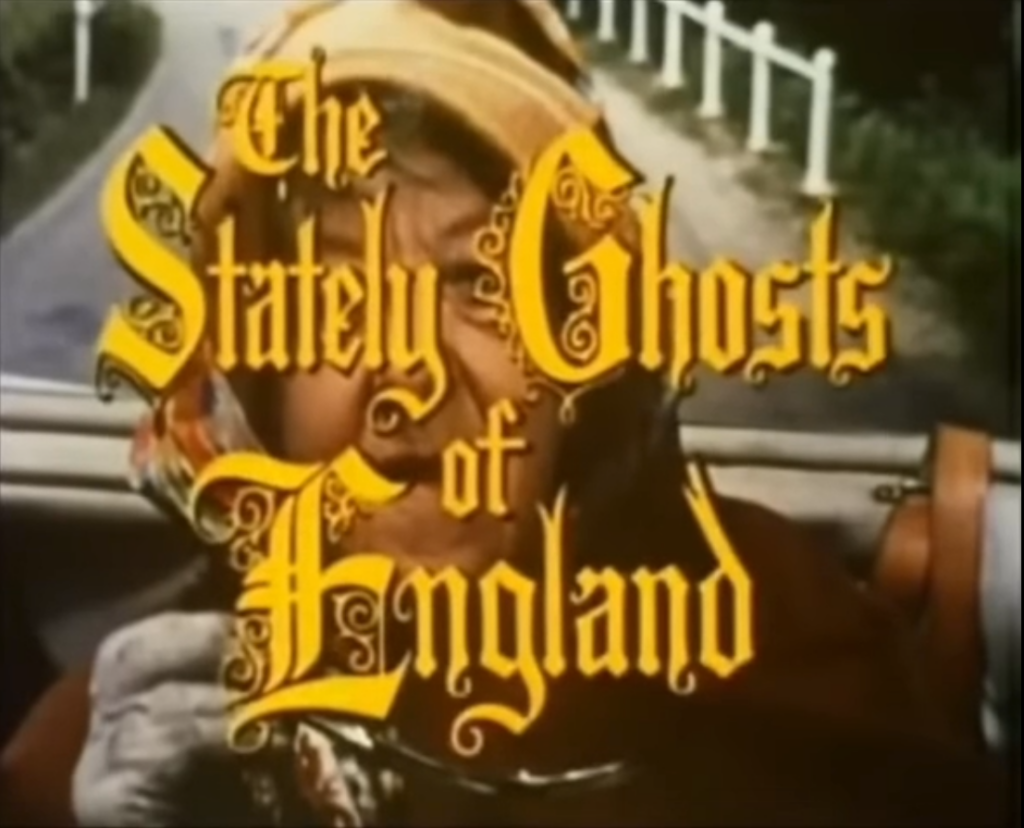
S05E22 – The Stately Ghosts of England (pt1)
Blake and Karen are joined by Matt Baxter to discuss the 1965 made-for-TV film The Stately Ghosts of England. The film stars Margaret Rutherford, her husband Stringer Davis, and celebrity clairvoyant Tom Corbett.
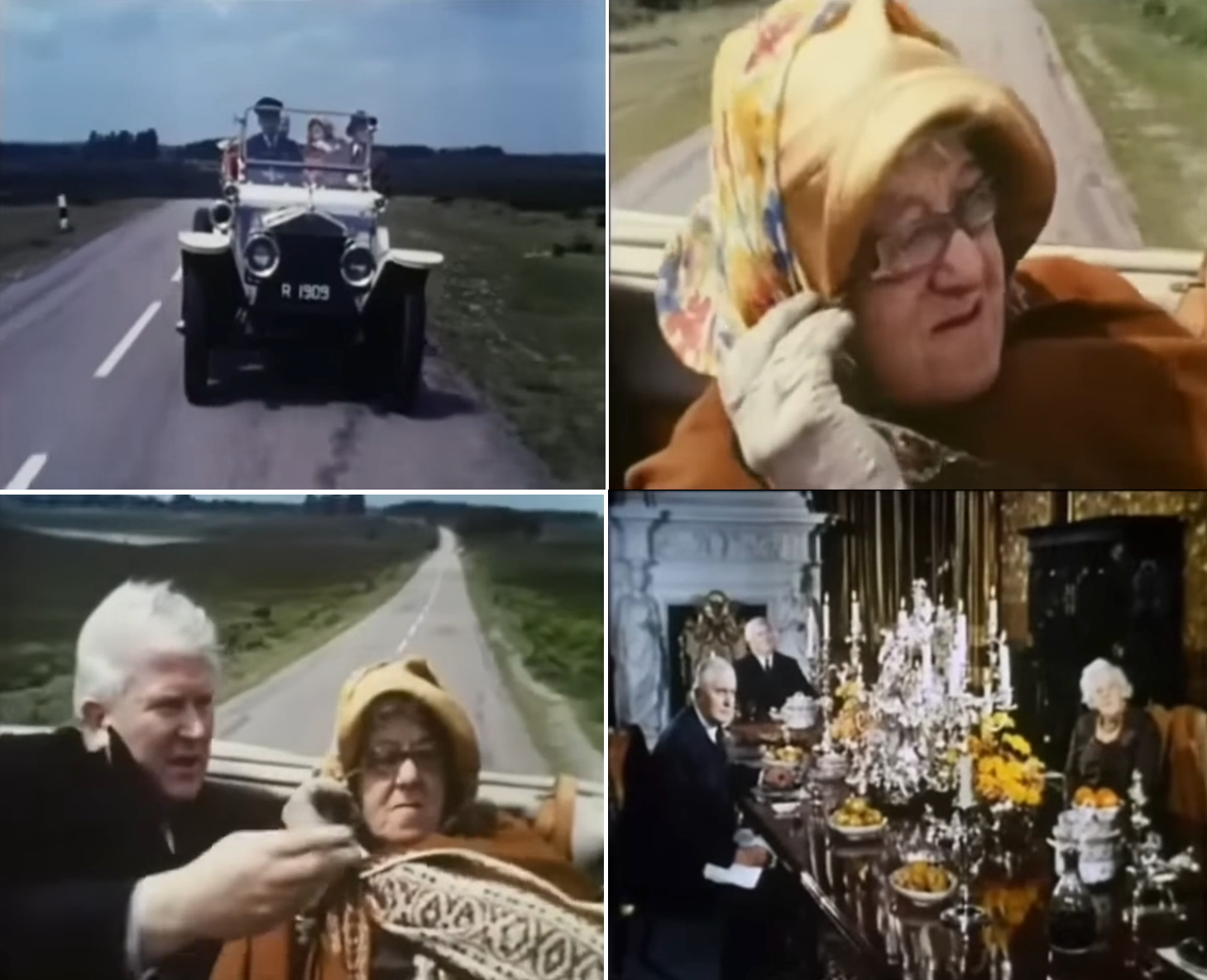
The film was directed by Frank De Felita who previously cam up in our DEBASED ON A TRUE STORY about The Entity, which he also wrote.
The movie was based on the book by Diana Normond which you can read on The Internet Archive.
You can watch the entire film on The Internet Archive as well.
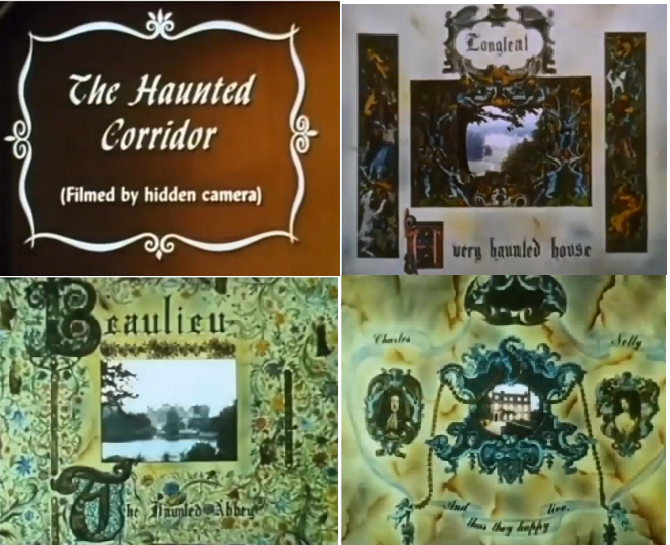
The “on screen” interstitials and notices were something to behold.
SEO Transcript
This is not a fully accurate transcript, and was machine generated. It’s here for helping search engines find the episode but not intended to be a faithful transcript of the episode. (But it’s not AWFUL.) Some of the material in this transcript only exists in the Patreon/Premium edition of the show and was excised for the commercial version.
———————
Monster House Presents
This is the ad-supported version of Monster Talk.
We’re dependent upon the revenue from these ads and from the support of our patrons at patreon.com forward slash monster talk to continue making this show.
As a disclaimer, your hosts are unable to control what ads you will hear.
And while we have done what we can to avoid ads that are divisive, the system that injects them sometimes ignores our preferences and always seems to ignore our efforts to not interrupt the conversational flow.
While we understand this can be disruptive, we’re trying our best.
Patreon remains the best way to enjoy commercial-free listening to our content, plus you generally get extended coverage of the subject.
We’re working on other ways to consume our content as well, so please stay tuned.
Now, I’ve never actually myself seen or heard the supernatural, but I can remember in my lifetime servants walking all miles around the passages rather than to go down that corridor at night.
And in any case, I can promise Mr. Corbett sufficient work for any medium here at Longleat tonight.
Well, Mr. Corbett isn’t a medium.
He’s a clairvoyant.
Mediums claim to be in touch with the spirit world through a guide, a long-dead man or woman whose job it is to bridge the gulf between the living and the dead.
But clairvoyants make no such claim.
I just happen to be born with a gift.
I can see ghosts.
I can’t exercise nor tell them to go away, but when they’re around, I can see them.
Well, if that’s the case, we might as well get on with the job.
It’s actually quite unlike anything we’ve ever seen before.
A giant hairy creature, part ape, part man.
In Loch Ness, a 24 mile long bottomless lake in the highlands of Scotland, it’s a creature known as the Loch Ness Monster.
Monster Talk.
Welcome to Monster Talk, the science show about monsters.
I’m Blake Smith.
And I’m Karen Stollznow.
This week and next week, we’re taking a look at a made-for-TV special produced by NBC in 1965.
Karen and Matt watched it on YouTube and brought it up as a show topic, and I was surprised at how enjoyable I found it.
When we got together to talk about the film, we ended up chatting for more than an hour, so I split this into two parts.
This film is directed by Frank DiFalita, who was a novelist, director, screenwriter, and enthusiastic researcher of the paranormal.
His novel, Audrey Rose, was adapted into a supernatural horror film, as was his, based on a true story novel and screenplay, The Entity, which explores the claims of Doris Bither and the paranormal researchers who studied her case.
We discussed that film in our series, Based on a True Story, and I’ll put a link to that in the show notes.
But The Stately Ghosts of England is not a particularly controversial or sensational film.
It’s more of a cozy exploration of venerable British homes and the well-to-do occupants who claim to share their residence with ghosts of previous tenants.
So here’s the thing.
When we started researching to put these episodes together, I realized that from a high level, the movie has all the elements of what would later become reality TV ghost hunting shows.
Now, in one sense, this movie is sort of recapitulating the kinds of investigations that the Society for Psychical Research conducted for decades.
And that influenced things like Shirley Jackson’s The Haunting of Hill House, which itself quite openly used SPR archives for inspiration.
The movie version of that novel, The Haunting, came out in 1963, just two years before this film.
And while the homes selected were inspired by the eponymous book by Diana Norman, which itself came into being in 1963, the structure and atmosphere feel indebted to Jackson’s novel.
Diana Norman was invited to work with self-described clairvoyant Tom Corbett, and the book she wrote describes visits to well-known English homes like Longleat, Woburn Abbey, Little Coat, Burford Priory, and others.
As Norman describes Corbett walking through these homes sensing spirits, it will be a familiar experience to anyone who’s watched reality TV shows with alleged psychic clairvoyance mediums.
The TV movie only deals with three of these homes, and in part one, we’ll get as far as Longleat.
Part two will take us to Salisbury Hall in Bewley.
If you want to see the film, there is a complete version on the Internet Archive, and I’ve linked to that in the show notes.
Monster Talk.
The whole gang’s back together.
It’s good stuff.
Back together, and here to talk about yet another one of those…
BBC archival videos that YouTube keeps suggesting, recommending to Matt and I.
And this one is the stately ghosts of England.
I keep going to say stately homes or houses of England, but I guess that is the impression that they’re trying to give with this.
So it was actually an NBC News production and a 50-minute special that aired back in 1965.
And so The Stately Ghost of England was inspired by a book of the same name written by Diana Norman back in 63, so a couple of years before this aired.
The Norman Conquest, got it.
I’ve seen her name, yes, spelt in different names, but we’ll go with that anyway.
But her book details visits to 11 English country houses.
So she looks at other locations too, Woburn Abbey, Camfield Place, and Little Coat.
So some of our listeners might be familiar with some of those places, but certainly the three that we’re going to be talking
talking about tonight.
And Blake, I know that you’re particularly interested in this aspect of the show and of the book too, that it seems to predate the big boom in haunted houses, even though these stories go way back, but certainly the ghost hunting culture aspect.
And it seems to really show ghost hunting techniques of the past and was certainly ahead of its time.
Well, you may recall this.
Well, this came out about, what, two years after the movie The Haunting, based on Shirley Jackson’s The Haunting of Hill House.
Oh, yes.
Indeed.
I didn’t even connect that.
And in a lot of ways.
That sort of set a prototype template for a ghost investigation.
But Shirley Jackson was copying spiritualist investigations as documented in the SPR’s archives, the Society for Psychical Research.
So I felt like what we were seeing here was, while not entirely natural, like it was very much…
What would be the word recapitulating the behaviors of SPR type investigations?
I think obviously different format in a dramatic presentation.
Right.
So but but yeah, I mean, I feel like.
It feels, honestly, although it feels very staged, and I guess we’ll get into all that, it feels very staged and constructed, but it also felt a little elevated compared to how the modern amateur ghost hunter YouTube sort of culture is.
At least in terms of accents.
And settings.
There’s a built-in class structure.
by deriving it from the superset of stately homes, and then you just get the haunted ones, and then you just get the ones that are in that book, and then you just get the ones that are included in this video.
So, yeah, it’s really…
I think we should start by talking about the cast a little bit.
Sure.
So we introduced the cast, and they’re described as experts, and I thought it was interesting that in the same breath they’re then introduced as true believers.
But we have…
as the star, the host, the wonderful Dame Margaret Rutherford.
So she wasn’t actually a dame then.
She was a dame in 1967.
And around that time, she won an Academy Award.
And I think at the time, she was the oldest Academy Award winner for Best Supporting Actress.
And also, I think the last person to win an Academy Award who had been born in the 19th century.
So I thought that was interesting.
Oh, well, we should specify what a dame is, because a lot of people in America might think it’s like toots, the mall on the arm of the gangster, you know, so.
Yeah, well, I’m not sure, but I think it’s like a British order.
So it’s kind of akin to a knighthood.
Is it a female knighthood?
A kind of knighthood, akin to a lord, I believe.
But I don’t know, and we’re going to talk about her husband in a minute, if he was actually, if he receives a title too.
The thing is like Dame Judi Dench.
Yeah.
In certain orders of chivalry, a lady, a dame is considered higher honor than a lady.
So now I know everything.
And that could be because the recipient’s a woman.
But yeah, certainly the term has pejorated in the United States where it can be a kind of dismissive term for a woman.
When I hear the term, unless it’s within the context of Elizabeth Taylor, I do think of it being an insult.
But Margaret Rutherford, she was amazing, an actress of stage, movies, television.
When I think of her, I think of her as Agatha Christie’s character, Miss Marple, and she’s unforgettable in that role and really brought some comedy to the role too.
So you would think she’s a very unlikely host for this show at first, but apparently she was a buff, this is a quote, a buff of all things paranormal.
So she lends that air to the show and also her collection of capes and silk hats.
Yeah, you’d think that’s probably her own clothing.
I don’t think there was a big budget.
But yeah, she’s interesting.
She’s captivating.
I mean, I don’t know that I would go to her for expertise, but boy, howdy, can she command a room.
She can, and her background is very interesting, too.
She really had quite a tragic upbringing.
I don’t know how much we want to get into this, but both of her parents took their own lives.
At the same time?
No, they were both in and out of mental health institutions at the time.
And her mother was pregnant at the time and her father kept going back into hospital.
And she didn’t know that he was still alive at one point.
She was told that he’d passed and yet he was still alive for about another 10 years in a hospital.
Oh, yikes.
But she, I think, as a result of that, suffered childhood trauma and went through depression and anxiety her whole life and had electroshock therapy.
Oh, wow.
But was greatly supported by another cast member by the name of Stringer Davis, and that was her husband.
And he’s an interesting character.
He has a quiet presence, I think.
in the show.
I didn’t know who he was at first.
I thought, who is this guy?
He doesn’t really say anything.
But apparently she would put, so he’d appeared in about 20 films with her and in later years she’d made it a condition of any contract that she had for movies and television that he would always play a part in anything that she appeared in.
Charles Bronson had the same deal with his wife.
So after they got married, a bunch of movies they do together.
So, yeah.
Oh, interesting.
It’s nice, but it keeps you from being separated.
It makes good sense from a relationship perspective.
Oh, yeah.
I drag Matt into things.
Look at where we are.
In fact, this is a drag show.
A lot of people don’t know that.
Well.
Much like Springer Davis was, I think, very comfortable being known as Margaret Rutherford’s husband, I’m very comfortable being known as Dr. Karen Stollznow’s husband.
Mr. Kathleen Smith here.
But they had an interesting relationship.
I think he came from stock and wealth, and his mother did not want them to get married, so they were together for about 15 years during their courtship and didn’t marry until his mother passed.
And I think that she referred to Margaret Rutherford as that older actress lady, and he didn’t particularly like her.
But it just seems like they had…
I don’t know, a relationship of convenience
like you read up on that a little bit yeah it sounded like for the time a lot of people gossiped that this might have been what they call a lavender marriage which is to say that Stringer might have been homosexual this was a time when it was on the cusp of that becoming legal but it was a very it wasn’t decriminalized until yeah I’m not sure what year
late i think mid to late 60s is my recollection but uh but before that you could be imprisoned uh if you were openly gay oscar wilde yeah yeah it not not pleasant yeah rough times 67 yeah there you go so it was partially decriminalized in england and wales via the sexual offenses act in 1967 so yeah speaking of oscar wilde uh margaret rutherford appeared in in some of his plays
I think the importance of being earnest and, I mean, just so many very well-known movies and plays.
But yeah, they had a very interesting relationship.
I read a lot to a lot of people say, oh, their relationship was never consummated.
And it’s like, I don’t know how anyone could possibly know that.
Well, the video.
Or the lack of video.
But yeah, they were together for their entire lives and died within a year of each other.
Which is very romantic and very, very common with people who’ve been married a long time.
I, my, it, their relationship set off my gaydar sense.
That’s the only reason I even looked it up.
I didn’t read anything about it until I actively went to look for it because something about their chemistry just seemed like that, that, that relationship, like that vibe.
So I don’t know.
It’s called acting.
Acting.
But it was so common in the cinema of the time or in the, in that, that world, the acting world at the time, you know,
Yeah, well, Rudolph Valentino, I think there were claims about him and Errol Flynn.
Errol Flynn, yeah.
Yeah.
Yeah.
But there was some nasty business.
I mean, we’re getting off.
Oh, way off topic.
Yeah, yeah, yeah.
But there was some nasty business when they were at the end of their lives and Margaret Rutherford had Alzheimer’s.
Oh, no.
And they brought in someone to care for them, a nurse, and I think she kind of –
tried to cozy up to Stringer and I think had aspirations to marry him.
And then when he died, she forged a will and said that he’d left her everything and stole some of their possessions and sold them off and I think is still at large.
Wow.
Yeah, she… A lot of drama.
Was a warrant out for her arrest.
Well, I mean, they’re actors, but a lot of extra drama.
Yeah, yeah.
But there is a third cast member…
and an additional person that we’ll talk about too.
But the third cast member is Tom Corbett.
And in some references to the Stately Ghosts of England, the book, it seems like he was a co-author, but he actually travelled with Diana to these 11 places, visited them.
So I think that’s why he’s woven into this TV show.
But he’s described, so he’s the psychic, and he’s described as a society clairvoyant.
Hmm.
So, interesting.
And he has that vibe.
Doesn’t he feel like the sort of the chip coffee character?
Like, he really does to me.
A bit.
Yeah.
Derek Okora?
Or Derek Okora?
Yeah, I mean, yeah.
It’s just like, again…
This is I think this is maybe a very important little film because of how it prototypes everything.
Like it really does set a template for what one of these investigation shows should look like.
And I. Yeah.
Ground.
There’s features here that will not appear in future stuff, which I loved, which we’ll get to.
But it really does feel like you could make a new version of this with different cast members and it would be super obvious what everybody’s doing, what their roles are.
It’s very, very much familiar territory now, but probably quite novel at the time.
Yep, yep.
And I’m surprised that they didn’t do a sequel because there were so many other houses and mansions in the book.
But there is one additional key player in this show.
Do you want to talk about the producer, Matt?
The producer, he’s an interesting chap.
What was his last name?
It’s Frank.
Yeah.
And he wrote The Entity.
Oh, really?
Audrey Rose.
Yeah.
Yeah.
Wow.
And I mean, he was a producer and director and did many things in that area.
But he wrote quite a few things.
And among them, you mean the screenplay, right?
Because I think that was the book was written by parapsychologists, right?
But so you wrote the screenplay?
Yes.
OK. Well, I just saw when you look up the entity, when you look up his name, it says IMDB as well says he’s the author of the entity.
But I think you might be right that that’s the screenplay.
Although Jay Anson was the author of Amityville, and he wasn’t there at the time.
Well, let’s get into, I guess, the meat of the show.
I want to add, too, that at the start of the show, that they say that they talk about these ghost stories and how they, quote, might be bad for business.
And I thought, wow, the reverse is.
Yeah, no kidding.
It is the business.
But I think it’s fun when you see them traveling in a it’s a Rolls Royce Silver Ghost.
It’s a beautiful vehicle that they’re driving in and so scenic.
They go past Stonehenge.
So there’s so much atmosphere to all of this.
But the first place that they go to, which is kind of near Stonehenge, it’s in Wiltshire, which is in southwest England.
It’s a place called Longleat House.
And, yeah, I thought let’s go through this in the order in which we saw this in the show.
Sure.
But it is a beautiful house, and I believe it’s now owned by a Lord Henry Thine, I think is how you pronounce his name.
But the place is known for allegedly having a resident ghost, so the ghost of –
I said his wife in my notes, but no, obviously this is the wife of the Viscount at the time, Viscount Weymouth.
So this is in the 18th century when they owned the place.
That’s the 1700s.
1700s.
That’s right.
So this ghost, Lady Louisa, known as the Green Lady as well.
So she’s believed to wander the corridors near the library searching for her lover.
So she was married.
But she took a lover.
What did they say in the show?
It was like he wasn’t much of a chap.
And society was absolutely thunderstruck when she married my ancestor, who, I have to admit, wasn’t much of a chap.
He wasn’t much of a chap, yes.
So, yeah, I don’t know if that was a reference to his sexuality or his appearance.
I think it was his appearance because they really focused on that portrait of him where he had that kind of Ichabod crane, long nose and no chin kind of thing.
So, yeah, he didn’t come off as a type of guy that was going to, you know, round himself up a fetching woman.
Or enter into a duel.
Or into a duel, exactly.
It sounds like it may have been that he just pulled a sword on a guy, that it wasn’t necessarily a fair duel.
Well, I wonder if it even took place because there’s no…
no name of a lover.
So they even say that, that he has no name.
It doesn’t seem like there are any records.
And if we’re talking about the 1700s, as Blake pointed out, that they would have had records of these kinds of things and duels were the way that business was handled and they were legal, but there would have been records of someone having died on the premises and it would have appeared in…
in the local newspapers.
So we’d have records.
And it is sad that they had to resort to dueling, but rap battles had not been invented yet.
So this is what they had to do.
So got to do what you can.
That’s right.
It just tracks.
We’re not around.
So she allegedly still haunts the premises and you can still hear the sound of her, her weeping.
and I thought it was interesting too where they spoke with the lord of the manor and asked him, have you ever actually seen this ghost?
And he said, no, I’ve never seen the ghost myself.
I’ve never, I think he said, actually seen or heard the supernatural, but he refers to their, I believe, the librarian.
and that she’s had some kind of encounter and they go and speak with her.
And she says, well, I didn’t actually quite see the ghost myself.
It was more of a sinister presence that I felt.
And then they invite her to visit the corridor and she’s like, oh, no thanks.
So she doesn’t want to go along.
So throughout this production, they have these interstitial images that they use.
And this is so funny because they’re going to be filming in a corridor up at the top, I guess, which I imagine would have been Servant’s area back in ye olde days.
It’s not that old, but…
That long hallway that they’re going to shoot down.
And they, they throw up a card on the screen and it’s, it’s all like in like a italic font.
It’s very elegant.
And it says the haunted corridor filmed by hidden camera.
And Matt, I, you know, I know you’ve looked into this sort of thing.
Like I have a lot.
Was it in any way, did that look like it was hidden camera footage?
It did not.
The only thing that made it seem like maybe it was hidden was that neither of them acknowledged the camera.
Right.
They did a great job.
But at some point, one of the characters is wearing glasses and you can see the studio lighting like when they turn.
It’s like, OK, that’s not a hidden camera if you’ve got to rig lighting for the scene.
Well, and it moved.
The camera was moving.
Yeah.
So, and it was in the middle of the hallway, which is a great place to hide something.
Yeah.
And they later show the hallway from the other perspective and there’s nowhere to hide it.
Right.
Yeah, that was hysterical to me watching that.
But before, when he was talking, who was it?
The Lord.
The Lord was talking about how he hadn’t seen anything or heard the supernatural.
But then he references Mr. Corbett and says that it will be sufficient work for any medium here at Longley tonight.
And Margaret Rutherford just spoke right up.
Mediums claim to be in touch with the spirit world through a guide, a long-dead man or woman whose job it is to bridge the gulf between the living and the dead.
But clairvoyants make no such claim.
Clairvoyants make no such claim.
It was just funny how she schooled him there in this knowledge everyone should have about mediums and clairvoyants.
I really enjoyed that a lot.
That’s why she’s the host.
And it was great because they were sitting at this big long table with this ridiculously huge chandelier centerpiece in the middle of it.
And you suddenly see Tom Corbett’s head pop around because he’s sitting on the other end of the table.
pop around and, you know, he’s basically, I just happened to be born with a gift and I can see ghosts.
And it’s just funny the way his head pops around that big, huge centerpiece.
And it seems like it was done for comic effect, but, you know, nobody laughed but me.
Oh, no, it was funny.
And just see the opulence of the house and the table.
But, yeah, well, they caught some evidence, though, didn’t they?
Yeah.
Do you have any evidence, I think, in the entire show?
Yeah, I mean, they’ve got…
I’m not sure what kind of camera that was supposed to be.
Was it night vision?
It didn’t look like night vision.
I mean, that would be too early for him.
I don’t know.
It had like a red filter on it.
I don’t really know what it was.
Okay, but here’s the thing about that.
I have read that supposedly…
They were having trouble filming there because the ghosts were causing, you know, the film to come out either reddish or orangish or cameras were falling and things were happening.
So until the director, Frank, decided to say ghosts can do.
Do we have your permission to film here?
And then everything stopped and behaved the way it should.
So and that was actually publicized.
all the problems, supernatural problems they were having.
So I am assuming that that footage is part of that mistake.
Well, it’s not the beginning of a manifestation as they refer to it.
Well, but that’s the thing is we don’t know if it was time lapse.
We don’t know if it was slowed down.
I would say they do show the little, there’s a little clock in the bottom left-hand side and it does move.
So I’m assuming it’s time lapse, but I don’t know what kind of filter that is.
That’s crazy.
Yeah.
Yeah, yeah.
But yeah, and it’s just one of those things, you know, coming from a critical thinking perspective.
It’s difficult because we have no information.
They’re on the top floor, there would be windows, but the cameraman who they interviewed says they were all blacked out.
And yet you can still see a clear sort of triangle of light coming from an upper window that is stationary throughout.
So they didn’t black out that window.
And if they didn’t black out that window, what other window did they not black out?
And if that was time lapse, could that have been the moon?
It depends on how much time it took.
But it was clearly a shaft of light.
They even called it a shaft of light, which is great.
But I’ve never heard of a ghost being referred to as a shaft of light before.
A little orb, I’ve heard that, but that came many years later.
Well, you start to call it that, and you say, don’t say that, because that shaft.
Right, exactly.
I’m just talking about shaft.
So it was, you know, when it would move, it clearly conformed to the shape of the wall and the corners and everything.
So, you know, it was light and the clear.
It had borders like it was coming through a window.
Yeah, it in every way looks on.
Except we’re remarking on it, but yeah.
Right, right, right.
You put a red filter on it.
Right.
Yeah, we ruin everything.
You put a red filter on it, and then you have a guy in horn-rimmed glasses with interesting eyebrows say, I didn’t do anything.
I was just sitting here.
And I can’t explain it.
Well, then it’s a ghost.
That’s right.
Well, and that was that.
I think we’ve still got two more places to visit, so we should move on.
We end that segment where they do these cool interstitials.
I’ll put these in the show notes.
Is it Longleat or Longleat?
I think it’s Longleat.
Longleat.
Longleat.
And they’ve got, like, it’s an illuminated manuscript.
And what they’ve done is they’ve made a cutout to do, like, an insert over the video.
They totally copied the Princess Bride.
They really ripped off the Princess Bride in 1963.
They totally did.
And it says a very haunted house.
This…
is delightful i it is so pleasant and innocent like i it just is so much it’s coming to us with a cleaner uh like a cleaner um i don’t know what you would call it uh karmic load than most of the modern stuff
I had a little bit of a Chitty Chitty Bang Bang kind of feel.
Yeah, it feels like a Disney Sunday night special.
The colors are very rich.
I don’t know.
It’s a bit Pride and Prejudice.
I bet.
Anyway.
Before we get to the next house, though.
You mean the Salisbury Steakout?
Yes.
Okay, sorry.
That was good.
I could smell that one coming.
Now, the…
The one before that, I have to comment on Rutherford’s wonderful little scamp-like behavior of sneaking away and finding hidden passages.
Yes!
Or do they find her?
And she does it twice in the thing where she just kind of wanders off.
And I love it.
I love it so much because she seems so mischievous doing that.
She stole that from Home Alone.
It reminds me of the Ghost Story for Christmas where you’ve got a character who’s looking in a library.
Everyone else has left and then mysterious things happen.
But they shoot from behind the books.
Like you’re getting the ghost perspective on her.
Are we really supposed to…
It reminds me of in Ghostwatch, there’s a moment where it’s supposed to be like a staged camera where the kids can’t see it.
When I say staged, it’s supposed to be fixed on a tripod.
And the shot changes, even though it’s supposed to be completely automated.
So it kind of breaks the…
If you know anything about filmmaking, you don’t normally have the ability to shoot from behind the books out at the people looking at the books.
That’s just impossible.
So…
Yeah, anyway, it sort of broke it for me, but it didn’t make me not love it.
I loved it.
Yeah.
They stole that from Interstellar.
Damn!
You ain’t wrong.
You ain’t wrong!
Well, I think we should move on to the next problem.
Yeah, yeah.
And so that’s Salisbury Hall, and this is in Hertfordshire in East England.
And so it’s pretty close to St. Albans, which is the Roman settlement.
Erin, can I stop you?
We forgot something else.
What?
A long late.
Why ghosts rarely appear in color.
Oh, yeah.
Oh, well, yeah, I guess we need that information to talk about.
Anything else?
Yeah, certainly the third place.
Ms. Rutherford is a paranormal expert.
She is, and she was so great.
Because I didn’t know this.
I didn’t know this myself.
She said that ghosts rarely manifest in color.
It’s normally in black and white because of all the ectoplasm.
The people who’ve seen the ghost testify to it being greyish in colour.
Well, ghosts rarely manifest themselves in colour, Lord Barth.
They’re usually described as grey or whitish grey because that’s the general colour of the ectoplasm which surrounds psychic manifestation.
And yet we’re talking about a green lady and later on we talk about a grey lady and a blue lady.
The monks in brown.
The monks in brown.
So, yeah, that logic is quickly forgotten.
But it was cool that they got to throw in a little insert with lots of old ghost photos, which I know we all love.
Yes, those were beautiful.
That’s right.
Yes.
Yeah, there was a silver bell, the manifestation and the ghost of random hole.
Yes.
Yeah.
Classic.
Classic.
Monster Talk.
You’ve been listening to Monster Talk, the science show about monsters.
I’m Blake Smith.
And I’m Karen Stollznow.
You just heard Matt Baxter, Karen Stolzno, and me discussing the 1965 NBC television movie, The Stately Ghosts of England.
This was part one of a two-part coverage, which will conclude next week.
We hope you’ve enjoyed this episode of Monster Talk.
Each episode, we strive to bring you the very best in monster-related content with a focus on bringing scientific skepticism into the conversation.
If you enjoy Monster Talk, we now have a variety of ways to support the show, all with convenient links at monstertalk.org forward slash support.
That’s monstertalk.org forward slash support.
We have links there to our Patreon page as well as a donation button.
Another great way to support the show is to buy books from our Amazon Monster Talk wishlist, which directly helps us with our research.
We love used books very much, so don’t feel compelled to buy new ones.
And we love Kindles so we can share our digital libraries with each other.
And finally, without spending any money at all, you can support us by leaving a positive review at iTunes or wherever you get your podcasts.
Positive reviews help keep us visible in iTunes, which is a great way to help us find new listeners.
And please share our show on your favorite social media platforms.
Monster Talks theme music is by Pete Stealing Monkeys.
Stay tuned for part two next week.
This has been a Monster House presentation.