Regular Episode
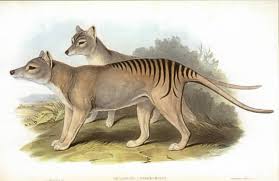
225 – Thylacines and Pademelons
🐾 The TAGOA Video and the “Evidence”
Neil Waters of TAGOA posted a video on February 22, 2021, to YouTube claiming trail-camera images captured what appeared to be a family group of thylacines — a mother, a father, and an unambiguous baby — wandering northeast Tasmania. Waters promoted the footage on Triple M Radio with host Brian Carlton, describing it as “pretty good evidence.” Carlton’s first on-air response upon seeing the images: “So what am I looking at here?”
Waters had sent the photos to Nick Mooney, a thylacine expert at the Tasmanian Museum and Art Gallery (TMAG). Mooney’s verdict: the animals are “very unlikely to be thylacines” and are “most likely Tasmanian pademelons.” His full quote, relayed via CNET: “The still images are not so exciting.”
🦘 So What Is a Pademelon, Exactly?
Pademelons are small marsupials native to Tasmania, mainland Australia, and New Guinea — compact, thick-furred relatives of the wallaby, smaller and rounder than their cousins. When browsing or moving away from a camera at speed, they can look surprisingly different from how they appear standing upright. As Karen notes, certain angles, dense vegetation, and wishful thinking can do a lot of heavy lifting. (Blake confesses to repeatedly calling them “pandamelons” during recording, which he blames on residual exposure to Cloudy with a Chance of Meatballs 2.)
🌿 The Buderim Beast and Mainland Sightings
Karen and Mat discuss a separate thread of mainland Australian thylacine lore: the so-called Buderim Beast, named for Buderim, a suburb north of Brisbane in Queensland where Karen’s mother lives. Historical range maps show thylacines did once inhabit Queensland and much of the Australian mainland, so sightings there aren’t geographically absurd — just almost certainly misidentifications. Cryptozoologist Karl Shuker has written about the Buderim Beast reports.
Karen and Mat actually visited Buderim Forest to photograph the habitat. The dense palm fronds and dappled light make it easy to see why someone hiking with a dog — especially one flashing past vegetation — might glimpse something striped and exotic. As Karen puts it: “If all you’re looking for is the stripes, because that’s what they’re known for.”
🔬 What Science Actually Tells Us About Thylacines
The episode touches on several genuinely fascinating findings from thylacine research:
– A major genetic population crash occurred more than 70,000 years ago, detectable in the low diversity of surviving bone specimens.
– Human arrival on the Australian mainland (~40,000 years ago) drove another significant decline.
– Dingoes arrived roughly 4,000 years ago — but a separate population crash around 3,000 years ago hit both the mainland and Tasmania (where dingoes never reached), suggesting a climate-driven event was also a major factor.
– Despite their common name “Tasmanian tiger,” thylacines appear to have hunted more like ambush predators — closer to a cat’s strategy than a wolf pack’s — which partly explains why the colonial-era fears of devastating sheep predation were probably exaggerated.
– The colonial bounty system (Tasmania paid bounties from 1888 to 1909) almost certainly delivered the final blow. The last known individual died in the Hobart Zoo in 1936; the species was officially declared extinct in 1986.
🧬 Why eDNA Could Settle This Once and For All
Blake draws a parallel to the environmental DNA (eDNA) survey of Loch Ness discussed in an earlier MonsterTalk episode with researcher Neil Gemmell. His argument: eDNA sampling of water sources, insect blood meals, and other environmental substrates in thylacine search areas would be far more definitive than any trail-cam photo. If a breeding population of large marsupials were roaming northeast Tasmania, they would be leaving biological traces that modern molecular techniques could detect. Blurry images are not a necessary step in that process.
📰 A Note on Media Responsibility
The panel is notably frustrated not just with Waters but with the news outlets that amplified the story without checking whether he had made prior unverified thylacine claims — which he had. Karen observes that this is the same pattern repeated with ghost sightings, Bigfoot videos, and every other cryptid slow-news-day story: the media get clicks with no accountability when the claim falls apart. Meanwhile, the genuinely interesting science — new research on thylacine hunting behavior, population genetics, climate impacts — goes unreported.
📚 Further Reading
– Thylacine – Wikipedia
– Pademelon – Wikipedia
– Tasmanian Museum and Art Gallery (TMAG)
🔗 Related Links
– Thylacine Awareness Group of Australia (TAGOA)
– Thylacine extinction history and bounty system
– Environmental DNA (eDNA) – overview
– Dingo – Wikipedia
– Hobart Zoo – Wikipedia
Note: ads inserted into the distributed audio alter the timestamps in unpredictable ways, so timing references in these notes are approximate.
Blake and Karen are joined again by Mat Baxter to talk about the latest Thylacine claims from the TAGOA. The photos dropped last night (US Time) and sadly don’t meet up with the hype – but there’s still much to talk about with this story.
Triple M Radio with Neil Waters on Thylacine News
Thylacine probably didn’t attack sheep in the way feared by 1920’s Sheep Herders.
Was climate change a big factor in the decline of Thylacine?
Thylacine Awareness Group of Australia (TAGOA)
What are pademelons?
Example of a “Buderim Beast” news story.
Karl Shuker on the Buderim Beast.
Previous MonsterTalk coverage of Thylacine.
Some photos from Mat & Karen’s trip to look for the Buderim Beast:


MonsterTalk Admin
0