Regular Episode
213 – Ghosts and Sociology
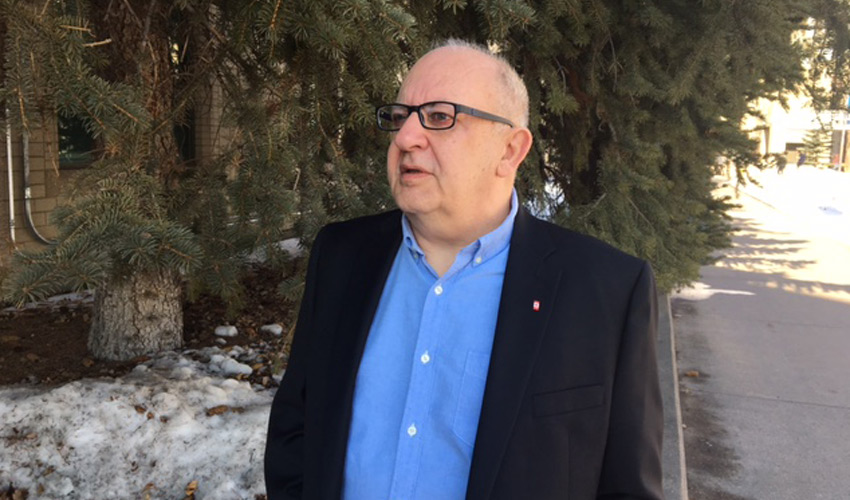
What makes this episode unusual is that Dr. Aveline approaches the subject neither as a believer nor as a debunker, but as a sociologist asking a deceptively simple question: how do ghost experiences affect the lives of the people who have them? He’s a self-described skeptic who has nonetheless trained himself to set that skepticism aside — at least during the interview.
🔬 The Research Design
Dr. Aveline conducted in-person interviews with 38 people across four major Canadian cities, recruited largely through Craigslist’s volunteer section, supplemented by 24 additional written accounts submitted by email. His methodology is rooted in grounded theory — entering the field with as few prior assumptions as possible and building theory inductively from the data, rather than testing a hypothesis.
He is currently in the coding phase, working through several hundred pages of transcripts and tagging recurring elements: the appearance of apparitions, whether ghosts were male or female, relatives or strangers, attached to a place or mobile, and what reason (if any) the experiencer attributed to the haunting. His running tally of reported entities across his sample already exceeds 300 individual ghosts — a figure partly explained by the eight self-described sensitives in his cohort, who report encounters far more frequently than the general population.
👁️ What People Actually Report
The range of experiences Dr. Aveline collected is striking. Common encounters include:
– Peripheral (“corner of the eye”) sightings, which turned out to be more frequent than full-frontal apparitions.
– Bereavement hallucinations: a deceased spouse appearing in a window to say goodbye, or a brother and sister-in-law appearing to signal they were “all right.”
– Childhood presences: several interviewees recalled ghost encounters beginning at age four, accepted without fear simply because young children have not yet drawn a firm line between the ordinary and the impossible.
– Pet ghosts — beloved cats and dogs — and the widespread belief that living pets can detect paranormal presences before their owners do.
– Experiences that defied any easy naturalistic framing, such as a man who described summoning an apparition, commanding it to leave, and then watching a ten-foot Angel Gabriel descend from the ceiling, wrap the ghost in his wings, and carry it back up through the ceiling in a cloud of smoke.
Dr. Aveline notes that his interviewees were not credulous eccentrics: they included a police officer, a doctor, a nurse, and a journalist — people professionally trained in empirical observation. Most were simply anxious to be heard by someone who wasn’t going to laugh at them.
🧠 The Thomas Theorem and Why Belief Matters
Dr. Aveline anchors his sociological framing in the Thomas Theorem, articulated in 1928 by sociologists W.I. Thomas and Dorothy Swaine Thomas: “If men define situations as real, they are real in their consequences.” Whether or not ghosts exist as objective phenomena, the experiences his subjects describe carry real psychological and social weight — comforting some, tormenting others.
Several sensitives in his sample described their abilities as a genuine burden: one reported feeling physical pain before someone in his vicinity dies; another said she could not ride a bus without being overwhelmed by other passengers’ emotions. A number of interviewees described malevolent presences that resisted both priestly blessing and indigenous spiritual intervention. On the other end of the spectrum, others found comfort in visitations from deceased loved ones — a dynamic Dr. Aveline admits he finds almost enviable from a secular standpoint.
🏨 Haunted Hotels: Banff Springs and The Stanley
Dr. Aveline mentions the Banff Springs Hotel — a grand castle-style property in the Canadian Rockies — and its resident legend, Jimmy the Bellhop, a ghost who is said to operate an elevator and then vanish through solid walls. One of Dr. Aveline’s interviewees encountered what he took to be an irritable, elderly elevator operator who simply ceased to exist after stepping off at the next floor. Dr. Aveline called the hotel to follow up; staff confirmed that multiple guests over the years have reported the same figure.
Blake mentions his own visit to the Stanley Hotel in Estes Park, Colorado — the real-world inspiration for the Overlook Hotel in 🎬 The Shining 💵. Karen notes that her husband, who does similar skeptical work, was effectively asked not to return after he provided naturalistic explanations for some of the experiences that ghost-hunting groups had reported there. The Stanley, the hosts agree, has an obvious commercial incentive to lean into its haunted reputation — and charges accordingly.
🌀 Skepticism, Empathy, and “Energy”
One of the more candid stretches of the conversation concerns how hard it is to be a working skeptic while listening to someone sincerely recount a profound and life-altering experience. Dr. Aveline describes a genuine ethical discomfort: his mind automatically reaching for explanations like sleep paralysis or parasomnia even as an interviewee describes being held down by an invisible presence that transformed into a child — and then feeling that his private skepticism was a kind of betrayal of the person trusting him with the story.
The hosts also discuss the colloquial use of the word energy — a term that physicists use with precise, measurable meaning but that experiencers deploy to describe something more like atmosphere or emotional residue. Blake pushes back gently on the reflexive skeptic move of dismissing the term: the felt sense of walking into an old asylum, or of dating someone who drains your enthusiasm for life, is a real psychological phenomenon even if it has nothing to do with electromagnetic fields. Dr. Aveline makes a note.
📊 How Common Is This?
Dr. Aveline flags two U.S. survey benchmarks relevant to his work:
– The Chapman University Survey of American Fears found that 58% of Americans believe a place can be haunted.
– A Pew Research Center poll found that 18% of Americans believe they have personally been in the presence of a ghost.
No equivalent Canadian national survey exists, which is part of what motivates his project. He suspects Canadian figures would be broadly similar, and notes that the 18% personal-encounter figure likely undercounts the phenomenon since it excludes people who believe but haven’t (yet) had a direct experience.
📚 Further Reading
– 📚 Paranormality: Why We See What Isn’t There 💵 by Richard Wiseman (mentioned as a relevant psychology-of-the-paranormal resource)
– 📚 The Skeptic’s Guide to the Paranormal 💵 by Lynne Kelly
🔗 Related Links
– Thomas Theorem (1928) — Wikipedia
– Grounded Theory — Wikipedia
– Sleep Paralysis — Wikipedia
– Fairmont Banff Springs Hotel — Wikipedia
– The Stanley Hotel — Wikipedia
– Electronic Voice Phenomena (EVP) — Wikipedia
– Mount Royal University — Wikipedia
Note: ads inserted into the distributed audio alter the timestamps in unpredictable ways, so timing references in these notes are approximate.
Download MP3 (Right-Click, Save As)
We interview Dr. David Aveline about his new project studying people who see or experience ghosts. He’s just getting started, but it’s a really interesting conversation about how one puts together research into such a strange and complicated topic.
Notes:
An article about Dr. Aveline’s research
The Thomas Theorem (1928) by William Isaac Thomas and Dorothy Swaine Thomas
“If men define situations as real, they are real in their consequences.”
The Banff Springs Hotel – allegedly haunted hotel discussed in the episode
The Stanley Hotel – Colorado hotel, inspiration for The Overlook in The Shining
Blake Smith
0
Tags :