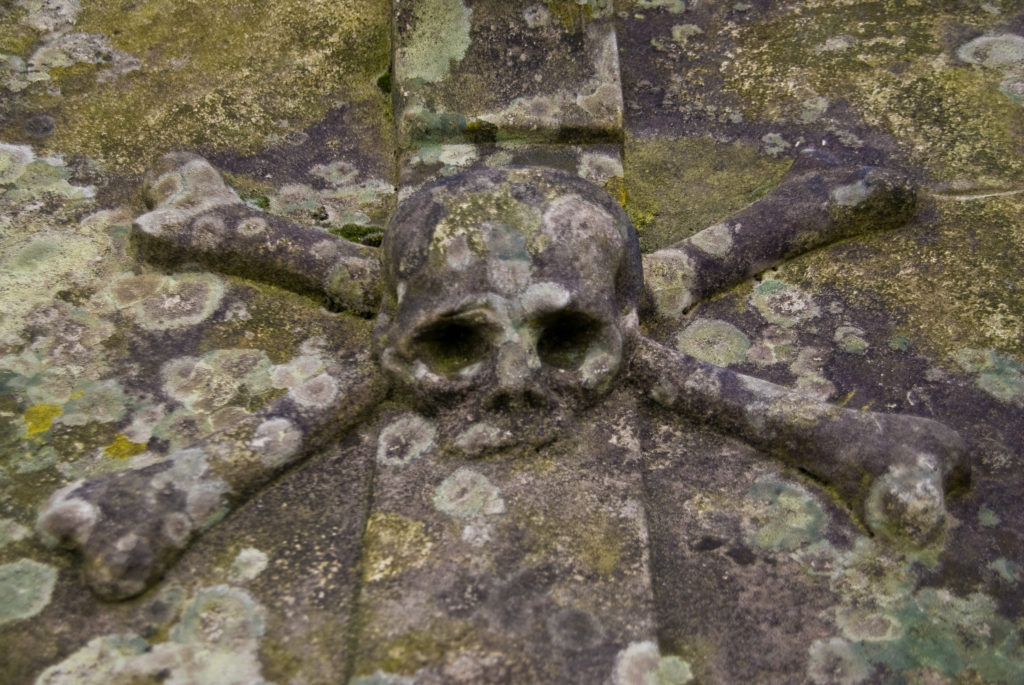
#205 – Burial Practice Makes Perfect
Blake opens with a reflection on a solo early-morning walk through the Key West Cemetery — home to more than 100,000 dead, nearly three times the island’s living population — and the thought he’s carried since his teenage years: graveyards are for the living.
⚱️ Burial, Cremation, and Exposure: A Brisk History
Tana sketches the three broad categories of body disposal across human history: burial, cremation, and exposure. Burial has the best archaeological footprint simply because it stays put. Cremation evidence survives less reliably, and exposure leaves almost nothing behind. The Romans practiced both burial and cremation (sometimes cremating and then ritually burying the ashes), while Jewish and Islamic traditions emphasize fast burial — within 24 hours — a custom that almost certainly has sanitation roots.
Even Neanderthal burials show evidence of ceremony: grave goods, trinkets, deliberate placement. Tana notes this is a distinctly human trait — the elaborate, culturally specific care of the dead. She shares a striking contrast from a recent trip to Kenya, where she learned that members of the nomadic Samburu tribe bury their dead wherever they happen to be, with no expectation of ever returning to that spot.
The conversation touches on sati (widow immolation on a husband’s funeral pyre), modern embalming (not legally required in the US, despite what some funeral homes may imply), and the one town in the US — Crestone, Colorado — where outdoor funeral pyres are legal for county residents.
🪦 Victorian Mourning Culture and Memento Mori
Tana’s thesis focuses on the Victorian middle class — a broad band from small shopkeepers to wealthy factory owners — as the prime consumers of a booming funerary economy. Queen Victoria‘s famously prolonged mourning after the death of Prince Albert — roughly 40 years of black dress — set the cultural tone from the very top of society downward.
Middle-class mourning practices included:
– Elaborate black silk and crepe mourning dress with strict rules on how long it must be worn.
– Memento mori jewelry — lockets and wreaths made from the deceased’s hair, often paired with black ribbons or jet.
– Whitby jet — a gemstone formed from compressed fossilized driftwood, mined in Yorkshire and considered the finest material for mourning jewelry. (The word “jet black” derives from this stone.)
– Hired mutes: silent professional mourners, dressed in black top hats and silks, paid by undertakers to follow a hearse and lend the procession an air of importance — a tradition Tana traces back to Roman times.
– Death photography: practiced but far less common than internet folklore suggests; many photographs people identify as post-mortem portraits actually show living subjects propped up with a posing stand, a routine technique of the era.
🌿 Garden Cemeteries and the Public Health Crisis
By the early 19th century, London’s parish churchyards were catastrophically overcrowded. Bones were routinely exhumed to make room for new burials, and newspapers carried lurid complaints about skulls and flies. The prevailing (pre-germ-theory) explanation was miasma — the idea that rotting corpses were literally poisoning the air.
Paris led the way: in 1790, the city began disinterring bodies from overcrowded cemeteries including Les Saints Innocents, stacking the bones in the now-famous Catacombs of Paris, and in 1804 opening Père Lachaise — the first of the grand garden cemeteries, now home to Jim Morrison, Oscar Wilde, Édith Piaf, and Frédéric Chopin.
London followed with what are collectively called the Magnificent Seven cemeteries, including Kensal Green (the oldest, still accepting burials) and Highgate, now maintained by the not-for-profit Friends of Highgate Cemetery. Highgate is best known in popular culture for the Highgate Vampire legend of the early 1970s (still on the MonsterTalk bucket list, apparently for well over a decade). Its east side holds the grave of Karl Marx.
⚰️ New Orleans Above-Ground Burials: Style vs. Science
The above-ground tomb style of St. Louis Cemetery Nos. 1, 2, and 3 in New Orleans is almost always explained by the city’s high water table — the story goes that buried coffins would float up during floods. Blake and Tana push back on this. Blake describes scale experiments he ran in sandy soil using a fish tank: he couldn’t get even highly buoyant objects to “pop” out of two feet of packed earth without an active pressure source from below. Tana cites obscure academic sources pointing to the Spanish colonial governorship of New Orleans as the real driver: the wall-vault system was fashionable in Spain and, simultaneously, among the French upper class in Paris. The above-ground style is primarily a cultural import, not a hydrological necessity — even if storm flooding can and does occasionally displace coffins. The tour-guide narrative, they conclude, has rather enthusiastically leaned into the physics explanation. Nicolas Cage‘s now-famous pyramidal tomb in St. Louis Cemetery No. 1 gets a brief, wry mention: however ridiculous it looks, his donation significantly aided the cemetery’s restoration.
🔔 Resurrection Men, Mort Safes, and the Bell Myth
The resurrectionists — body snatchers who sold corpses to medical schools and private anatomy students — targeted the path of least resistance: paupers buried in shallow or mass graves. Coffin hardware (brass fittings, copper nails, nameplates) was itself valuable as scrap metal. The 1752 Murder Act authorized dissection of executed murderers, and the Anatomy Act of 1832 — passed in the wake of scandals like Burke and Hare — further opened the supply of unclaimed bodies from workhouses.
Two pervasive myths get skeptical treatment:
– Mort safes: the heavy iron cages seen over graves in Edinburgh and elsewhere were designed to deter resurrectionists, not to keep the restless dead from rising — despite what circulates on social media.
– “Saved by the bell” coffin bells: Tana notes that while patents for bells and air-tubes attached to coffins certainly exist, she could find no evidence that such devices were ever actually manufactured and deployed. The phrase “saved by the bell” is straightforwardly traceable to boxing, not premature burial.
🔥 The Cremation Society and the Long Road to Legality
In Victorian Britain, cremation was not illegal but was deeply suspicious — both for religious reasons (bodily resurrection) and forensic ones (destroying evidence of foul play). A group called the Cremation Society of Great Britain occasionally conducted what amounted to stealth outdoor cremations, drawing public scrutiny. Cremation was formally regulated under the Cremation Act of 1902. The Catholic Church accepted cremation only in 1963, around the time of Vatican II, with the caveat that the choice must not express a denial of bodily resurrection. Today, cremation is considerably more common in the UK than in the US, a difference Tana attributes partly to land scarcity and partly to differences in evangelical religious culture.
📚 Further Reading
– Tana Owens, Paying Respects: Death, Commodity Culture, and the Middle Class in Victorian London (graduate thesis — link in show notes)
– 🎬 The Others 💵 (2001) — Nicole Kidman film featuring a Victorian-era death photograph
– 🎬 Tales from the Crypt 💵 (1972, Amicus Productions) — wraparound story filmed at Highgate Cemetery
– 🎬 The Body Snatcher 💵 (1945) — Val Lewton/Boris Karloff film inspired by Burke and Hare
– 🎬 Burke and Hare 💵 (2010) — John Landis dark comedy
– 🎬 The Flesh and the Fiends 💵 (1960, aka The Fiendish Ghouls)
– 🎬 The Doctor and the Devils 💵 (1985) — produced by Mel Brooks
🔗 Related Links
– Taphonomy — the science of how organisms decay (relevant to incorruptible saints claims)
– Incorruptibility — Catholic doctrine around bodies that resist decomposition
– Embalming — history and practice
– Miasma theory — the pre-germ-theory explanation for disease that drove cemetery reform
– Whitby Jet — source of Victorian mourning jewelry and the phrase “jet black”
– Père Lachaise Cemetery
– Highgate Cemetery and the Friends of Highgate Cemetery
– Burke and Hare murders
– Anatomy Act 1832
– Cremation Act 1902
–
Note: ads inserted into the distributed audio alter the timestamps in unpredictable ways, so timing references in these notes are approximate.
Download Episode (right-click, Save As)
Tana’s Thesis: Paying Respects: Death, Commodity Culture, and the Middle Class in Victorian London.
Death Photos of the Victorian Age – memento mori
The Catholic incorruptible saints
British “natural death” burial laws
The Cremation Society (behind the 1902 UK Cremation Act)
The Highgate Vampire case of the early 1970s
Nicholas Cage’s pyramid tomb in New Orleans St. Louis Cemetery

(Source: Atlas Obscura)
New Orleans Above Ground Burial:
“When St. Peter Street graveyard was close to capacity, city officials established St. Louis Cemetery #1. At the time, Esteban Miro was the governor of New Orleans, and his allegiance was to Spain. Therefore, when the St. Louis Cemetery was developed, the wall vault system that was popular in Spain at the time was adopted for those who wished to be buried stylishly above ground. Ground burial also continued at St. Louis Cemetery.”
Mort Safes – protected corpses from resurrectionists, not the public from wandering dead.

Burke & Hare – notorious resurrectionists turned murderers, inspired:
- The Body Snatcher (1945)
- Burke and Hare (2011)
- Horror Maniacs aka The Greed of William Hart (1948)
- The Flesh and the Fiends aka The Fiendish Ghouls (1960)
- Burke and Hare (1972)
- The Doctor and the Devils (1985) (amazing cast + produced by Mel Brooks!?)

“Saved by the Bell” etymology derives from boxing, not grave bells
“Jet” the source of the phrase “jet black” and the Whitby Jet mourning jewelry referenced

1 thought on “#205 – Burial Practice Makes Perfect”
Comments are closed.
There is at least one grave with provisions against being buried alive. See Atlas Obscura:
https://www.atlasobscura.com/places/thomas-pursell-s-escape-burial-hatch