Regular Episode
#190 – DRAGONS
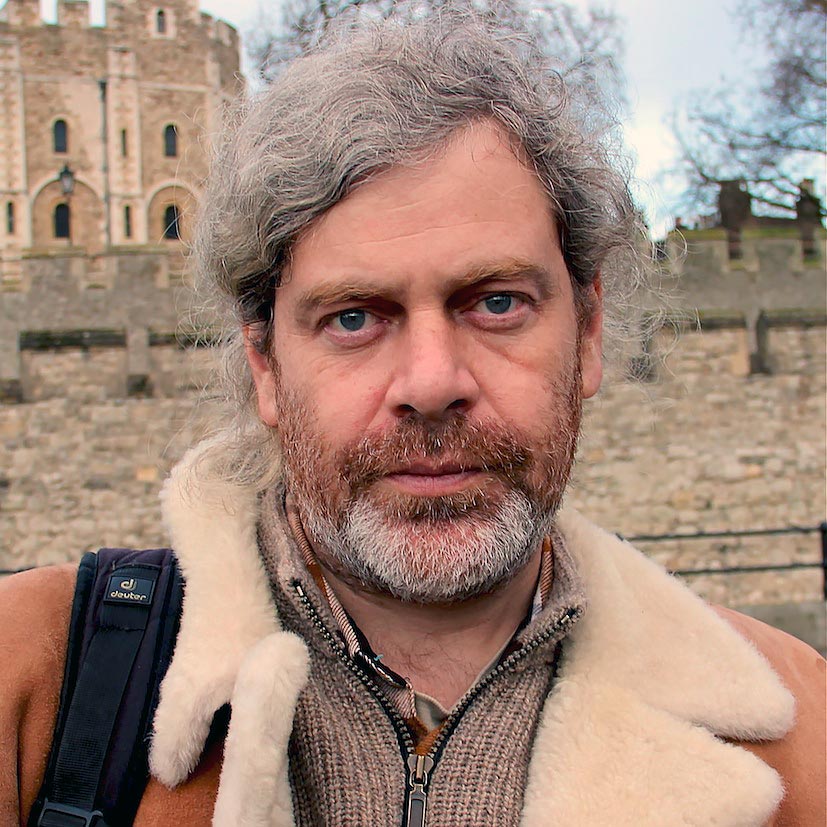
Eric’s background spans Buddhist studies, Tibetan and Himalayan religions, comparative folklore, and years of fieldwork in rural southeastern Tibet. His academic path was sparked in part by a professor at Carleton College — Qiguang Zhao — whose book 📚 A Study of Dragons, East and West 💵 showed a young Eric that one could rigorously and academically study things one simply finds cool. The episode also dips into Tibetan Yeti lore and hidden-village fairy traditions, with promises of future episodes on both.
🐉 The Gospel of Dragons: Multiple Origins
Eric’s central argument is that there is no single proto-origin for the dragon — he belongs firmly to the “multiplicity of origins” camp, a position that sets him apart from the usual diffusionary models in comparative mythology. As Wendy Doniger puts it, “there is no Galapagos Islands for myth” — stories generally do travel and blend — but Eric makes a case that at least three independent streams fed into what we now call dragons:
– A Chinese/East Asian origin: serpentine, rain-bringing, auspicious amalgam creatures associated with the emperor and good harvests — described with the head of a camel, horns of a deer, scales of a carp, and eagle claws.
– A Mesopotamian origin: darker in character, linked to storm-god-versus-serpent combat myths, and figures like Tiamat in Babylonian cosmology.
– A South Asian origin: the Naga, a subterranean water-spirit associated with rain, earthquakes, and the protection of buried treasure, which traveled with Buddhism along the Silk Roads.
These three traditions collided, blended (syncretized), and picked up additional influences from Greek, Egyptian, and Abrahamic traditions — eventually producing the winged, fire-breathing, virgin-stealing European dragon of the High Middle Ages, which looks almost nothing like any of its ancestors.
🌏 The Silk Road as Monster Highway
The Silk Roads were not a single highway but a branching network of trade routes stretching roughly from Korea to Venice — and almost nobody traveled the whole length. Goods, ideas, and stories moved in short hops, translated and re-translated at each stop. Buddhism, for example, passed through so many hands that its texts were sometimes rendered three or four times before arriving in Chinese. The period of Pax Mongolica — when the Mongol Empire guaranteed relative freedom of movement and religion across the largest contiguous land empire in history — was a particularly rich moment for idea exchange. Concepts like monotheism, and yes, dragons, flowed through this network. Persia sat squarely in the middle, a rich civilizational center in its own right rather than merely a waypoint between East and West.
🔥 Fire, Wings, and the European Dragon
The fire-breathing quality of European dragons is a puzzle Eric acknowledges he can’t fully solve — but the association of dragons with evil, terror, and hellfire tracks closely with their appearance in the Book of Revelation and their subsequent role in Christian iconography as stand-ins for the Devil. Chinese celestial dragons, by contrast, fly without wings — they are storms, not creatures that need aerodynamic lift. The question of wings versus no wings, and the finer distinctions between dragons, wyverns, and worms/wyrms, turns out to owe more to the taxonomy-obsessed world of Dungeons & Dragons and Tolkien than to any historically fixed tradition. The cultural staying power of D&D in shaping the modern American mental image of dragons — right down to leg counts — is, Eric and Blake agree, not to be underestimated. (The 🎬 Hobbit films 💵’ decision to give Smaug two legs and wings rather than four legs and wings remains, for the record, a source of genuine fan grievance.)
Blake also raises the theory — associated with scholar Adrienne Mayor — that fossil discoveries of dinosaur bones may have seeded some dragon legends. Eric notes there is a direct linguistic link in Chinese between the word for dinosaur and the word for dragon (lóng), and that fossilized bones have historically turned up in Chinese traditional medicine markets, powdered and sold for vitality. A plausible connection, even if not the whole story.
🏔️ Tibetan Dragons, Thunder Speech, and the Migu
In Tibetan, the word druk means “dragon speech” — and that is simply the word for thunder. Not a metaphor. Not “it sounds like a dragon.” Thunder is dragon speech. Bhutan‘s very name in Dzongkha is Druk Yul — Land of the Thunder Dragon — and the dragon appears on its national flag. Eric’s years of fieldwork in southeastern Tibet intersect here with Yeti (or rather Migu) lore: the local Tibetan tradition of the migu — a wild, forest-dwelling, almost-human creature — raises the same question about the “right” question to ask. Eric argues that asking whether the Migu are “real” in a physical-creature sense is an outsider’s question, one that imposes a colonial hermeneutic onto stories that are primarily about identity, landscape, and community. The Tibetan stories of Shashung Dudu (a winged, long-armed wild person defeated by a clever boy with a gunpowder-filled horn) are tied intimately to specific mountain peaks — and the same story is told in multiple valleys, each pointing to its own jagged peak as the site of the explosion. The monster story becomes a kind of shared cultural glue across dispersed communities.
🌄 Hidden Villages and Fairy Lore
The episode closes with a rich detour into Tibetan hidden-valley traditions. The concept of beyul — a hidden sacred land opened by a Buddhist master as a refuge — feeds into the broader Western romanticization of Shangri-La and Shambhala. (Eric notes, with appropriate wryness, that the actual town where he does his fieldwork is now officially named Shangri-La.) Pre-Buddhist invisible-village stories describe fairy-like beings whose hidden community is made visible — and thus lost — through transgression: they cremate a dead donkey in imitation of human funerary rites, break the spell, and are forced into contact with ordinary people. Villagers today point to ruins above their settlements and explain that their ancestors mixed with those fairy folk generations ago. These stories do what the best monster stories do: they explain the landscape, encode proper behavior, and stitch together community identity across distance.
📚 Further Reading
– 📚 A Study of Dragons, East and West 💵 by Qiguang Zhao
– 📚 The First Fossil Hunters: Dinosaurs, Mammoths, and Myth in Greek and Roman Times 💵 by Adrienne Mayor
– 📚 Gods and Monsters of the Machine Age 💵 by Adrienne Mayor
🔗 Related Links
– Dragon (Wikipedia overview)
– Chinese Dragon
– Naga (South Asian serpent spirit)
– Tiamat (Babylonian mythology)
– Silk Road
– Pax Mongolica
– Beyul (Tibetan hidden lands)
– Yeti
– Syncretism
– Non-overlapping Magisteria (Stephen Jay Gould)
Note: ads inserted into the distributed audio alter the timestamps in unpredictable ways, so timing references in these notes are approximate.
Where do Dragons come from — and why do so many cultures have them? Learn about the origins of Dragon legends with Eric Mortensen of Guilford College. Our conversation also touches on Fairies and Yeti — and we will doubtless be revisiting both Eric and the topic of Dragons in future episodes.
Mentioned in the episode
- Qiguang Zhao — a professor who influenced Eric and wrote a book about Dragons
- Books by Qiguang Zhao
- Of Gods and Monsters (April 2019) — Conference Details
Music
- Monstertalk Theme: Monster by Peach Stealing Monkeys
MTArchivist
0