Regular Episode
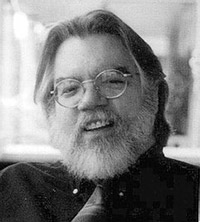
#115 – MONSTERTALK MEETS THE LOVECRAFT GEEK
The result is a wide-ranging conversation covering Lovecraft’s relationship to religious terror, cryptozoology, film adaptations, literary descendants, and the perennial question of how to love the work of a deeply flawed author — all with Bob’s characteristic blend of erudition and dry wit.
🕯️ Theology, Cosmic Horror, and the Mysterium Tremendum
Bob traces his twin passions — theology and Lovecraft — back to junior high, and argues they have always been complementary rather than contradictory. Drawing on Rudolf Otto‘s concept of the mysterium tremendum — the terrifying holy mystery before which the individual feels their own smallness — Bob contends that Lovecraft’s cosmicism taps into the same psychological substrate as genuine religious awe. An essay by Fritz Leiber first crystallized this parallel for him.
He also cites Coleridge‘s “willing suspension of disbelief” and Peter Berger‘s idea of a “finite province of meaning” to explain why devout readers can enjoy supernatural horror without existential crisis: entering a story is a temporary, consensual frame-shift, not a theological statement. The mysterium fascinans — the irresistible pull toward the very thing that terrifies — is, Bob notes, exactly what makes Lovecraft’s doomed protagonists keep digging.
🦑 Lovecraft and Cryptozoology
Blake asks which Lovecraft stories map most closely onto modern cryptid lore. Bob’s top picks:
– The Whisperer in Darkness — the buildup of rumor, eyewitness reports, and washed-down carcasses of the Mi-Go closely mirrors how lake-monster and Bigfoot cases accumulate in the wild.
– The Shadow over Innsmouth — retroactively pressed into cryptozoological service by the Animal Planet mockumentaries about “merpeople,” which Bob compares to Orson Welles’ War of the Worlds broadcast in their capacity to deceive inattentive viewers.
– The Call of Cthulhu — Cthulhu’s deep roots in Kraken legend, including the motif of an island that turns out to be a living creature.
Bob also notes that The Curse of Yig edges toward incorporating indigenous cryptid-like folklore, and speculates that a Lovecraft writing today would almost certainly have incorporated Bigfoot and Chupacabra into his mythology.
🎬 Lovecraft on Film: Essentials and Oddities
Bob’s recommended viewing for the Lovecraft-curious, ranging from faithful adaptations to films that merely breathe the same air:
– The Lovecraft Historical Society‘s silent-film-style The Call of Cthulhu (2005) — Bob’s top pick for fidelity to the source.
– Cthulhu (2007) — a modern Shadow over Innsmouth update that Bob praises for the dinner-table scene where a cult leader makes a surprisingly coherent theological case for the old ones.
– The “big three” loose adaptations of the late 1960s: Die Monster Die (based on The Colour Out of Space), The Dunwich Horror, and The Haunted Palace (based on The Case of Charles Dexter Ward).
– The Beyond (Lucio Fulci, 1981) — structurally loose but atmospherically Lovecraftian; Bob praises its “deeply unsatisfying” ending as something Lovecraft himself would have approved.
– Eye of the Devil (1966, starring David Niven and Deborah Kerr) — Bob ranks it alongside The Wicker Man in thematic power; based on a novel by Philip Loraine. A scene inscribed with text from the Gnostic Acts of John (the “Round Dance of the Savior”) sent Bob down a research rabbit hole that eventually led him to his wife.
– Dark Intruder (1965) — a failed TV pilot featuring Leslie Nielsen as a Victorian-era San Francisco occult investigator, with explicit namedrops of Azathoth and Dagon; Bob suspects both Lovecraft and Robert Bloch were sources for the writers.
Bob is notably cooler on the Stuart Gordon adaptations (Re-Animator, From Beyond), finding their added sexuality at odds with Lovecraft’s fundamentally cerebral horror — though he concedes that The Shadow over Innsmouth‘s hybridization subplot implies things the original text politely doesn’t explore.
📖 Literary Descendants: Who Captures the Lovecraftian Feel?
Bob surveys the Lovecraftian literary tradition with a scholar’s eye:
– August Derleth — The Lurker at the Threshold works well for its first two-thirds before veering into the good-versus-evil framing that critics like Dirk Mosig (in his essay “H.P. Lovecraft: Myth-Maker”) found antithetical to Lovecraft’s cosmicism.
– Robert Bloch — Bob’s pick for greatest early fidelity, with Bloch’s invented grimoires De Vermis Mysteriis and Cultes des Goules often misattributed to Derleth.
– Brian Lumley — enthusiastically absorbs Lovecraft but quickly hybridizes him with Edgar Rice Burroughs and EC Comics energy; Bob loves it while acknowledging purists may not forgive the divergence.
– Ramsey Campbell — remains faithful in spirit across a long career.
– Cody Goodfellow — Bob calls him “a literary alchemist” who melds techno-thriller, hard-boiled detective, splatterpunk, and genuine Lovecraftian vision; his two-volume sequence 📚 Radiant Dawn 💵 / 📚 Ravenous Dusk 💵 gets particular praise, as does his collaboration with John Skipp, 📚 Jake’s Wake 💵.
– Laird Barron — earns praise precisely for channeling the Lovecraftian atmosphere without reflexively name-dropping Cthulhu and Yog-Sothoth.
– Joe Pulver and Mark Rainey — also cited as writers maintaining genuine Lovecraftian vision.
Bob draws a sharp distinction between this kind of evolutionary literary inheritance and mere name-dropping, comparing the creative lineage favorably to Lovecraft’s own debt to Arthur Machen, Algernon Blackwood, and Lord Dunsany.
🔬 Lovecraft’s Monsters: Sources and Inspirations
Bob traces the mythological and literary DNA of several key entities in the Cthulhu Mythos:
– Cthulhu — Kraken legend, especially the motif of mistaking a living creature for an island.
– Wilbur Whateley (The Dunwich Horror) — inspired in part by Helen Vaughan in Machen’s The Great God Pan, particularly the idea of a blasphemous hybrid and the morphing death scene.
– Shub-Niggurath — likely rooted in the Baphomet goat of medieval witchcraft lore; Bob notes that “Baphomet” itself is simply an Old French corruption of “Mahomet” (Muhammad), the real origin of the Knights Templar accusations.
– Azathoth — possibly derived from Anathoth (hometown of the prophet Jeremiah) and/or an alchemical/astrological text titled Azoth.
– Nyarlathotep — the name came to Lovecraft in a dream, but Bob suspects the dream was seeded by Lord Dunsany’s invented names “Mynarthitep” and “Alhirathon.”
– Hastur — borrowed directly from Robert W. Chambers.
🧪 Lovecraft the Skeptic
Bob pushes back on the persistent myth that Lovecraft was an occultist or member of the Golden Dawn, calling it “pure fantasy, like an urban legend.” By his own repeated declaration, Lovecraft was a naturalist, atheist, rationalist, and materialist. He ghost-wrote the skeptical exposé Imprisoned with the Pharaohs for A special for the Halloween Season, Robert Price returns to MonsterTalk to give us a raw dripping sample of his podcast The Lovecraft Geek, a kind of secular version of his popular The Bible Geek podcast. Questions from listeners are tossed down into the well of Price’s vast knowledge to see what answers echo back up to drive us mad.
Direct Lovecraft Film Adaptations
- The Haunted Palace
- Die Monster Die
- The Dunwich Horror
- Cthulhu
- The Call of Cthulhu
- Colour from the Dark
- The Color Out of Space (Nic Cage version)
- The Color out of Space (German Indy version)
- Re-Animator
- Bride of Re-Animator
- From Beyond
- The Resurrected
- Curse
- The Whisperer in Darkness
- Dreams in the Witch House
Films Inspired by Lovecraft
Sculpture
Books mentioned or relevant to this episode
- The Complete H. P. Lovecraft Filmography
- The Thing in the Woods, Margery Williams
- Ravenous Dusk, by Cody Goodfellow
- Radiant Dawn, Cody Goodfellow
- Jake’s Wake, by Cody Goodfellow and John Skipp
- Lovecraft Country, by Matt Ruff
- The Ballad of Black Tom, by Victor LaValle
- The Complete Fiction of H.P. Lovecraft
- I Am Providence: The life and times of H. P. Lovecraft by S.T. Joshi
- Call of Cthulhu: Horror Roleplaying in the Worlds of H. P. Lovecraft
Bob’s Halloween Movie Recommendations
- Mark of the Vampire
- The Return of the Vampire
- Brides of Dracula
- Curse of the Werewolf
- Universal Monster Movies
Robert Price Links
- The Bible Geek
- The Lovecraft Geek
- Robert M. Price Patreon Page
- Robert M. Price Facebook Page
- Official Website of Robert M. Price
- Robert M. Price’s Amazon Author Page
Music
- Monstertalk Theme: Monster by Peach Stealing Monkeys
MTArchivist
0