Regular Episode
044 – PARANORMALITY: PSYCHIC DOGS, GHOSTS AND SILLY VOICES—AN INTERVIEW WITH RICHARD WISEMAN
Blake warns listeners up front: this episode contains almost no monster content. He then immediately mentions a Gith from D&D, thereby increasing the monster content by approximately 100%.
🐕 JT, the (Allegedly) Psychic Dog
The episode opens on the case that has “haunted” Wiseman for years: Jaytee, a terrier whose owner claimed he would go to the window whenever she was on her way home — apparently demonstrating telepathic awareness of her return. Austrian television ran with this as proof of canine psychic ability. Wiseman investigated and found a simpler explanation: the dog went to the window a lot, regardless of whether the owner was en route.
Wiseman and parapsychologist Rupert Sheldrake have traded papers on the case ever since — what Wiseman describes as “two grown men arguing about a psychic dog as if they had nothing better to do with their time.” The core dispute isn’t whether the raw data patterns match (they largely do across both researchers’ trials) but how to interpret them. Wiseman’s paper appeared in the British Journal of Psychology — the only psychic-dog paper in over a century of that journal’s publication, a distinction he claims to be “very proud” of. Jaytee has since died, closing the data set, though the hosts speculate that a sufficiently motivated medium could reopen it.
The Skeptico angle: podcast host Alex Tsakiris of Skeptiko remains deeply dissatisfied with Wiseman’s conclusions — a dissatisfaction he has expressed freely and at length. Blake notes that Tsakiris has similarly gone after Ben Radford over an investigation into psychic detectives, and recently interviewed Karen largely as a vehicle for relitigating Radford’s case. Blake announces that MonsterTalk has agreed to a formal debate with Tsakiris, to be hosted in the Skepticality podcast feed.
📖 Paranormality: The Book That Wasn’t Sold in America
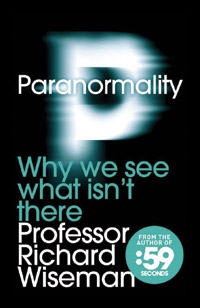
Paranormality starts from the premise that paranormal phenomena are not genuine and proceeds to ask the more interesting question: why do so many people believe in them, and what does that tell us about the brain? Wiseman describes it as a “skeptical primer” that puts the current psychological thinking on these experiences into a single accessible volume.
At the time of recording, the book had been sold into roughly 20 language markets — but not the United States. Wiseman explains the mechanics: territorial rights are sold separately, and no American publisher had picked up the US rights. He was able to release a Kindle edition directly (retaining approximately 70% of cover price, versus a far smaller cut through traditional publishing) while his UK publisher Macmillan shipped a limited number of British physical copies stateside. The group agrees this situation is almost certainly the result of a conspiracy involving JT, the grassy knoll, and the Twin Towers.
US publishers, Wiseman suspects, were nervous: credulous paranormal books sell; rigorous skeptical ones occupy an awkward middle ground — too pop for hardcore science readers, too scientific for the “it’s all true” audience. One editor reportedly suggested he could rewrite the book to imply some ghosts might be real. He declined.
👻 Ghosts, Infrasound, and the God Helmet
Blake steers the conversation toward hauntings and the physical mechanisms sometimes proposed to explain them — two areas Wiseman has investigated directly.
On infrasound: Wiseman credits the late Vic Tandy with the original hypothesis that very low-frequency sound waves (around 18–19 Hz) can produce feelings of unease and anomalous perception. Wiseman followed up with a controlled concert experiment, introducing infrasound into one of two live performances; audiences in the infrasound condition reported more unusual experiences. He considers the mechanism plausible — but notes that naturally occurring infrasound at the right intensity would be a stretch as a blanket explanation for hauntings.
On Michael Persinger’s “God Helmet”: Wiseman is considerably more skeptical. The helmet was claimed to induce feelings of a “sensed presence” via weak magnetic field stimulation of the temporal lobes. When a separate research team used the equipment without activating the current, subjects still reported the same experiences — suggesting that suggestion and expectation, rather than electromagnetic stimulation, were doing the work. Wiseman draws a parallel to Victorian-era phrenologists and hypnotists who could trigger localized “experiences” simply by pointing at regions of the skull. He notes that the apparent absence of a proper control condition in the original Persinger work is the kind of methodological gap that should give pause. Persinger’s wizard shoes, however, Wiseman confirms as genuine.
On haunted rooms more generally: Wiseman suspects that culturally absorbed stereotypes of what a haunted space looks like (dark, old, architecturally odd) prime suggestible people to have anomalous experiences when they enter such spaces. The test: tell subjects one room is haunted and another is not, then switch the labels — and the experiences follow the label, not the room.
😱 Sleep Terror: A Personal Case Study
The conversation takes a charmingly candid detour when Wiseman admits to chronic sleep terror (distinct from sleep paralysis, which Blake has also experienced). During episodes, Wiseman sits up, becomes convinced a demonic entity or a “terrible dog” (never a cat) is in the room, sometimes screams or barricades the door, and then returns peacefully to sleep with no memory of the event — leaving his partner Caroline wide awake and terrified. Sleep researchers have apparently used his self-recordings as data, since people who tape themselves mid-episode are rare. He reports having once woken in a hotel to find he had jammed a chair hard against the door during the night after dreaming of zombies. He considers this a reasonable contingency plan.
🐬 Sea Monsters, Dolphins, and Dr. Charles Paxton
Wiseman mentions having had dinner with Dr. Charles Paxton, a statistician who works on estimating animal populations — including dolphin counts for the UN — from observational data rather than direct enumeration (you cannot, apparently, simply count dolphins; this is forbidden). Paxton noticed that the same statistical modelling techniques used for cetacean population estimates could be applied to sea monster sightings, which are similarly plentiful and similarly resistant to direct counting. Wiseman declines to say more on the record, noting the work is ongoing. Paxton is also, reportedly, conducting experiments in which people dress as Bigfoot and walk around in various locations, for reasons the transcript does not fully illuminate.
🍷 Luck, Wine, and What Wiseman Is Actually Known For
In Britain, Wiseman notes, his public profile rests less on the paranormal work and more on his research into luck — the subject of his earlier book The Luck Factor — and his self-help research published as 59 Seconds. He considers the luck work his most meaningful contribution: by unpacking the psychology of fortunate and unfortunate people and repackaging it as actionable habit changes, he received years of emails from readers saying it had changed their lives. He expects this, rather than the JT affair, to appear on his gravestone, though he acknowledges that MonsterTalk’s hosts may have other plans for his memorial.
A recent experiment at the Edinburgh Science Festival generated comparable controversy: Wiseman gave participants either a cheap (~£2.50) or expensive (~£20) wine and asked them to identify which was which. The result was 50-50 across every variety tested — including among self-described wine enthusiasts. The wine industry responded poorly. One critic’s rebuttal: “that means they were right half the time.”
Wiseman also appeared on Coast to Coast AM with George Noory to discuss Paranormality, finding Noory perfectly pleasant even as callers insisted their ghost sightings had no possible explanation and demanded he explain them anyway. He has also collaborated with comedian Lewis Black on a segment about Wiseman’s World’s Funniest Joke research, available on YouTube.
📚 Further Reading
– 📚 Paranormality: Why We See What Isn’t There 💵 by Richard Wiseman
– 📚 The Luck Factor 💵 by Richard Wiseman
– 📚 59 Seconds: Think a Little, Change a Lot 💵 by Richard Wiseman
– 📚 Scientific Paranormal Investigation 💵 by Benjamin Radford
🔗 Related Links
– Jaytee the psychic dog (Wikipedia)
– Rupert Sheldrake (Wikipedia)
– Persinger’s God Helmet (Wikipedia)
– Vic Tandy and infrasound research (Wikipedia)
– Sleep terror (Wikipedia)
– LaughLab / World’s Funniest Joke research (Wikipedia)
– Richard Wiseman’s website (ghost photo blog and quizzes)
– 📺 Wiseman’s “Colour Changing Card Trick” (YouTube)
Note: ads inserted into the distributed audio alter the timestamps in unpredictable ways, so timing references in these notes are approximate.

Today on MonsterTalk, we share an interview with Dr. Richard Wiseman recorded at TAM9—the James Randi Educational Foundation’s “Amazing Meeting.” It is a wide-ranging interview that discusses Wiseman’s new book, Paranormality: Why we see what isn’t there, as well as ghosts, psychic dogs and the trouble with counting dolphins. It has naught to do with monsters, but it is an amusing interview and provides a little background into the upcoming debate between MonsterTalk and Alex Tsakiris’ Skeptiko.
- Jaytee the psychic(?) dog
- Wiseman vs. Sheldrake on Skeptiko
- EMF and Ultra-low Frequency Sound as mechanisms for causing hauntings
- Wiseman’s famous “Colour Changing Card Trick”
- Wiseman’s YouTube channel
- Wiseman’s Ghost-photo Blog
Items of Interest
- Read an excerpt from Paranormality in eSkeptic
- Listen to the Skepticality interview with Richard Wiseman
Music
- Music from today’s intro was Soft Tempest by Symbion Project, used with permission. (Buy the MP3 from Amazon)
- Monstertalk Theme: Monster
by Peach Stealing Monkeys
MTArchivist
0