
#018 – Bringing Light to a Moth
📖 Lovecraft: The Man Behind the Mythos
Robert Price traces Lovecraft’s origins as a largely self-educated, intensely literary recluse who grew up reading 18th-century volumes in his grandfather’s library in Providence, Rhode Island. He never finished high school, yet his prose — dense, archaic, deliberately Poe-esque — stood apart from the pulp surroundings of Weird Tales, where he famously submitted his first stories with an imperious demand that not a single comma be changed.
Lovecraft died in relative obscurity in 1937. His posthumous reputation was salvaged in hardcover by August Derleth and Donald Wandrei, who founded Arkham House expressly to preserve his work. Price credits scholar S. T. Joshi with much of the subsequent mainstream literary rehabilitation — though Lovecraft’s cult following had already been growing, and drawing hostile fire from critics like Edmund Wilson, since the 1940s.
👁️ Influences and the Craft of Cosmic Dread
Price sketches out the literary genealogy behind Lovecraft’s distinctive atmosphere:
– Edgar Allan Poe — Lovecraft called him “my god of fiction,” and his early prose style shows it.
– Arthur Machen — Price considers him possibly the biggest influence; once you’ve read The Great God Pan and The White People, he argues, you’ve nearly read The Dunwich Horror already.
– Algernon Blackwood — source of Lovecraft’s sense of “cosmic outsideness,” especially in The Willows and The Wendigo. (Blackwood himself read Lovecraft’s “The Rats in the Walls” and remarked it was a little too “grossly physical” in its horror.)
– M. R. James — Lovecraft admired him deeply; “Count Magnus” is cited as a direct influence on The Call of Cthulhu.
– Lord Dunsany — the Irish baron and fantasist whose stately, biblical prose style shaped Lovecraft’s early “Dunsanian” tales; Lovecraft actually saw him read in person.
– Edgar Rice Burroughs and science fiction writer John Taine also figure in, somewhat unexpectedly.
Price’s conclusion: Lovecraft did what writers are always told to do — he assimilated his influences through “artistic alchemy” and made something genuinely new.
🐙 The Cthulhu Mythos: Cosmic Nihilism as Pseudo-Religion
Price explains that the term “Cthulhu Mythos” was coined by August Derleth — Lovecraft himself called it, tongue-in-cheek, “Yogg-Sothothery,” comparing it to a religion in the same breath as Judaism and Christianity. The mythos describes ancient, super-intelligent beings who arrived from outer space or other dimensions long before humanity, created (or accidentally produced) human life, and now lie dormant — imprisoned in places like the sunken city of R’lyeh — awaiting the alignment of the stars that will allow them to return.
Cthulhu himself is described in The Call of Cthulhu as a colossal, roughly humanoid figure with an octopoid head, rudimentary wings, and claws — the high priest of the Old Ones, communicating to degraded human cults through dreams. Price argues that Cthulhu’s visual specificity — compared to, say, the indescribable Azathoth or the ever-shifting Nyarlathotep — is precisely why he became the franchise mascot: you can make a plush toy out of him.
The real horror of the mythos, Price argues, is not physical destruction but ontological humbling: the revelation that humanity is cosmically insignificant, that intelligence preceded us by millions of years, and that the universe is profoundly indifferent. Lovecraft didn’t believe in the monsters; he believed in the philosophy they illustrated.
The mythos’s collaborative, inconsistent nature — with friends like Robert Bloch and Clark Ashton Smith adding their own invented grimoires and entities — was largely unplanned. Once other writers started cross-referencing each other’s fictional props, Lovecraft embraced it, appreciating that the resulting inconsistencies actually mimicked the character of real mythology.
📜 The Necronomicon Problem and Real-World Believers
Even in Lovecraft’s lifetime, readers wrote asking where to obtain a copy of the Necronomicon. He would write back patiently explaining that he had made it up. Price recounts visiting the Magical Child occult bookstore in New York’s Greenwich Village with Lynn Carter and S. T. Joshi, where a figure calling himself “Simon” was holding court for credulous young occultists, implying the book might actually work for scrying. The paperback in question — published eventually by Avon — is the so-called Simon Necronomicon, a text Price describes as real Sumerian material with a handful of mythos names awkwardly stitched in. Price and company were not charmed.
🎬 Lovecraft on Screen (and Why It’s Hard)
Price and Blake trade notes on the difficulty of adapting Lovecraft’s fiction, whose power lies almost entirely in narration and atmosphere rather than action or characterization. Films discussed include:
– 🎬 In the Mouth of Madness 💵 (John Carpenter) — explicitly Lovecraftian, named by Price as a favorite.
– 🎬 The Thing 💵 (John Carpenter) — based on John W. Campbell’s “Who Goes There?” but widely regarded as spiritually rooted in Lovecraft’s At the Mountains of Madness.
– 🎬 The Ninth Gate 💵 — cited approvingly for its Lovecraftian grimoire atmosphere.
– Older “clinkers” including 🎬 The Dunwich Horror 💵, 🎬 Die, Monster, Die! 💵, and 🎬 The Haunted Palace 💵 — beloved for their cheesy charm rather than fidelity.
Price expressed hope that Guillermo del Toro‘s long-gestating adaptation of At the Mountains of Madness would eventually get made. (It didn’t — at least not yet.) The fundamental problem: Lovecraft’s stories are almost poem-like in their dependence on prose texture, and “good luck making a movie out of a poem.”
🔬 The Real Thing: Cephalopod Biology with PZ Myers
PZ Myers — evolutionary developmental biologist at the University of Minnesota Morris and author of the science blog Pharyngula — explains why real cephalopods are already pretty Lovecraftian, no fiction required:
– The “head” of an octopus or squid that looks like a head is actually a mantle — a bag of guts. The tentacles are a heavily modified foot, evolutionarily descended from slug-like ancestors.
– The brain is a small ganglion wrapped around the esophagus. When an octopus swallows a large meal, it literally compresses its own brain. Myers speculates, with appropriate uncertainty, that this might produce something analogous to visual disturbances.
– Despite their tiny brains, octopuses demonstrate impressive cognition: opening jars, caching objects, recognizing individual people, passing memory tests.
– Cephalopod eyes evolved convergently with vertebrate eyes but are, in one respect, better engineered: the photoreceptors face forward rather than backward, meaning they lack the blind spot caused by our retina’s “inside-out” wiring.
– Giant squid use ammonia for neutral buoyancy, which makes them largely inedible — a fact that has not historically deterred sperm whales.
– Blue-ringed octopuses carry lethal tetrodotoxin — a neurotoxin also found in pufferfish — in quantities sufficient to kill a human.
– Hox genes, the same master patterning genes that lay out vertebrate body plans, are repurposed in cephalopods to specify the identity of individual tentacles — a combinatorial scheme Myers describes as “weird.” Occasional mutant specimens with bifurcating tentacles have washed ashore, hinting at how regulation of branching works.
Myers also introduces his “favorite monster”: Vampyroteuthis infernalis — the vampire squid — a deep-sea cephalopod with webbed tentacles and skin that irises shut over its eyes in place of eyelids. The episode’s existing show notes quote Lovecraft’s own epitaph for the creature: “That is not dead which can eternal lie…”
📚 Further Reading
– 📖 The Call of Cthulhu by H. P. Lovecraft
– 📚 The Dunwich Horror 💵 by H. P. Lovecraft
– 📚 At the Mountains of Madness 💵 by H. P. Lovecraft
– 📚 H. P. Lovecraft: A Life 💵 by S. T. Joshi
–
Note: ads inserted into the distributed audio alter the timestamps in unpredictable ways, so timing references in these notes are approximate.
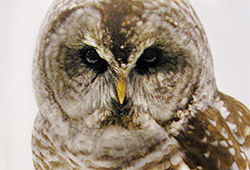
In this episode, Committee for Skeptical Inquiry (formerly CSICOP) investigator Joe Nickell joins the MonsterTalk crew for a look into the West Virginian legend of Mothman — allegedly a human-sized creature with wings and glowing red eyes. Nickell discusses the ways monsters evolve following a community’s initial reports, and the cyclical nature of spates of sightings.
About this episode
Joe Nickell is the senior investigator for the Center for Inquiry (CFI) and is the author of many books that will be of interest to MonsterTalk listeners. His most recent book is Real or Fake: Studies in Authentication.
Of special interest to MonsterTalk listeners will be Adventures in Paranormal Investigation and Real Life X-Files: Investigating the Paranormal and of course he is the co-author of Lake Monster Mysteries, along with Ben Radford.
Loren Coleman’s “Mothman Death List” can be found here.
Ben Radford’s new book Scientific Paranormal Investigation: How to Solve Unexplained Mysteries is now on sale!
The alien timeline graphic that Joe Nickell mentions in this episode can be found here.

Music
- Monstertalk Theme: Monster
by Peach Stealing Monkeys
Episode Transcript
Read a complete transcript of this episode.